Clean-Label Starch Modifications: Dry Heat Treatment in Combination with Ion Exchange
Johanna A. Thomann, Michael Polhuis, Jan O. P. Broekman, Hero J. Heeres, André Heeres

TL;DR
This paper explores how combining dry heat treatment with ion exchange can modify potato starch to create clean-label, nutrient-rich starches with improved functional properties.
Contribution
The study introduces a dual modification method for potato starch using ion exchange and dry heat treatment, enhancing its functional and nutritional properties.
Findings
Dry heat treatment reduces starch viscosity and gelatinisation temperature while increasing digestible starch content.
Ion exchange with specific cations enhances the effectiveness of dry heat treatment in modifying starch properties.
Magnesium and calcium show particular promise due to their nutritional value and ability to form ionic cross-links.
Abstract
Potato starch offers the unique potential of mineral enrichment through the presence of phosphorylated amylopectin chains. This property was utilised in a straightforward dual modification of native potato starch by combining mineral enrichment with dry heat treatments (DHT). DHT itself (110–130 °C, 3–6% moisture, 2 h) affords potato starches with lower viscosity and gelatinisation temperatures and higher contents of digestible starch. Prior ion exchange with Na+, K+, Mg2+, and Ca2+ enhanced the versatility of dry heat treatments. This study demonstrates the fine-tuning of functional properties (rheology) of these novel, dual-modified starches. Of special interest are magnesium and calcium due to their nutritional value and their valency, allowing ionic cross-linking. The present study contributes to the understanding of starch–ion interactions in DHT, clearly highlighting the role of…
Genes, proteins, chemicals, diseases, species, mutations and cell lines named across the full text — each resolved to its canonical identifier and authoritative record.
Click any figure to enlarge with its caption.
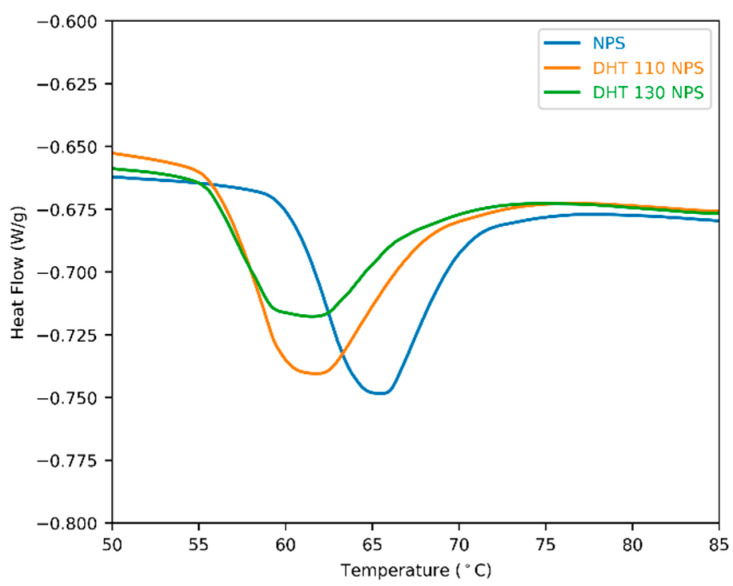 Figure 1
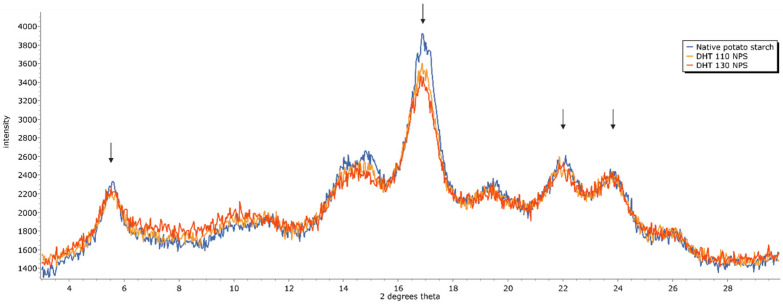 Figure 2
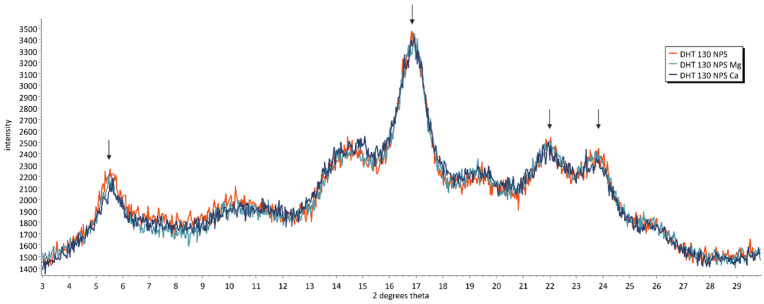 Figure 3
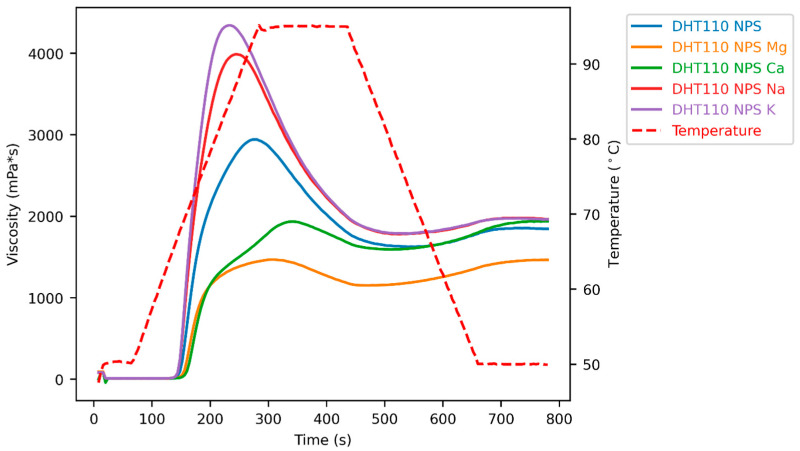 Figure 4
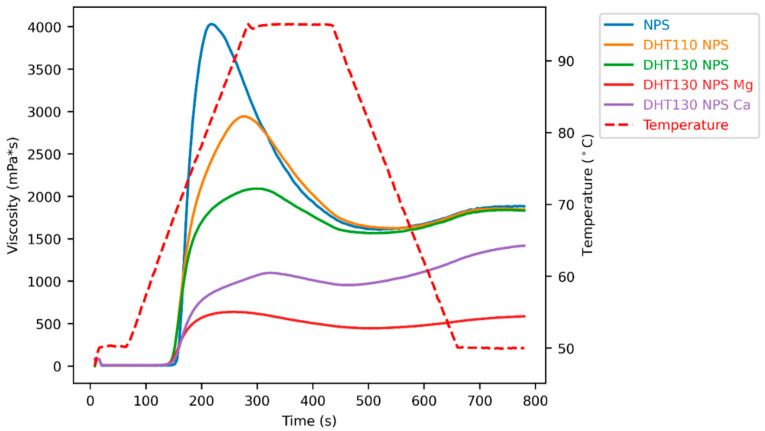 Figure 5
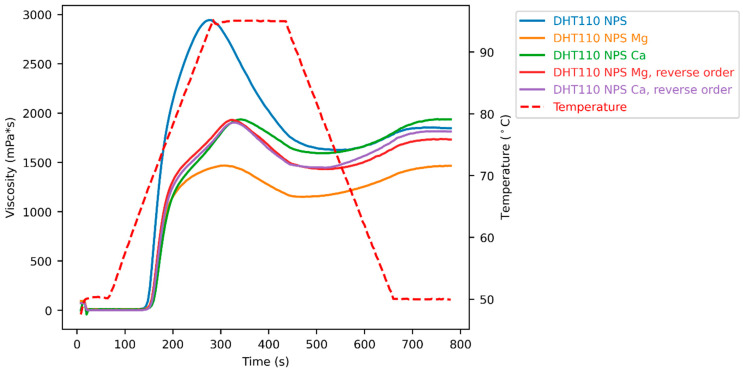 Figure 6
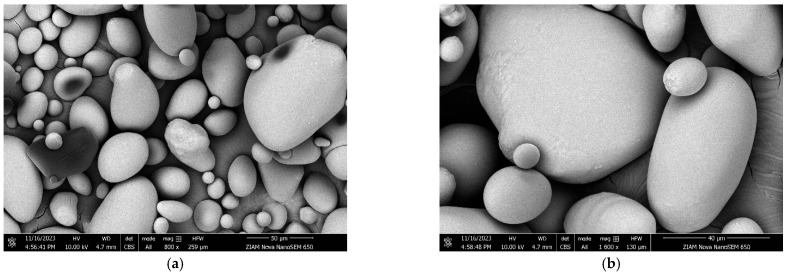 Figure 7
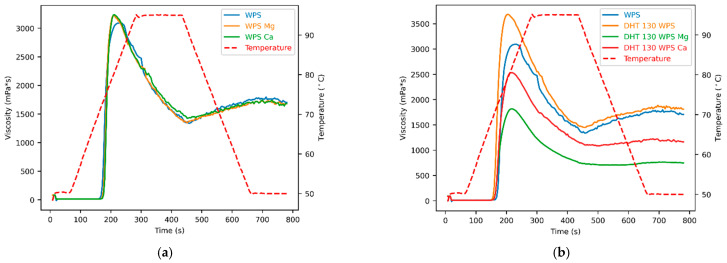 Figure 8
Peer Reviews
No public reviews on file for this paper yet. If you reviewed it on a platform where reviews are public (OpenReview, ICLR, NeurIPS, ICML), you can paste yours below so the community can read it here.
Videos
No videos yet. Explain this paper in a talk, walkthrough, or lecture? Add one.
Taxonomy
TopicsFood composition and properties · Nanocomposite Films for Food Packaging · Polysaccharides Composition and Applications