Enhancing the Signature Rose Aroma of Kluyveromyces marxianus-Fermented Milk Beer via Adaptive Laboratory Evolution
Chen Xing, Youming Tan, Xinchi Jiang, Wenlu Li, Qihao Wang, Zihao Liu, Hong Zeng, Yanbo Wang

TL;DR
This study uses adaptive evolution to improve the rose-like aroma of a fermented milk beer by enhancing the acid tolerance of a yeast strain.
Contribution
The first application of adaptive laboratory evolution to enhance the signature rose aroma in K. marxianus-fermented milk beer.
Findings
Km-ALE-X20 showed 16-fold higher growth and 28-fold more phenylethyl alcohol production in lactic acid-rich medium.
The evolved strain increased alcohol and ester compound production by 33.87% and 32.43% in fermented milk beer.
Sensory analysis revealed higher rose and fruity aroma scores for the evolved strain, though the parental strain had a more balanced aroma.
Abstract
Milk beer, a modern Chinese dairy beverage, is usually fermented by the co-culture of lactic acid bacteria (LAB) and Kluyveromyces marxianus (K. marxianus), with the latter known for its ability to produce aroma compounds. However, the accumulation of lactic acid produced by LAB can inhibit the growth of K. marxianus, which inevitably hinders the diversity and intensity of flavor compounds in milk beer. In this study, adaptive laboratory evolution (ALE) was applied to the parental strain Kluyveromyces marxianus CICC1953 (Km-P) under different concentrations of lactic acid to obtain an evolved strain Km-ALE-X20 with enhanced acid tolerance and increased titer of phenylethyl alcohol, which has a floral, rose-like aroma. Km-ALE-X20 demonstrated a 16-fold increase in OD600 and a 28-fold increase in phenylethyl alcohol production compared with Km-P in chemically defined medium (CDM)…
Genes, proteins, chemicals, diseases, species, mutations and cell lines named across the full text — each resolved to its canonical identifier and authoritative record.
Click any figure to enlarge with its caption.
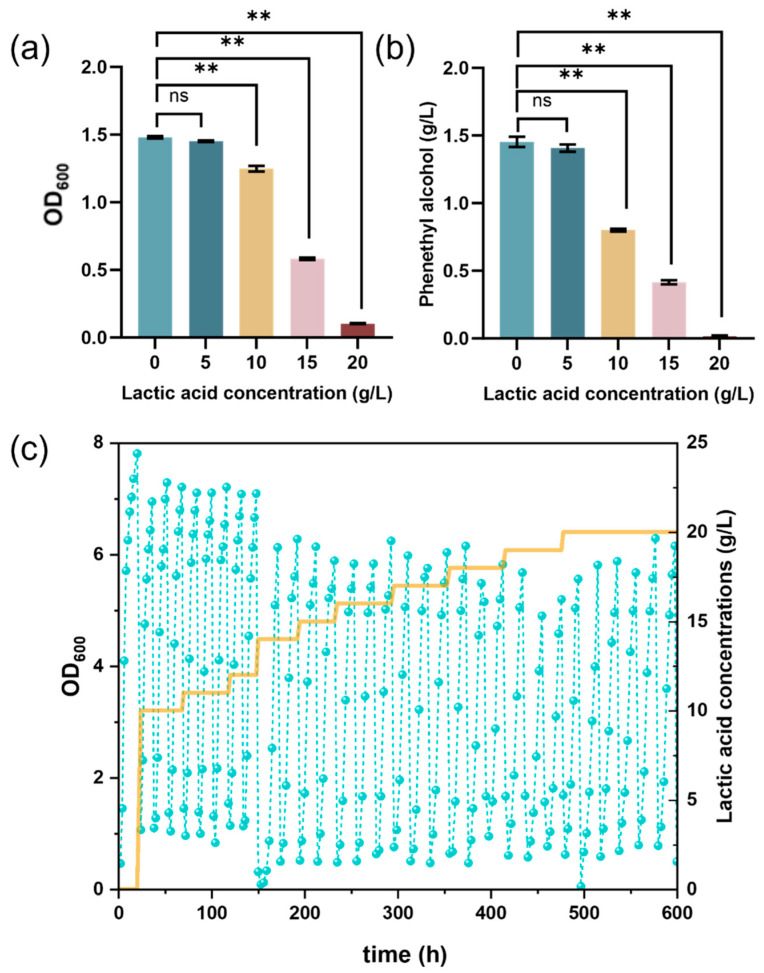 Figure 1
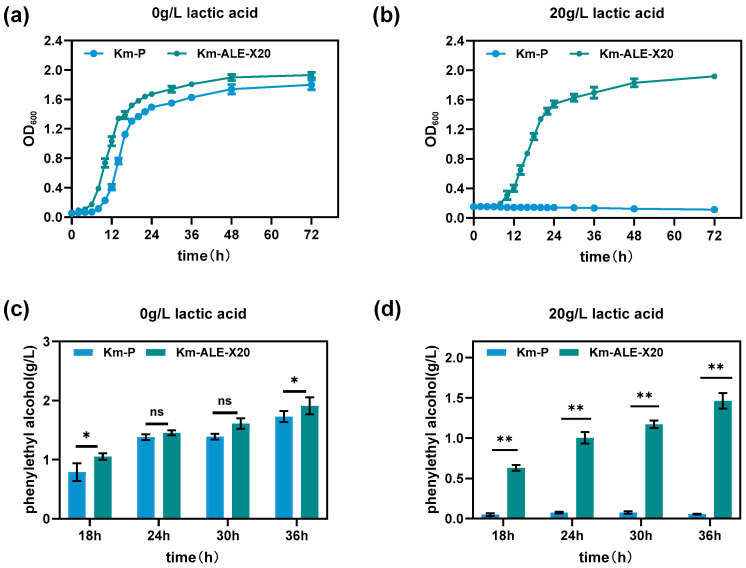 Figure 2
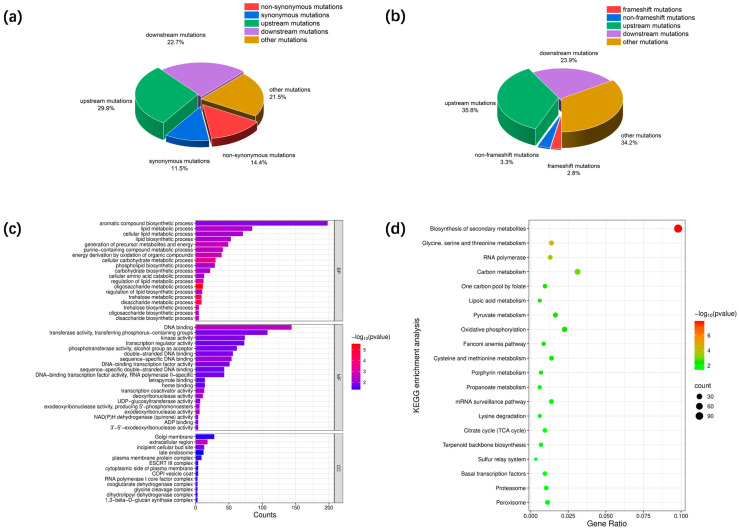 Figure 3
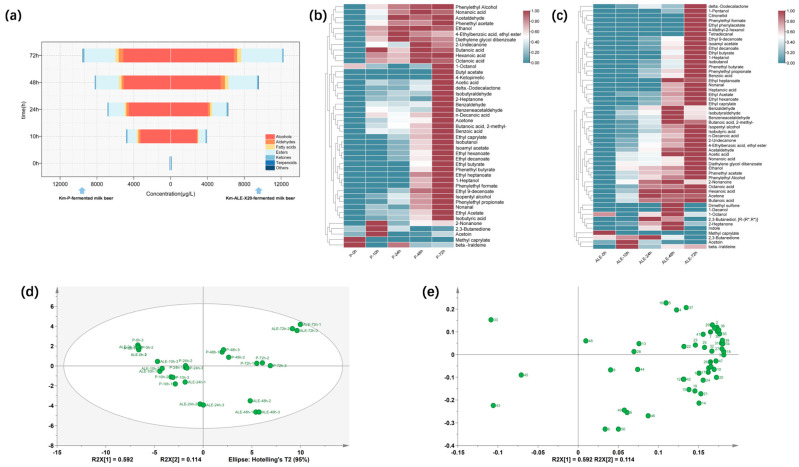 Figure 4
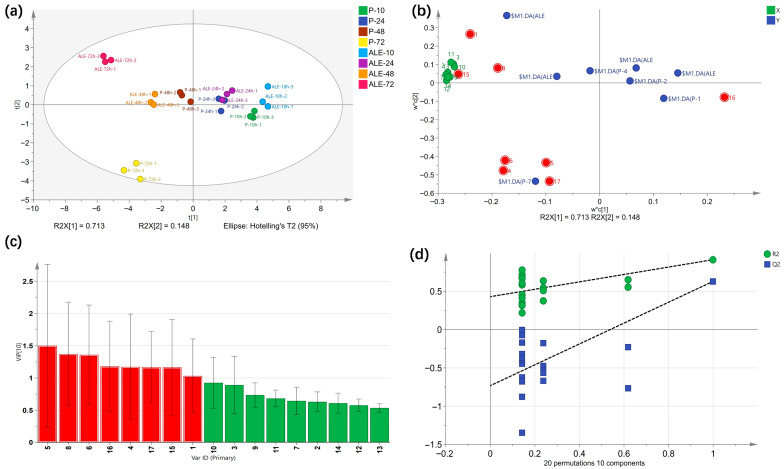 Figure 5
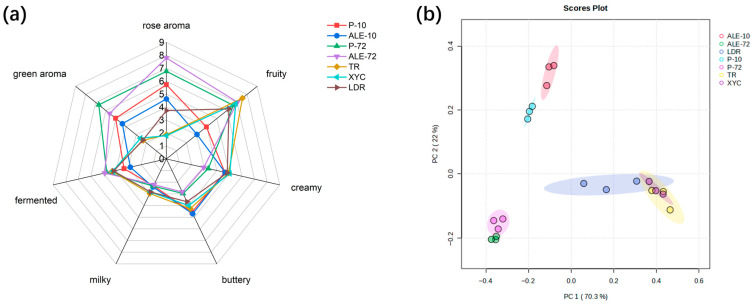 Figure 6
Peer Reviews
No public reviews on file for this paper yet. If you reviewed it on a platform where reviews are public (OpenReview, ICLR, NeurIPS, ICML), you can paste yours below so the community can read it here.
Videos
No videos yet. Explain this paper in a talk, walkthrough, or lecture? Add one.
Taxonomy
TopicsFermentation and Sensory Analysis · Fungal and yeast genetics research · Microbial Metabolic Engineering and Bioproduction