Diagnostic Performance and Clinical Utility of the Uromonitor® Molecular Urine Assay for Urothelial Carcinoma of the Bladder: A Systematic Review and Diagnostic Accuracy Meta-Analysis
Julio Ruben Rodas Garzaro, Anton Kravchuk, Maximilian Burger, Ingmar Wolff, Steffen Lebentrau, José Rubio-Briones, João Paulo Brás, Christian Gilfrich, Stephan Siepmann, Sascha Pahernik, Axel S. Merseburger, Axel Heidenreich, Matthias May

TL;DR
The Uromonitor® test detects bladder cancer mutations in urine and shows better accuracy than traditional cytology, but needs improvement for routine use.
Contribution
This study provides a systematic review and meta-analysis comparing Uromonitor® with urine cytology for bladder cancer detection.
Findings
Uromonitor® had higher sensitivity (55%) and accuracy (85%) compared to urine cytology (42% and 78%).
Uromonitor® showed improved positive predictive value (79%) compared to cytology (64%).
The test's sensitivity estimate has very low certainty due to high heterogeneity across studies.
Abstract
Background: Urine cytology remains widely used for surveillance of non-muscle-invasive bladder cancer despite well-known limitations in sensitivity, especially for low-grade tumors. Uromonitor®, a molecular assay detecting TERT promoter, FGFR3, and KRAS mutations in voided urine, has emerged as a promising adjunct. To evaluate its suitability for routine use, a consolidated assessment of diagnostic performance and a direct comparison with urine cytology are needed. Methods: We conducted a prospectively registered systematic review (PROSPERO CRD420251173244), synthesizing all available studies that evaluated Uromonitor® for the detection of urothelial carcinoma of the bladder (UCB). Methodological quality was assessed using the QUADAS-2 framework, and certainty of evidence was evaluated following GRADE for diagnostic tests. Sensitivity was prespecified as the primary endpoint.…
Genes, proteins, chemicals, diseases, species, mutations and cell lines named across the full text — each resolved to its canonical identifier and authoritative record.
Click any figure to enlarge with its caption.
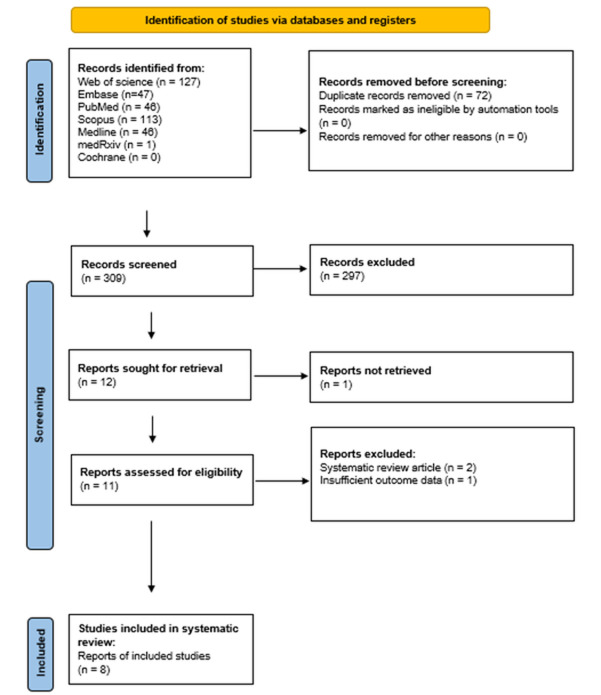 Figure 1
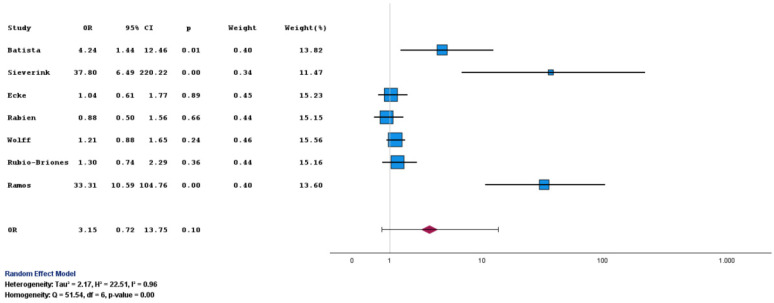 Figure 2
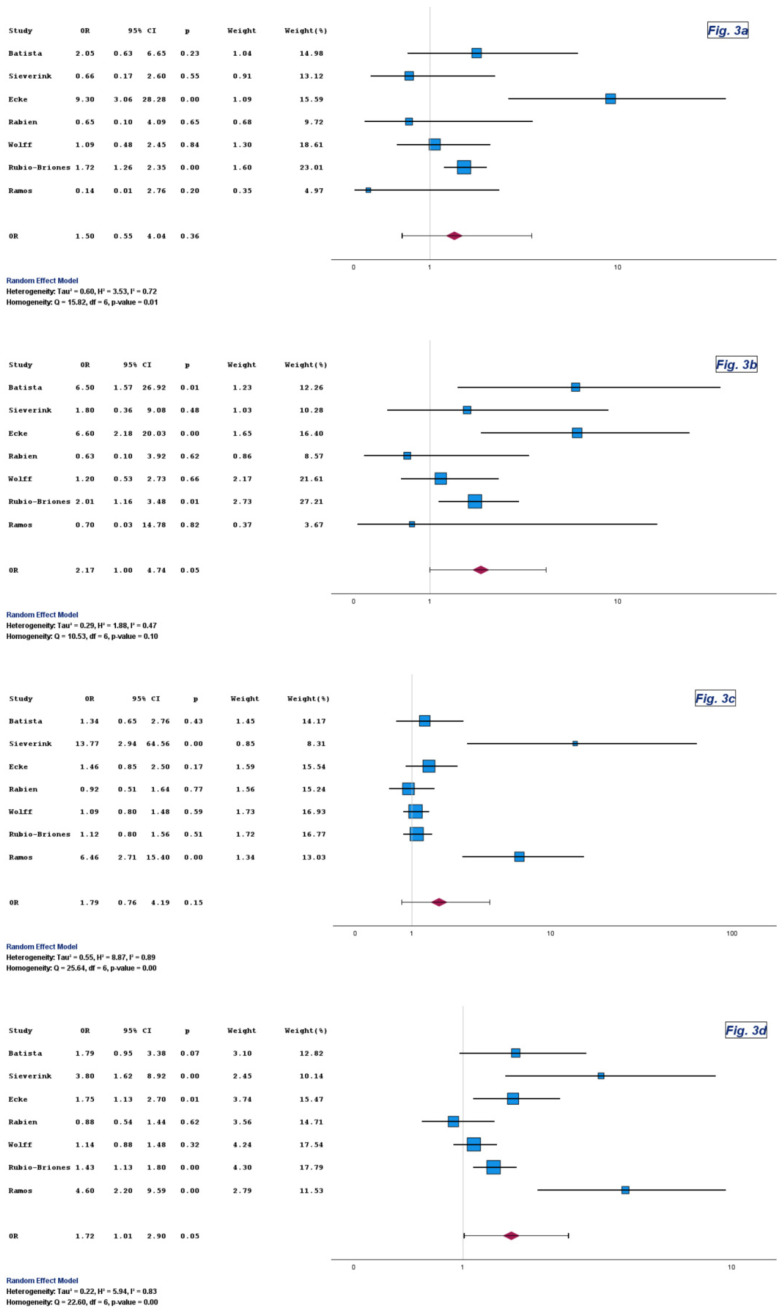 Figure 3
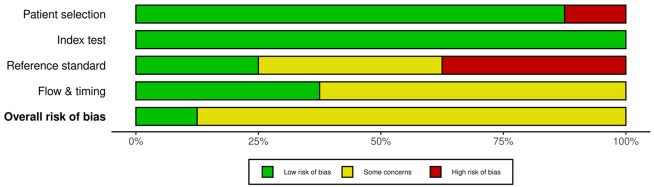 Figure 4
Peer Reviews
No public reviews on file for this paper yet. If you reviewed it on a platform where reviews are public (OpenReview, ICLR, NeurIPS, ICML), you can paste yours below so the community can read it here.
Videos
No videos yet. Explain this paper in a talk, walkthrough, or lecture? Add one.
Taxonomy
TopicsBladder and Urothelial Cancer Treatments · Urinary and Genital Oncology Studies · Esophageal Cancer Research and Treatment