Transition-Aware Decomposition of Single-Qudit Gates
Denis A. Drozhzhin, Evgeniy O. Kiktenko, Aleksey K. Fedorov, Anastasiia S. Nikolaeva

TL;DR
This paper introduces a method to efficiently break down quantum operations on d-level systems into allowed pulses, improving quantum computing with qudits.
Contribution
A resource-efficient algorithm is proposed for decomposing single-qudit operations into allowed pulses based on selection rules.
Findings
The algorithm ensures the number of pulses is at most d(d−1)/2 for arbitrary single-qudit operations.
The method is demonstrated for trapped ions like Yb+171, Ba+137, and Ca+40, and superconducting qudits.
The approach is relevant for two-qudit operations via efficient single-qudit gate decomposition.
Abstract
Quantum computation with d-level quantum systems, also known as qudits, benefits from the possibility to use a richer computational space compared to qubits. However, for an arbitrary qudit-based hardware platform, the issue is that a generic qudit operation has to be decomposed into the sequence of native operations—pulses that are adjusted to the transitions between two levels in a qudit. Typically, not all levels in a qudit are simply connected to each other due to specific selection rules. Moreover, the number of pulses plays a significant role, since each pulse takes a certain execution time and may introduce error. In this paper, we propose a resource-efficient algorithm to decompose single-qudit operations into the sequence of pulses that are allowed by qudit selection rules. Using the developed algorithm, the number of pulses is at most d(d−1)/2 for an arbitrary single-qudit…
Genes, proteins, chemicals, diseases, species, mutations and cell lines named across the full text — each resolved to its canonical identifier and authoritative record.
Click any figure to enlarge with its caption.
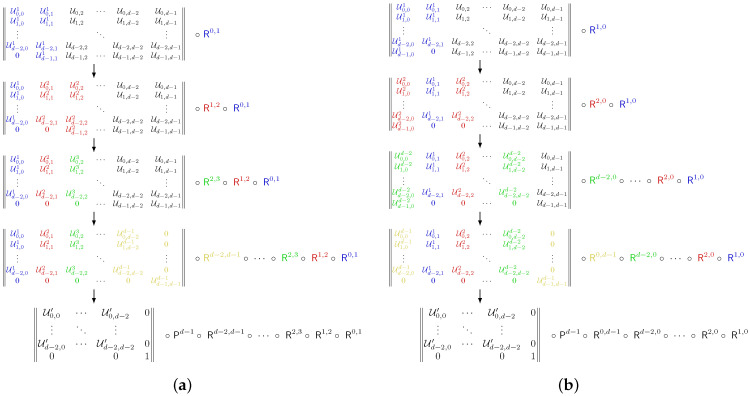 Figure 1
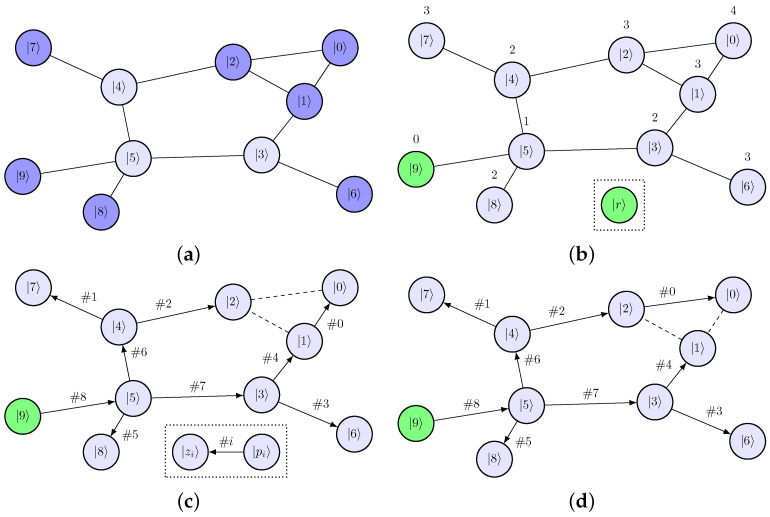 Figure 2
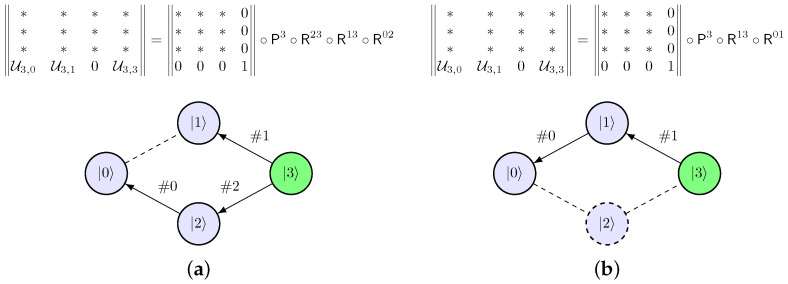 Figure 3
 Figure 4
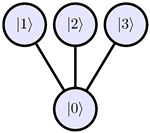 Figure 5
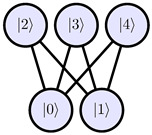 Figure 6
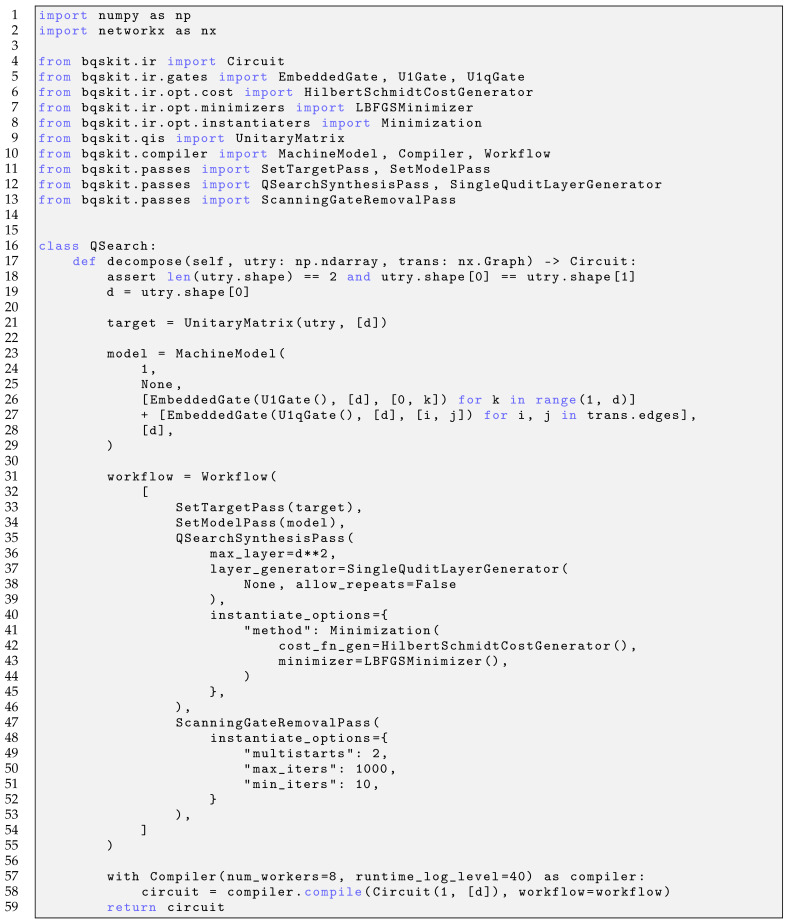 Figure 7
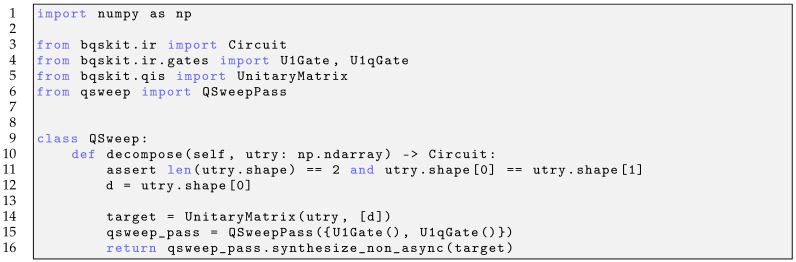 Figure 8
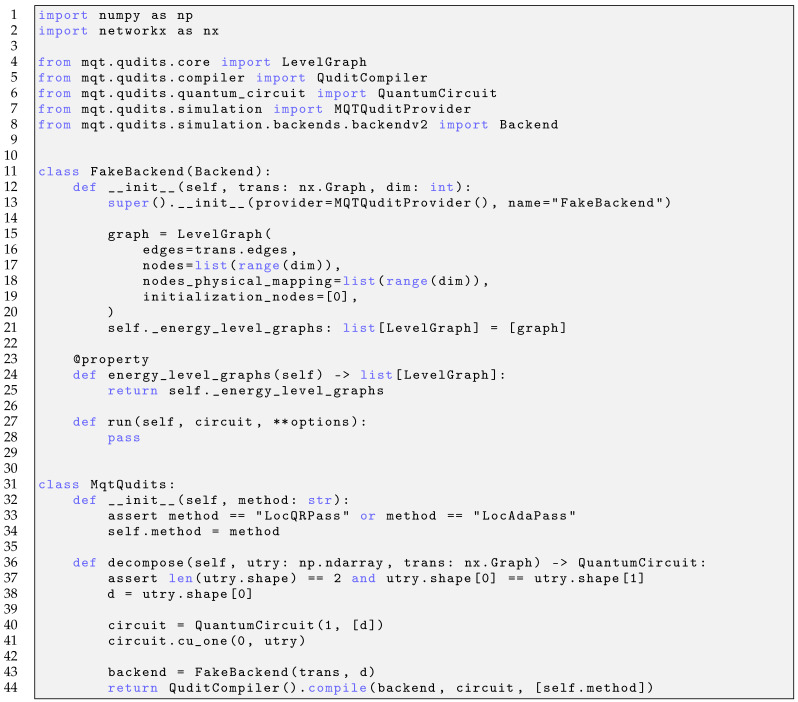 Figure 9
Peer Reviews
No public reviews on file for this paper yet. If you reviewed it on a platform where reviews are public (OpenReview, ICLR, NeurIPS, ICML), you can paste yours below so the community can read it here.
Videos
No videos yet. Explain this paper in a talk, walkthrough, or lecture? Add one.
Taxonomy
TopicsQuantum Information and Cryptography · Quantum Computing Algorithms and Architecture · Quantum and electron transport phenomena