Artificial Intelligence–Based Prediction of Subjective Refraction and Clinical Determinants of Prediction Error
Ozlem Candan, Irem Saglam, Gozde Orman, Nurten Unlu, Ayşe Burcu, Yusuf Candan

TL;DR
This study shows that AI can accurately predict eye refraction using routine data, potentially aiding eye exams.
Contribution
The novel use of routine non-cycloplegic autorefraction and keratometry data for AI-based refraction prediction is presented.
Findings
The model achieved high accuracy for spherical and cylindrical prediction (R2 = 0.987 and 0.933; MAE = 0.126 D and 0.137 D).
Astigmatic axis prediction had a mean absolute angular error of 4.65° (median, 0.96°).
Factors like steeper keratometry and greater objective cylindrical power were linked to reduced prediction accuracy.
Abstract
Background/Objectives: Subjective refraction is the clinical gold standard but is time-consuming and examiner-dependent. Most artificial intelligence (AI)-based approaches rely on specialized imaging or biometric data not routinely available. This study aimed to predict subjective refraction using only routine, non-cycloplegic autorefraction and keratometric data and to identify factors associated with reduced prediction accuracy. Methods: This retrospective study included 1856 eyes from 1006 patients. A multi-output histogram gradient-boosting model predicted subjective spherical equivalent, cylindrical power, and astigmatic axis. Performance was evaluated on an independent test dataset using R2 and mean absolute error, with circular statistics for axis prediction. Prediction failure was assessed using clinically relevant tolerance thresholds (sphere/cylinder ≤ 0.50 D; axis ≤ 10°) and…
Genes, proteins, chemicals, diseases, species, mutations and cell lines named across the full text — each resolved to its canonical identifier and authoritative record.
Click any figure to enlarge with its caption.
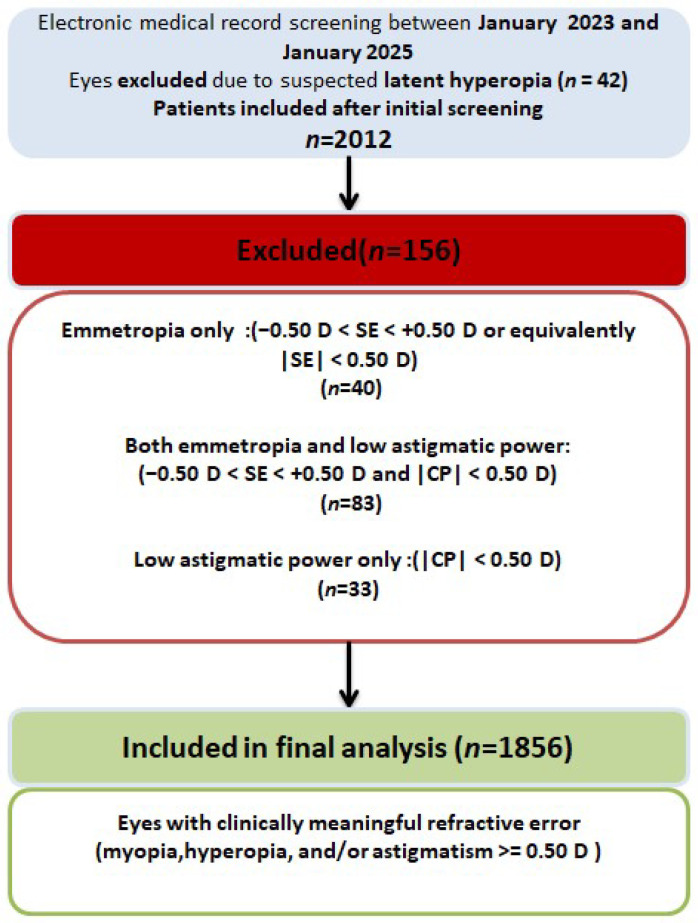 Figure 1
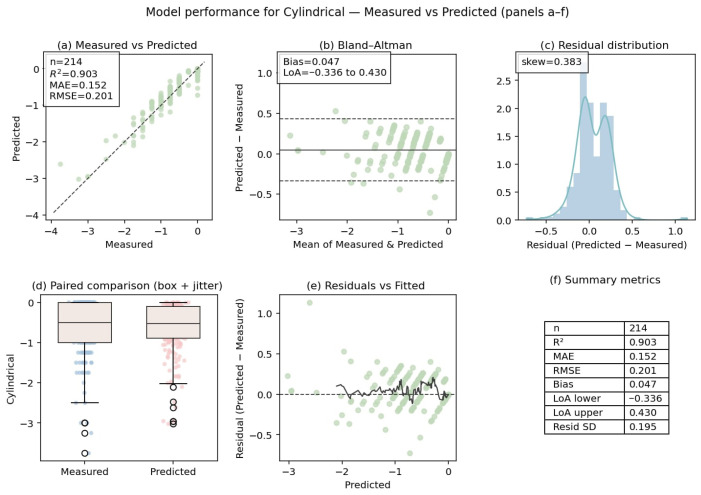 Figure 2
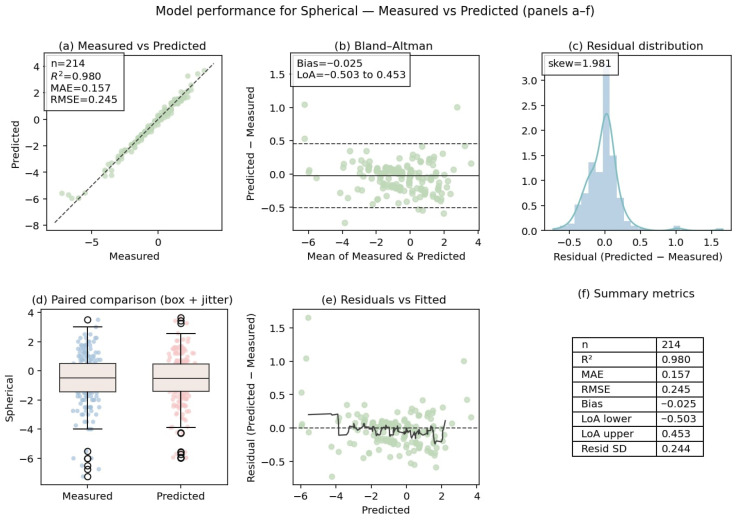 Figure 3
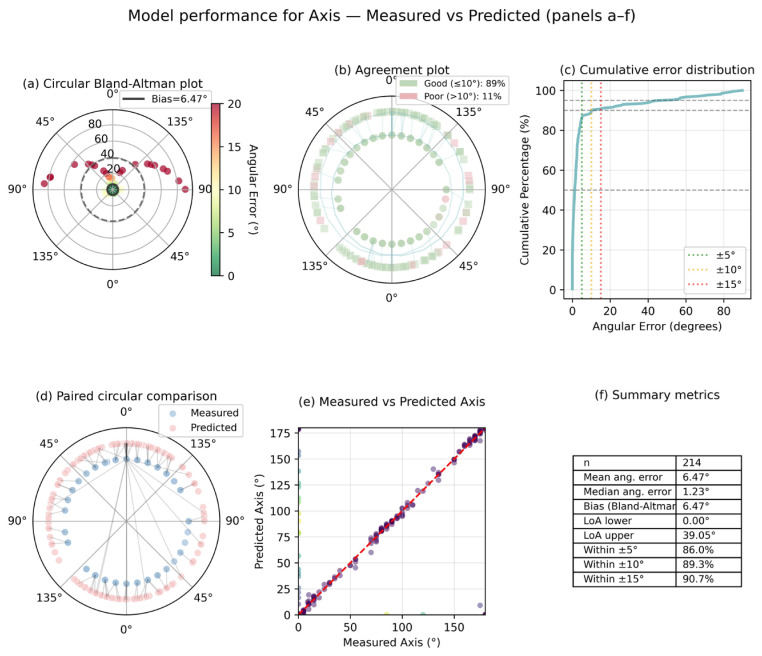 Figure 4
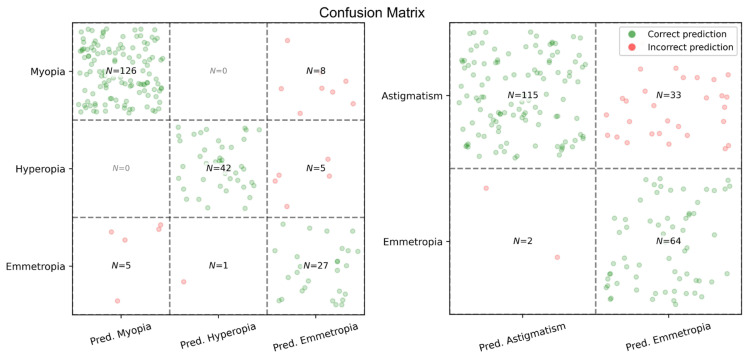 Figure 5
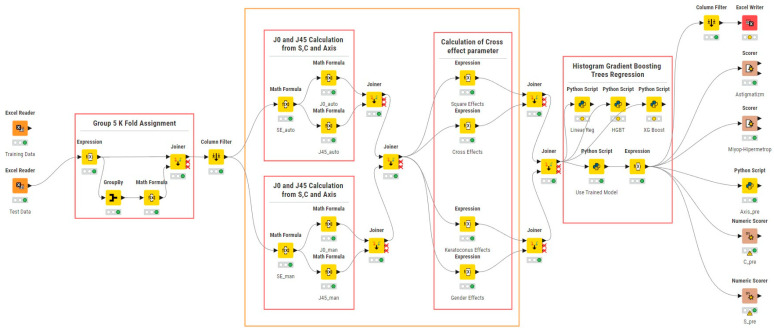 Figure 6
Peer Reviews
No public reviews on file for this paper yet. If you reviewed it on a platform where reviews are public (OpenReview, ICLR, NeurIPS, ICML), you can paste yours below so the community can read it here.
Videos
No videos yet. Explain this paper in a talk, walkthrough, or lecture? Add one.
Taxonomy
TopicsOphthalmology and Visual Impairment Studies · Corneal surgery and disorders · Glaucoma and retinal disorders