Secondary Displacement of Forearm Fractures in Children: When to Anticipate Remodeling and When to Intervene?
Kasper C. Roth, Linde Musters, Leon W. Diederix, Pim Edomskis, Christiaan J. A. van Bergen, Denise Eygendaal, Joost W. Colaris

TL;DR
The study finds that accepted secondary displacements in children's forearm fractures do not lead to worse long-term outcomes, suggesting a more lenient approach may be safe for certain cases.
Contribution
The study identifies specific predictors of long-term functional impairment in pediatric forearm fractures and challenges strict reduction criteria.
Findings
Accepted secondary displacements in both metaphyseal and diaphyseal forearm fractures did not lead to worse long-term functional outcomes.
Complete initial radial displacement, bicortical ulnar fractures, and older age at trauma are predictors of functional impairment.
A permissive approach to secondary displacements in skeletally immature children may reduce the need for surgical interventions.
Abstract
What are the main findings? •Accepted secondary displacements of both metaphyseal and diaphyseal forearm fractures did not lead to worse long-term functional outcomes.•Predictors of long-term functional impairment included complete initial displacement of the radius, bicortical ulnar fractures, and re-fractures for metaphyseal fractures, as well as older age at trauma for diaphyseal fractures. Accepted secondary displacements of both metaphyseal and diaphyseal forearm fractures did not lead to worse long-term functional outcomes. Predictors of long-term functional impairment included complete initial displacement of the radius, bicortical ulnar fractures, and re-fractures for metaphyseal fractures, as well as older age at trauma for diaphyseal fractures. What is the implication of the main finding? •A more permissive approach to accepted secondary displacements—particularly for…
Genes, proteins, chemicals, diseases, species, mutations and cell lines named across the full text — each resolved to its canonical identifier and authoritative record.
Click any figure to enlarge with its caption.
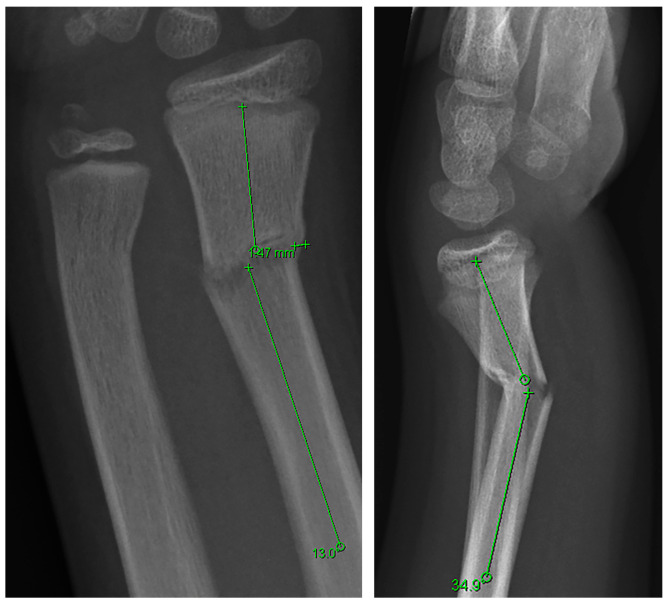 Figure 1
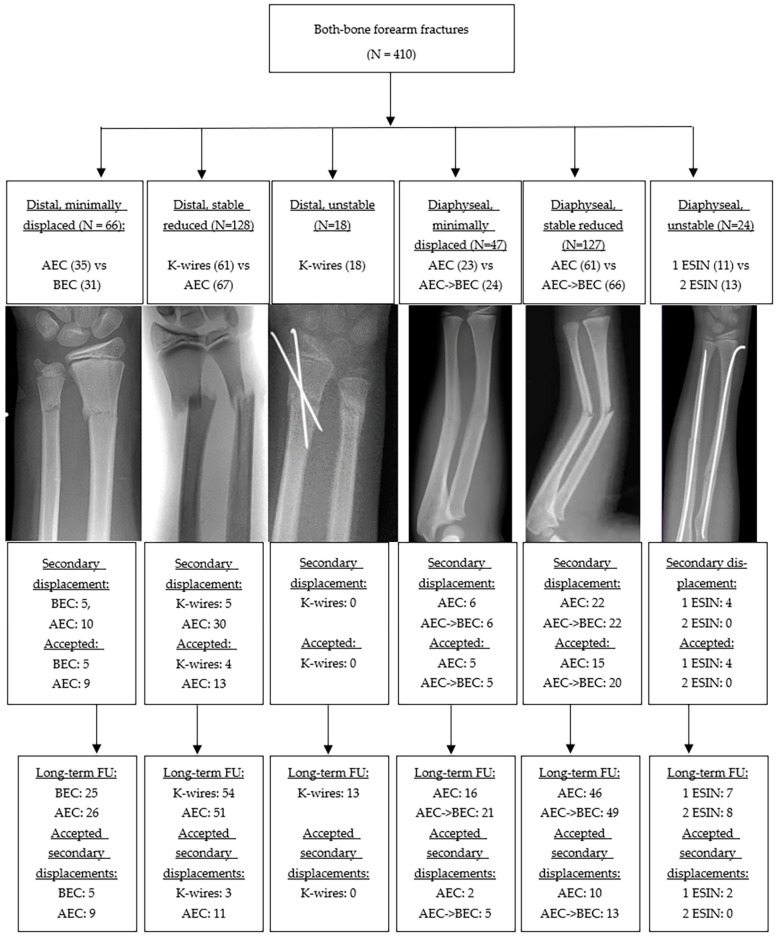 Figure 2
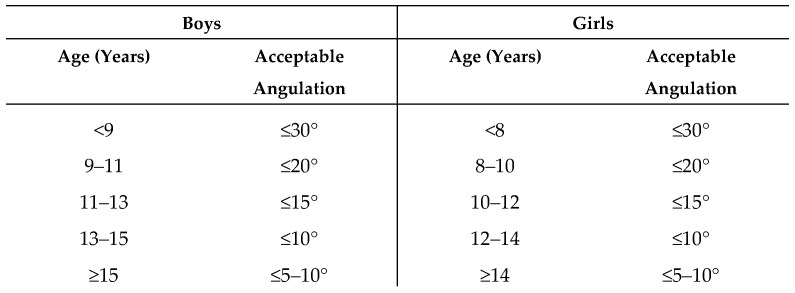 Figure 3
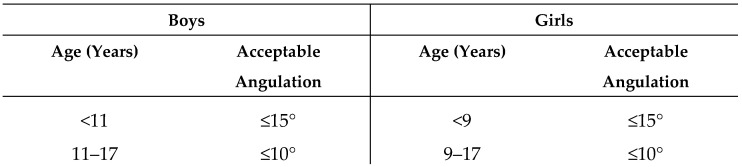 Figure 4
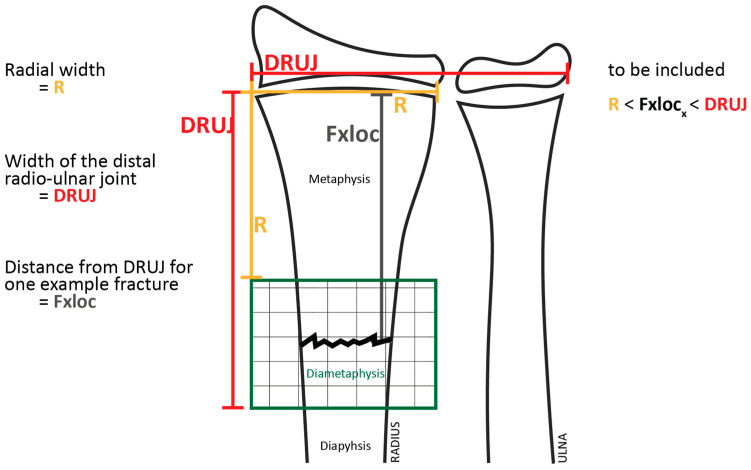 Figure 5
Peer Reviews
No public reviews on file for this paper yet. If you reviewed it on a platform where reviews are public (OpenReview, ICLR, NeurIPS, ICML), you can paste yours below so the community can read it here.
Videos
No videos yet. Explain this paper in a talk, walkthrough, or lecture? Add one.
Taxonomy
TopicsBone fractures and treatments · Orthopedic Surgery and Rehabilitation · Elbow and Forearm Trauma Treatment