Impact of Green Extraction Methods for Algae and Aquatic Plants on Amino Acid Composition and Taste Detection Using Electronic Tongue Analysis
Lyket Chuon, Witoon Prinyawiwatkul, Amporn Sae-Eaw, Peerapong Wongthahan

TL;DR
This study compares green extraction methods for algae and aquatic plants, finding that extraction method and material compatibility strongly influence protein yield, amino acid content, and taste profiles.
Contribution
The study introduces a comparative analysis of green extraction methods for algae and aquatic plants, linking amino acid profiles to taste detection using electronic tongue analysis.
Findings
Wolffia extracted by maceration yielded the highest protein compared to other methods and commercial seaweed.
Higher levels of glutamic and aspartic acids were associated with umami taste, while histidine contributed to bitter taste.
Extraction efficiency was more influenced by method-material compatibility than raw material alone.
Abstract
The growing demand for sustainable protein sources has increased interest in algae and aquatic plants as alternatives to animal-derived proteins. These resources are rich in protein, amino acids, and umami compounds but require suitable extraction methods to maximize yield and quality. This study compared three green extraction techniques—maceration (MAE, 80 °C, 2 h), ultrasound-assisted extraction (UAE, 750 W, 20 kHz, 50% amplitude, 35 °C, pH 12, 1 h), and enzyme-assisted extraction (EAE, 5% β-glucanase/flavourzyme, 55 °C, pH 6.5, 1 h)—on five raw materials: wakame (commercial seaweed), hair seaweed, sea lettuce, water silk algae, and Wolffia. The result revealed that both raw materials and extraction methods significantly (p < 0.05) affected protein yield, amino acid, physicochemical properties, and taste detection with e-tongue. Wolffia extracted by MAE yielded the highest protein…
Genes, proteins, chemicals, diseases, species, mutations and cell lines named across the full text — each resolved to its canonical identifier and authoritative record.
Click any figure to enlarge with its caption.
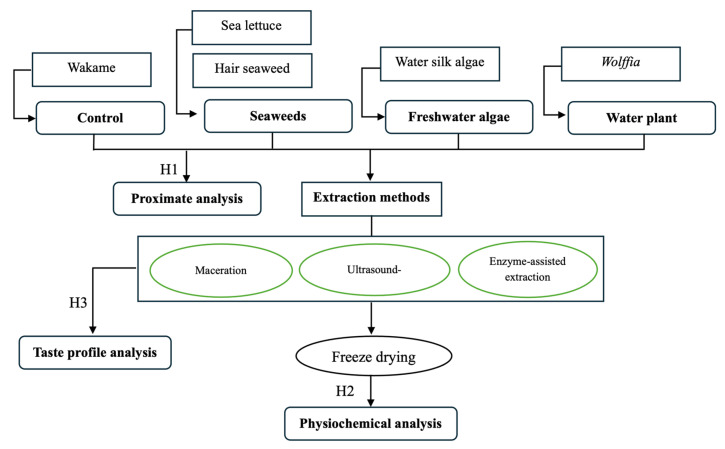 Figure 1
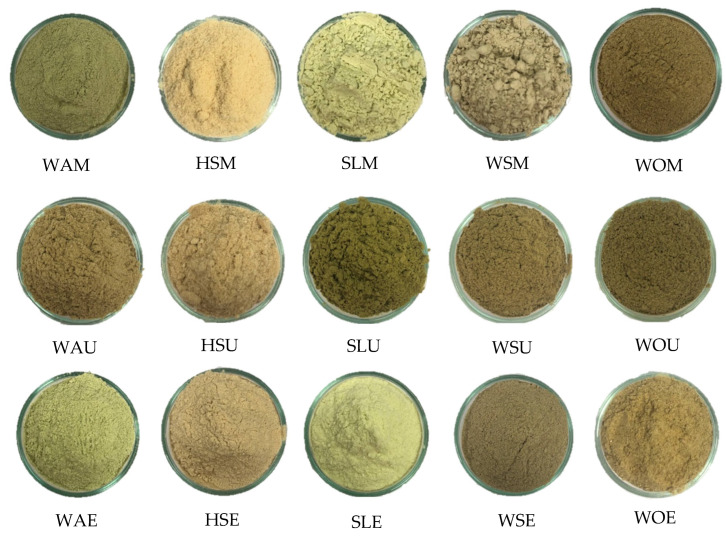 Figure 2
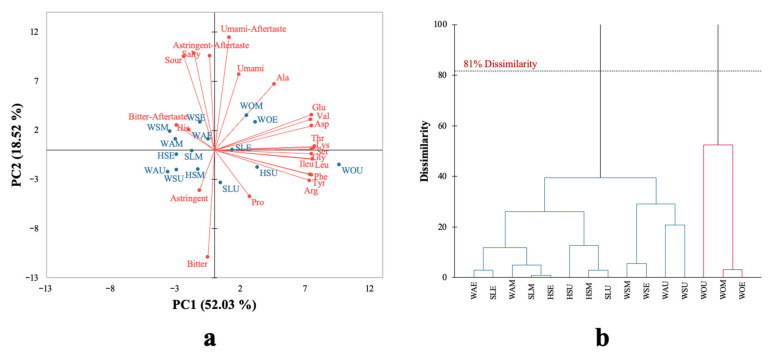 Figure 3
Peer Reviews
No public reviews on file for this paper yet. If you reviewed it on a platform where reviews are public (OpenReview, ICLR, NeurIPS, ICML), you can paste yours below so the community can read it here.
Videos
No videos yet. Explain this paper in a talk, walkthrough, or lecture? Add one.
Taxonomy
TopicsAdvanced Chemical Sensor Technologies · Biochemical Analysis and Sensing Techniques · Biopolymer Synthesis and Applications