Reassessing China’s Regional Modernization Based on a Grey-Based Evaluation Framework and Spatial Disparity Analysis
Wenhao Zhou, Hongxi Lin, Zhiwei Zhang, Siyu Lin

TL;DR
This paper evaluates modernization in Chinese provinces using a new framework, revealing regional disparities and offering policy insights.
Contribution
A novel grey-based evaluation framework integrating multiple analytical methods to assess Chinese-style modernization.
Findings
Eastern provinces lead in modernization but show internal volatility.
Western provinces face widening disparities despite regional clustering.
The framework provides insights for targeted policy interventions.
Abstract
Understanding regional disparities in Chinese modernization is essential for achieving coordinated and sustainable development. This study develops a multi-dimensional evaluation framework, integrating grey relational analysis, entropy weighting, and TOPSIS to assess provincial modernization across China from 2018 to 2023. The framework operationalizes Chinese-style modernization through five dimensions: population quality, economic strength, social development, ecological sustainability, innovation and governance, capturing both material and institutional aspects of development. Using K-Means clustering, kernel density estimation, and convergence analysis, the study examines spatial and temporal patterns of modernization. Results reveal pronounced regional heterogeneity: eastern provinces lead in overall modernization but display internal volatility, central provinces exhibit gradual…
Click any figure to enlarge with its caption.
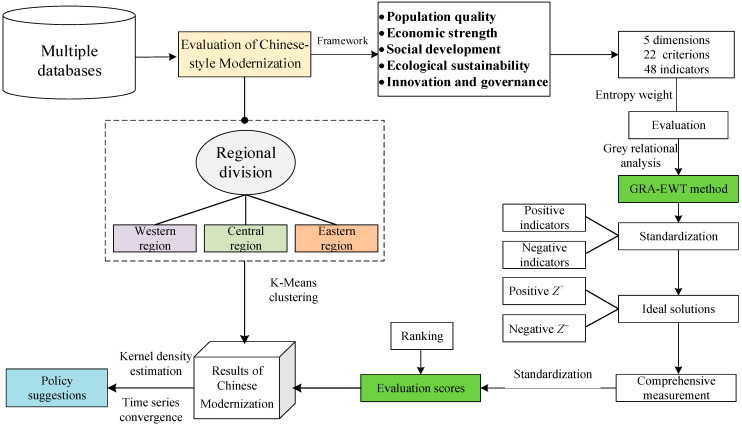 Figure 1
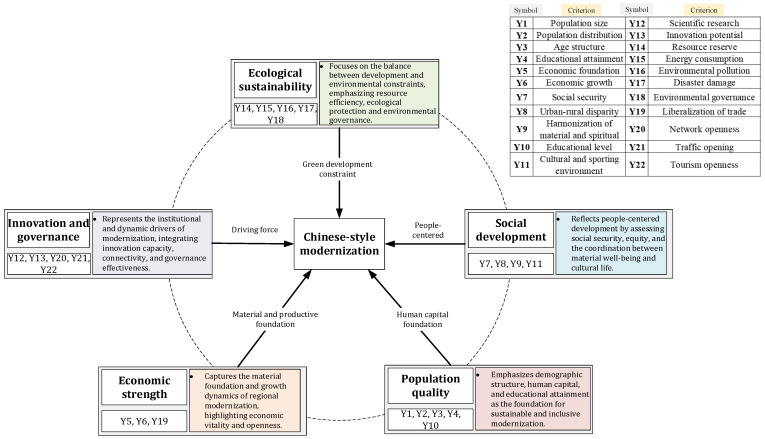 Figure 2
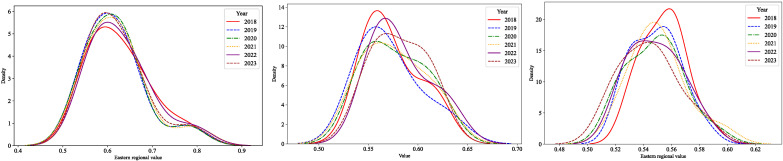 Figure 3
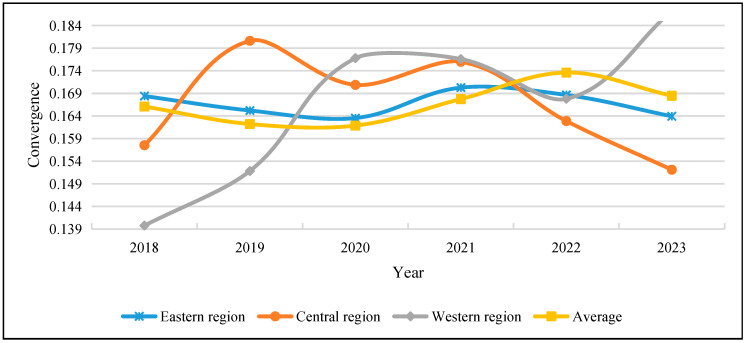 Figure 4
Peer Reviews
No public reviews on file for this paper yet. If you reviewed it on a platform where reviews are public (OpenReview, ICLR, NeurIPS, ICML), you can paste yours below so the community can read it here.
Videos
No videos yet. Explain this paper in a talk, walkthrough, or lecture? Add one.
Taxonomy
TopicsGrey System Theory Applications · Immune responses and vaccinations · Diverse Interdisciplinary Research Innovations