A Screening Method for Determining Left Ventricular Systolic Function Based on Spectral Analysis of a Single-Channel Electrocardiogram Using Machine Learning Algorithms
Natalia Kuznetsova, Aleksandr Suvorov, Daria Gognieva, Zaki Fashafsha, Dmitrii Podgalo, Dinara Mesitskaya, Dmitry Shchekochikhin, Vsevolod Sedov, Petr Chomakhidze, Philippe Kopylov

TL;DR
This paper introduces a machine learning-based method to screen for heart dysfunction using a single ECG channel, achieving high diagnostic accuracy.
Contribution
A novel screening method for left ventricular systolic dysfunction using single-channel ECG and machine learning is proposed.
Findings
Lasso regression achieved 79.2% sensitivity and 81.7% specificity for detecting reduced ejection fraction.
Extra Trees model showed 83.1% sensitivity and 82.7% specificity for severe ejection fraction reduction.
External testing confirmed 98% accuracy, 98.4% specificity, and 93.5% sensitivity.
Abstract
Background and Objectives: Given the non-specificity of symptoms and complex methods for diagnosing heart failure, which are not applicable in screening, it is of great importance to develop a simple screening method for identifying systolic dysfunction of the heart based on available biosignals, one of which is a single-channel electrocardiogram (ECG). The method does not require the participation of medical staff. Aim: To create a screening model for detecting left ventricular systolic dysfunction in a complex analysis of single-channel ECG parameters using machine learning algorithms Methods: We included 624 patients aged 18 to 90 years. All patients underwent echocardiography and single-channel I-lead ECG recording using a portable electrocardiograph. The left ventricle ejection fraction (LV EF) was determined in the apical 2-chamber and 4-chamber view using the BIPLANE Simpson…
Genes, proteins, chemicals, diseases, species, mutations and cell lines named across the full text — each resolved to its canonical identifier and authoritative record.
Click any figure to enlarge with its caption.
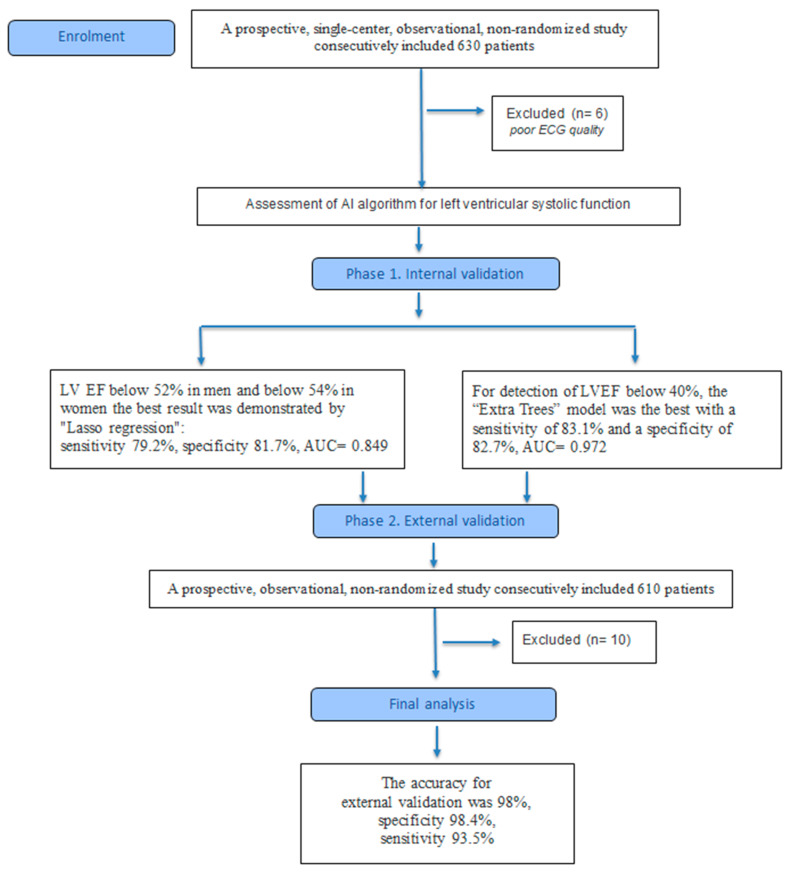 Figure 1
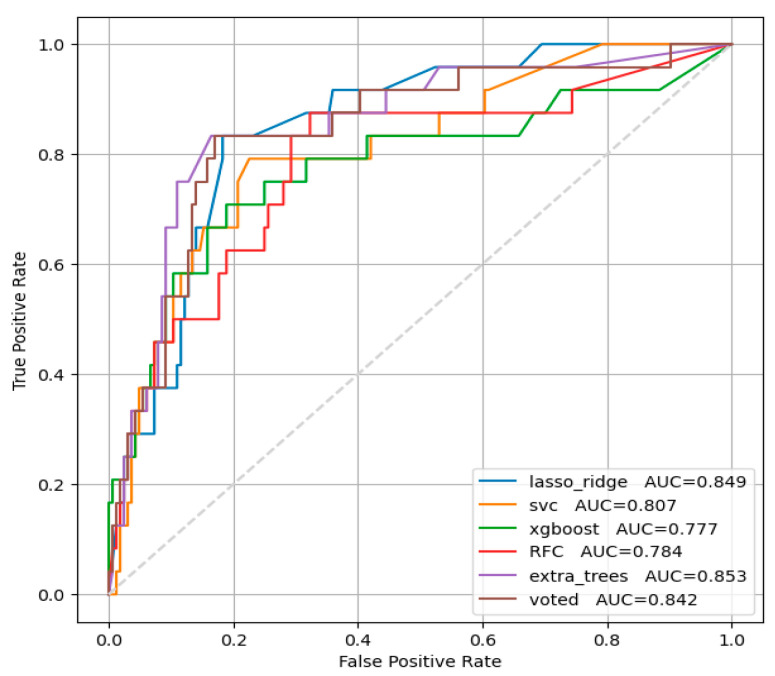 Figure 2
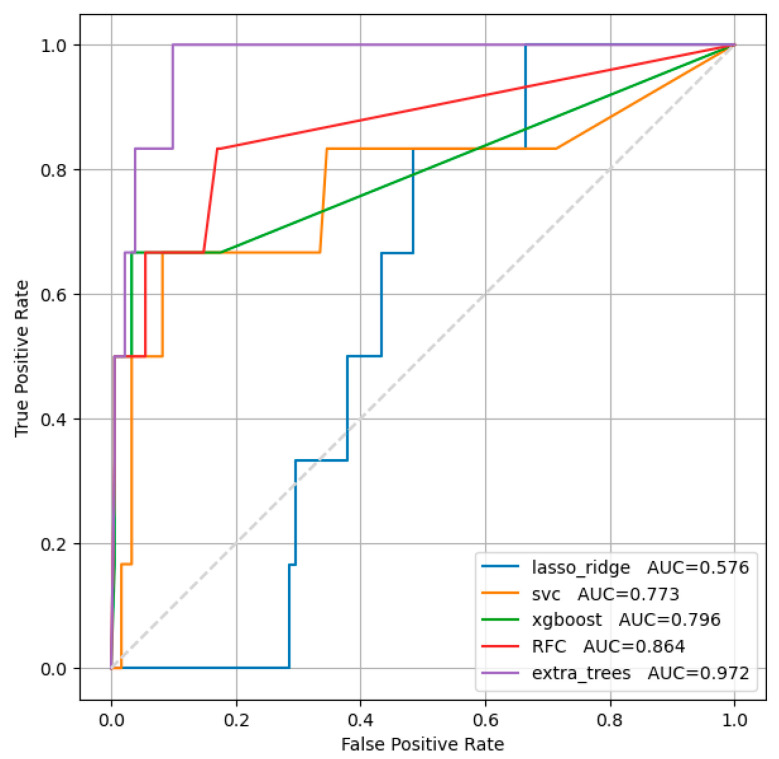 Figure 3
Peer Reviews
No public reviews on file for this paper yet. If you reviewed it on a platform where reviews are public (OpenReview, ICLR, NeurIPS, ICML), you can paste yours below so the community can read it here.
Videos
No videos yet. Explain this paper in a talk, walkthrough, or lecture? Add one.
Taxonomy
TopicsECG Monitoring and Analysis · Heart Rate Variability and Autonomic Control · Cardiac electrophysiology and arrhythmias