AI-Based Brain Volumetry Without MPRAGE? Evaluation of Synthetic T1-MPRAGE from 2D T2/FLAIR
Ludwig Singer, Tim Alexius Möhle, Angelika Mennecke, Konstantin Huhn, Veit Rothhammer, Manuel Alexander Schmidt, Arnd Doerfler, Stefan Lang

TL;DR
This study shows that AI can generate synthetic brain scans from commonly used clinical imaging sequences, allowing accurate brain volume measurements typically requiring specialized scans.
Contribution
The novel use of AI to synthesize MPRAGE-like images from 2D T2/FLAIR sequences for accurate brain volumetry.
Findings
Synthetic MPRAGE-like images showed strong correlation with real MPRAGE for total brain volume (r = 0.99 in controls).
White matter and hippocampal volumes also demonstrated high agreement with real MPRAGE scans.
The method works reliably for both healthy individuals and multiple sclerosis patients.
Abstract
Background: Automated AI-based brain volumetry is increasingly used in clinical practice. T1-weighted sequences (e.g., MPRAGE) are considered the current state-of-the art. However, due to faster acquisition and higher in-plane resolution, 2D anisotropic sequences are often preferred in clinical routine. However, these sequences cannot be processed with currently available AI-volumetry software. Thus, we here aimed to evaluate volumetric data from synthetic MPRAGE-like sequences (mprAIge). Methods: We analyzed 412 datasets (206 conventional MPRAGE and 206 T2w/FLAIR) from healthy volunteers (n = 36) and patients with multiple sclerosis (n = 140). Synthetic mprAIge was generated using SynthSR-CNN and assessed via assemblyNET on the volBrain platform. Total brain volume (TBV), gray and white matter volume (GMV/WMV), and key substructures were compared between mprAIge and conventional…
Genes, proteins, chemicals, diseases, species, mutations and cell lines named across the full text — each resolved to its canonical identifier and authoritative record.
Click any figure to enlarge with its caption.
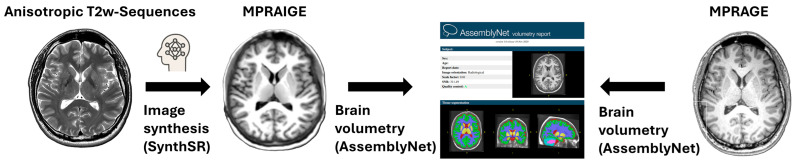 Figure 1
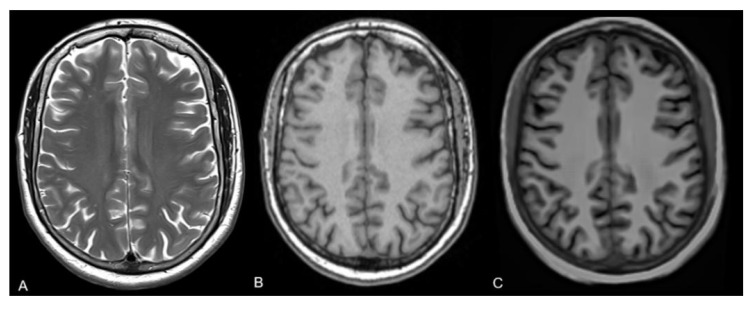 Figure 2
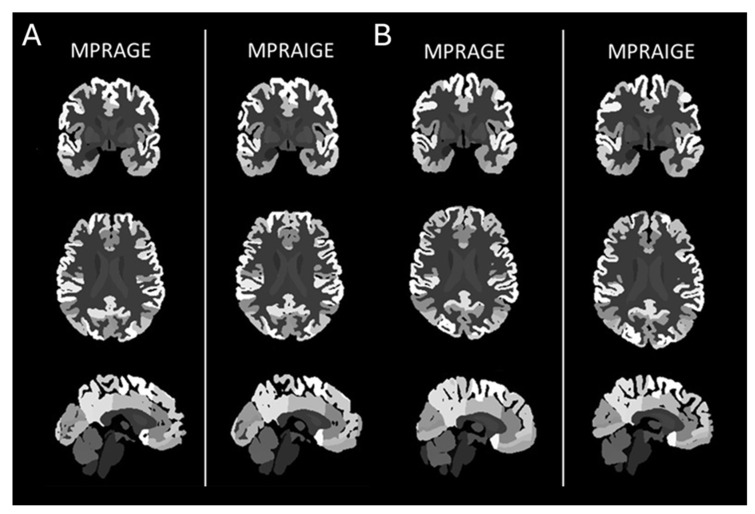 Figure 3
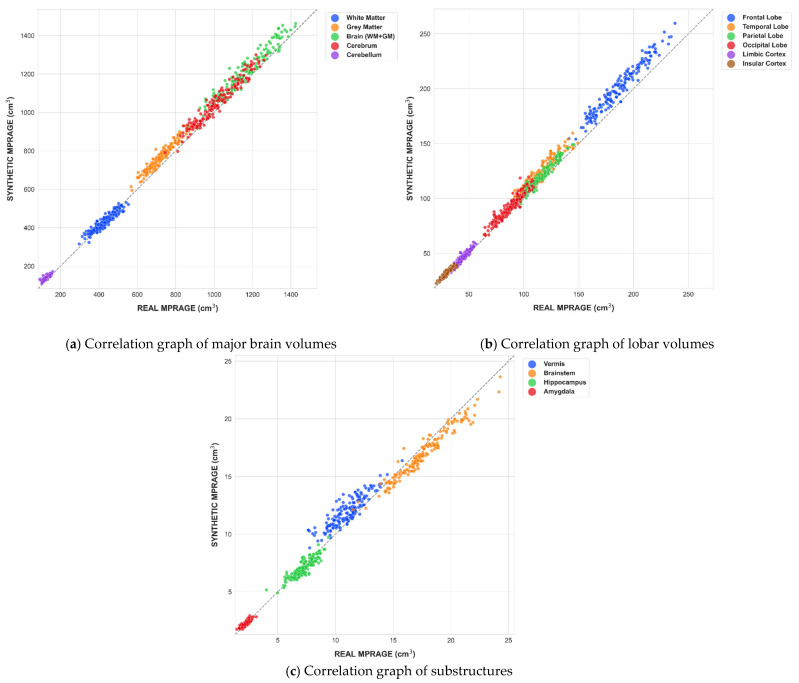 Figure 4
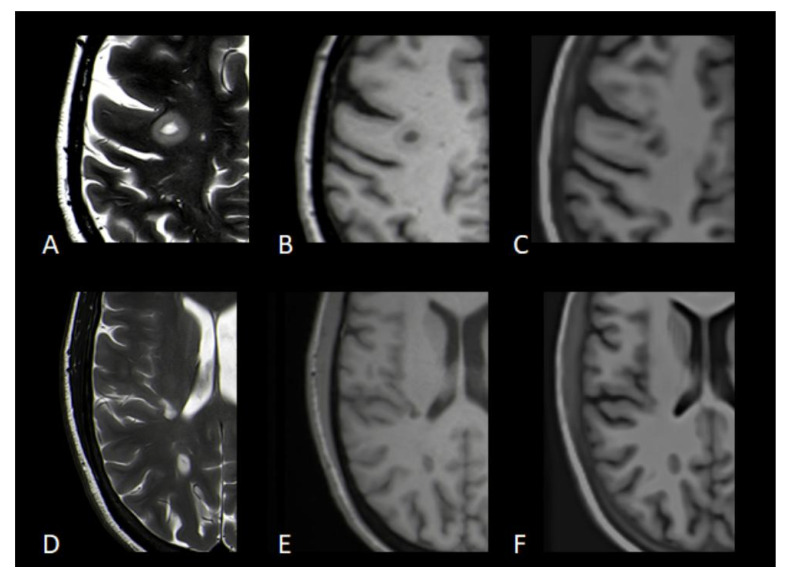 Figure 5
Peer Reviews
No public reviews on file for this paper yet. If you reviewed it on a platform where reviews are public (OpenReview, ICLR, NeurIPS, ICML), you can paste yours below so the community can read it here.
Videos
No videos yet. Explain this paper in a talk, walkthrough, or lecture? Add one.
Taxonomy
TopicsMultiple Sclerosis Research Studies · Glioma Diagnosis and Treatment · Dementia and Cognitive Impairment Research