HSP90α and KLK6 Coregulate Stress-Induced Prostate Cancer Cell Motility
Katelyn L. O’Neill, Johnny W. Zigmond, Raymond Bergan

TL;DR
The study reveals how cellular stress in prostate cancer cells leads to a new pathway involving HSP90α and KLK6 that controls cell movement and protease activity.
Contribution
The paper identifies a novel extracellular stress-response pathway involving HSP90α and KLK6 that regulates MMP-2 activity and prostate cancer cell motility.
Findings
Stress increases extracellular HSP90α but decreases MMP-2 activity in prostate cancer cells.
Stress-induced KLK6 reduces MMP-2 activity, which can be reversed by HSP90α when KLK6 is inhibited.
The study shows that KLK6 is a key extracellular protease that suppresses MMP-2 activity under stress conditions.
Abstract
What are the main findings? Cellular stress leads to increased HSP90α, yet decreased MMP-2-dependent cell motility in PCa.Decreased MMP-2 activity is due to stress-induced extracellular KLK6 and can be rescued by extracellular HSP90α upon KLK6 inhibition. Cellular stress leads to increased HSP90α, yet decreased MMP-2-dependent cell motility in PCa. Decreased MMP-2 activity is due to stress-induced extracellular KLK6 and can be rescued by extracellular HSP90α upon KLK6 inhibition. What are the implications of the main findings? This study identifies a novel stress-response pathway that regulates MMP-2 activity and cell motility.Enhanced understanding of cancer cell motility in the context of stress will better inform patient risk stratification, tailored care, and development of precision therapeutics. This study identifies a novel stress-response pathway that regulates MMP-2…
Genes, proteins, chemicals, diseases, species, mutations and cell lines named across the full text — each resolved to its canonical identifier and authoritative record.
Click any figure to enlarge with its caption.
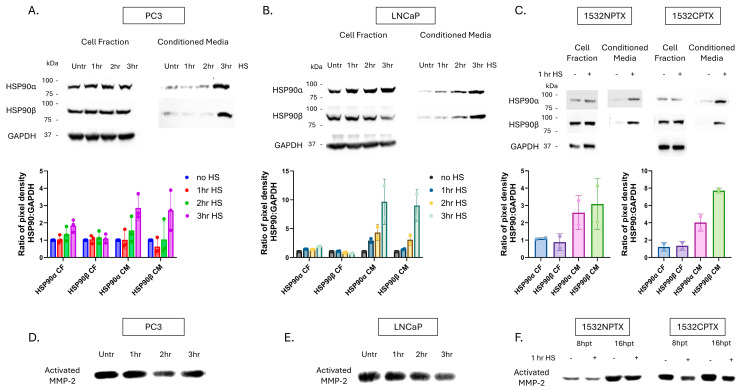 Figure 1
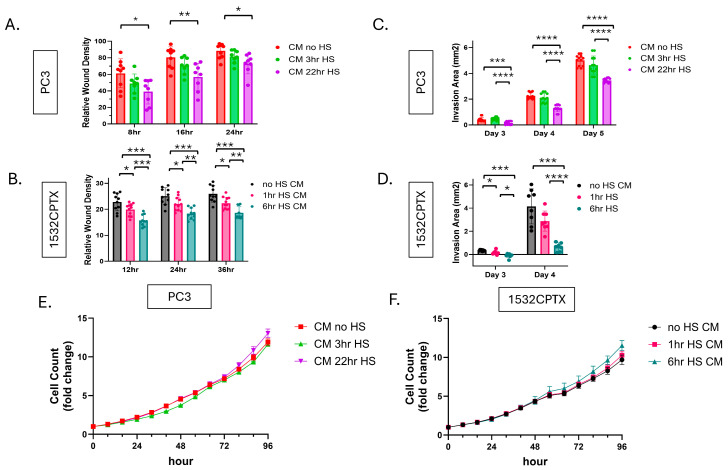 Figure 2
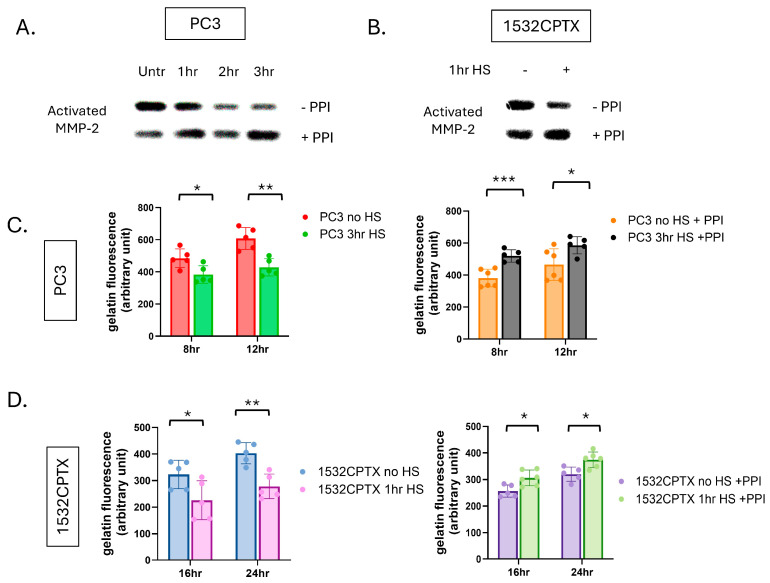 Figure 3
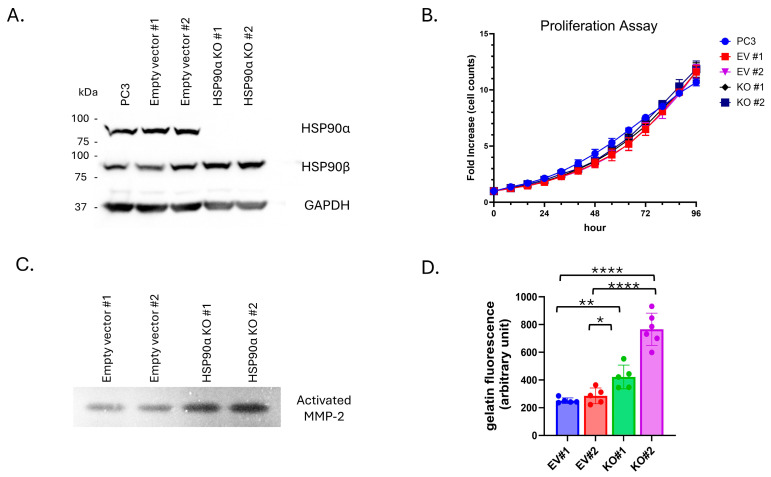 Figure 4
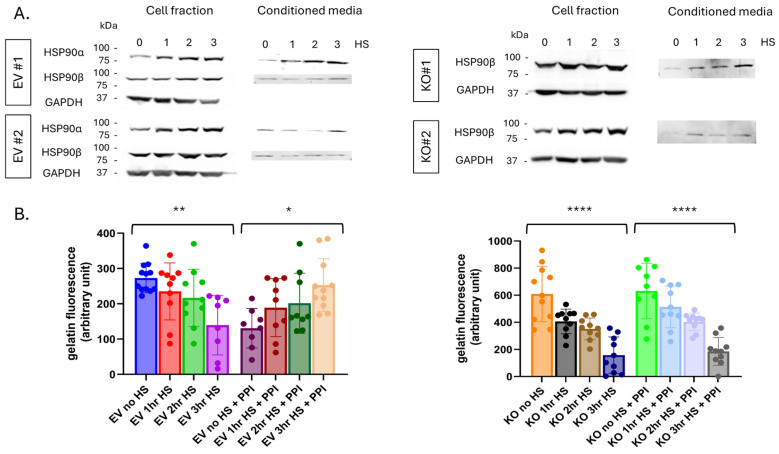 Figure 5
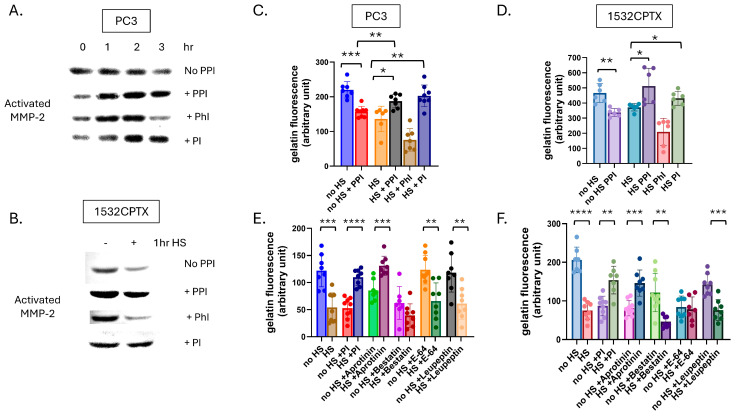 Figure 6
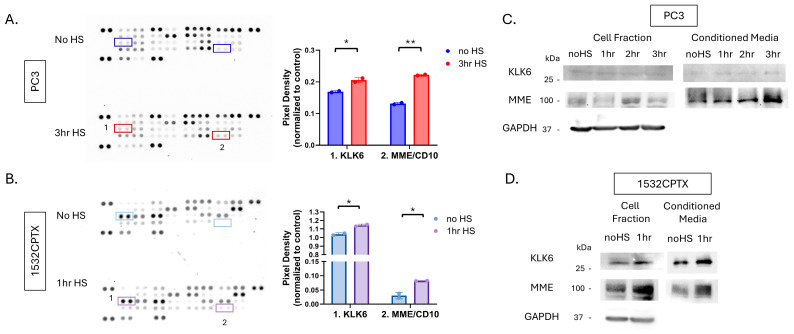 Figure 7
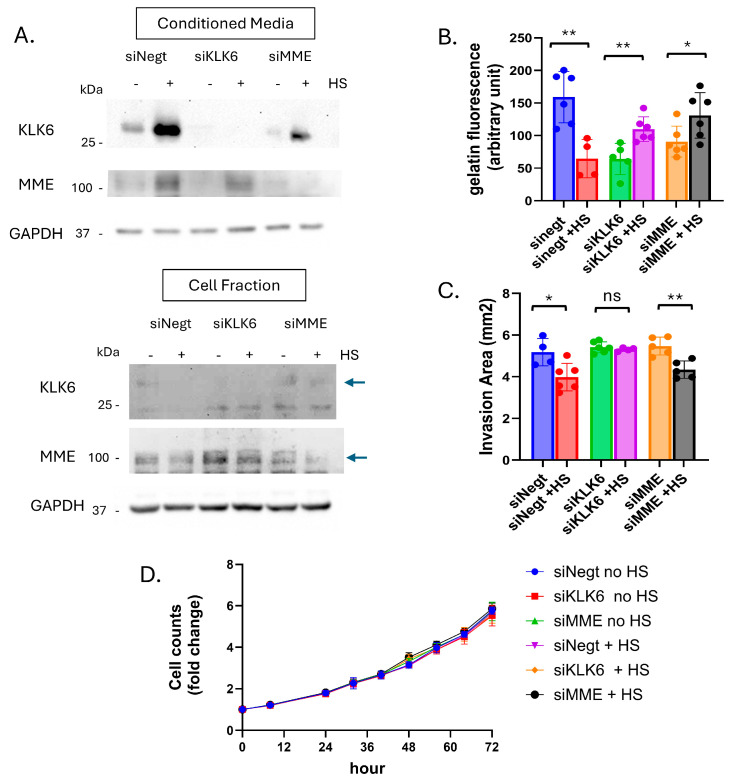 Figure 8
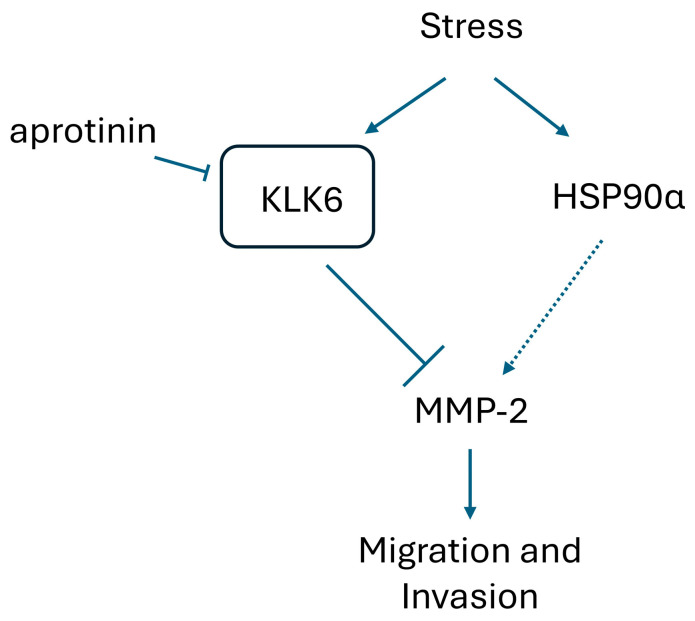 Figure 9
Peer Reviews
No public reviews on file for this paper yet. If you reviewed it on a platform where reviews are public (OpenReview, ICLR, NeurIPS, ICML), you can paste yours below so the community can read it here.
Videos
No videos yet. Explain this paper in a talk, walkthrough, or lecture? Add one.
Taxonomy
TopicsProtease and Inhibitor Mechanisms · Coagulation, Bradykinin, Polyphosphates, and Angioedema · Heat shock proteins research