Diagnostic Value of Serum and Salivary Podoplanin as Clinical Biomarkers for Distinguishing Oral Cancer from Oral Leukoplakia
Hafize Uzun, Guven Bozarslan, Seyma Dumur, Naile Fevziye Misirlioglu, Mehmet Nuri Elgormus, Canan Duvarcı, Remise Gelisgen, Aysegul Batioglu Karaaltin, Yetkin Zeki Yilmaz

TL;DR
This study shows that measuring podoplanin in blood and saliva can help distinguish oral cancer from benign conditions like leukoplakia, offering a non-invasive diagnostic tool.
Contribution
The study introduces salivary podoplanin as a non-invasive biomarker for early detection of oral cancer and risk stratification of premalignant lesions.
Findings
Serum and salivary podoplanin levels were significantly higher in oral cancer patients compared to controls and leukoplakia patients.
Salivary podoplanin showed excellent diagnostic accuracy with high sensitivity and specificity for detecting oral cancer.
Podoplanin levels increased with the severity of epithelial dysplasia in leukoplakia, indicating its role in malignant transformation.
Abstract
Objective: This study aimed to evaluate serum and salivary podoplanin (PDPN) levels in patients with oral cancer (OC) and oral leukoplakia (OL) and to investigate their potential role as diagnostic biomarkers in distinguishing between these conditions. Materials and Method: Ninety participants were enrolled: 30 healthy controls, 30 patients with OL, and 30 patients with histopathologically confirmed OC. All cases were recruited from the Department of Otorhinolaryngology, Cerrahpaşa Medical Faculty and Istanbul Atlas University Hospital. Demographic characteristics, comorbidities, and biochemical parameters were recorded. Serum and salivary PDPN levels were measured using the ELISA method. Results: Serum PDPN levels were significantly higher in the OC group (3.25 ± 0.80 ng/mL) compared with both OL (1.85 ± 0.56 ng/mL) and controls (0.98 ± 0.42 ng/mL) (p < 0.001). Salivary PDPN levels…
Genes, proteins, chemicals, diseases, species, mutations and cell lines named across the full text — each resolved to its canonical identifier and authoritative record.
Click any figure to enlarge with its caption.
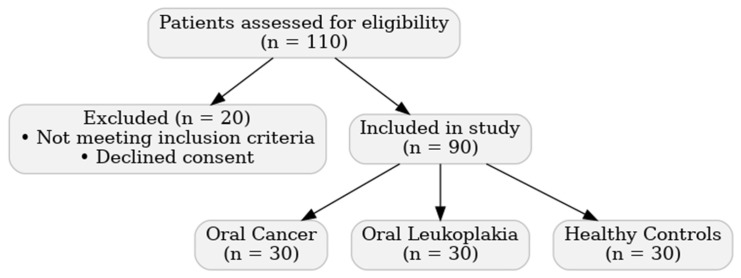 Figure 1
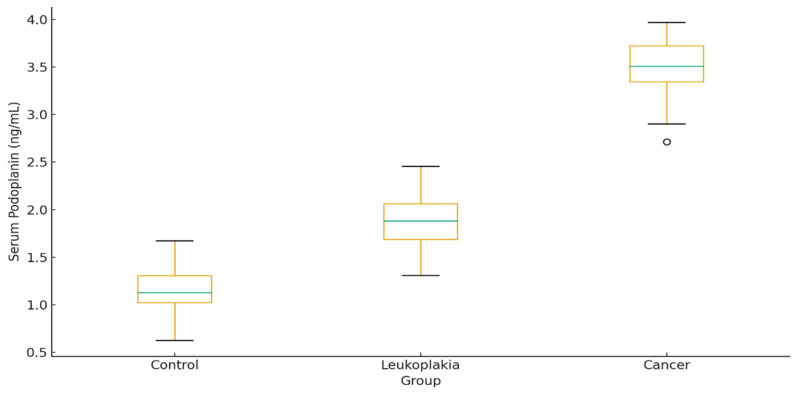 Figure 2
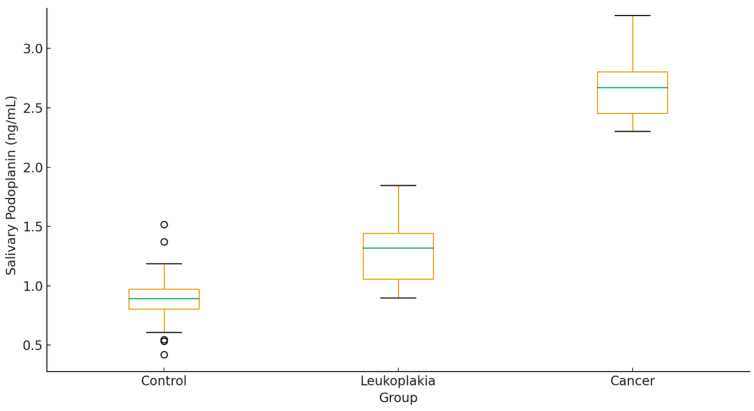 Figure 3
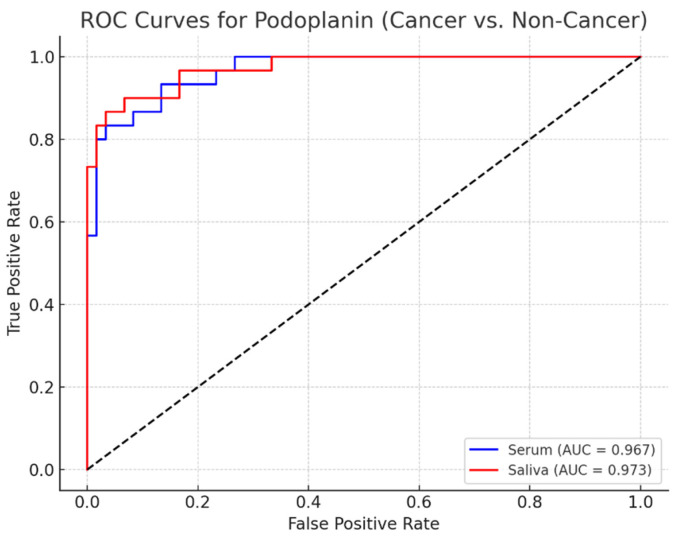 Figure 4
Peer Reviews
No public reviews on file for this paper yet. If you reviewed it on a platform where reviews are public (OpenReview, ICLR, NeurIPS, ICML), you can paste yours below so the community can read it here.
Videos
No videos yet. Explain this paper in a talk, walkthrough, or lecture? Add one.
Taxonomy
TopicsLymphatic System and Diseases · Oral Health Pathology and Treatment · Salivary Gland Disorders and Functions