The Value of High-Frequency Ultrasound in the Evaluation of Cutaneous Rosai-Dorfman Disease: A Case Series and Literature Review
Leyan Yang, Minjie Shu, Shuqing Sheng, Haoxuan Liu, Jinyi Deng, Yujing Zhao, Qiao Wang, Lehang Guo

TL;DR
This study explores how high-frequency ultrasound can help evaluate a rare skin condition called cutaneous Rosai-Dorfman disease, offering a non-invasive way to monitor treatment and guide decisions.
Contribution
The study introduces high-frequency ultrasound as a complementary non-invasive tool for evaluating and monitoring cutaneous Rosai-Dorfman disease.
Findings
High-frequency ultrasound (HFUS) can delineate dermal and subcutaneous involvement in CRDD cases.
HFUS can assess lesion morphology, contour regularity, border definition, and vascularity.
HFUS is useful for monitoring treatment response by showing changes in lesion size and vascularity.
Abstract
Background and Clinical Significance: Cutaneous Rosai-Dorfman disease (CRDD) is a rare, benign histiocytic proliferative disorder, accounting for approximately 3% of all Rosai-Dorfman disease (RDD) cases. Currently, the diagnosis of CRDD relies on invasive pathological examination due to the absence of reliable non-invasive alternatives. This case series evaluates the potential utility of high-frequency ultrasound (HFUS) as an adjunctive diagnostic tool for CRDD. Case Presentation: We present three CRDD cases, correlating HFUS features with histopathology. All cases showed hypoechoic lesions with varying infiltration depths and morphologies, though no specific diagnostic features were identified. HFUS clearly delineated involvement of the dermal and subcutaneous layers, assessed morphological characteristics like contour regularity and border definition, and evaluated vascularity. This…
Genes, proteins, chemicals, diseases, species, mutations and cell lines named across the full text — each resolved to its canonical identifier and authoritative record.
Click any figure to enlarge with its caption.
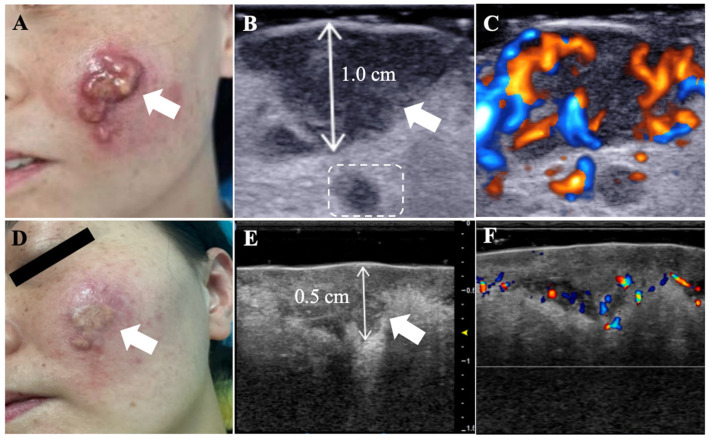 Figure 1
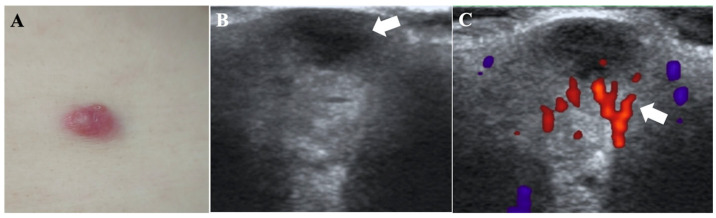 Figure 2
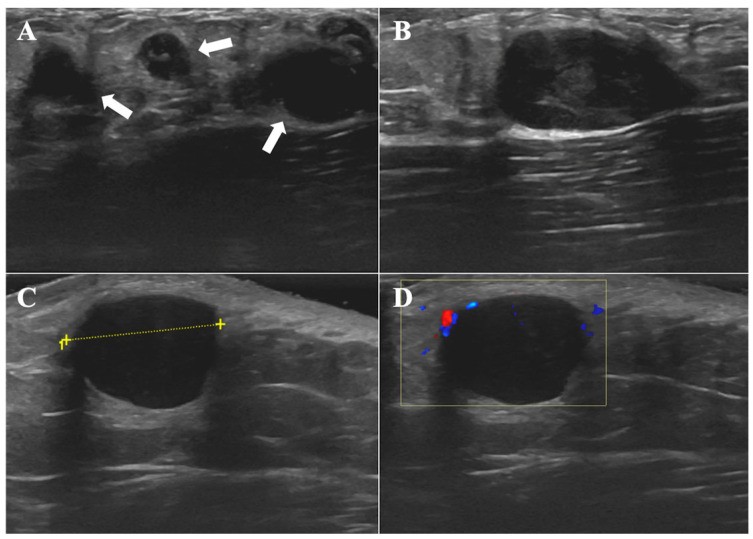 Figure 3
Peer Reviews
No public reviews on file for this paper yet. If you reviewed it on a platform where reviews are public (OpenReview, ICLR, NeurIPS, ICML), you can paste yours below so the community can read it here.
Videos
No videos yet. Explain this paper in a talk, walkthrough, or lecture? Add one.
Taxonomy
TopicsHistiocytic Disorders and Treatments · Tuberous Sclerosis Complex Research · Genetic and rare skin diseases.