Dual Genetic Diagnosis of Prader–Willi Syndrome and TMC1-Related Severe Congenital Hearing Loss: Diagnostic Challenges and Cochlear Implant Outcomes
Pinelopi Samara, Michail Athanasopoulos, Evangelia Koudoumnaki, Nikolaos Markatos, Ioannis Athanasopoulos

TL;DR
A child with Prader–Willi syndrome and severe hearing loss was found to have a separate genetic cause, leading to successful cochlear implant outcomes.
Contribution
First molecularly confirmed case of Prader–Willi syndrome co-occurring with TMC1-related hearing loss, highlighting diagnostic and treatment implications.
Findings
Compound heterozygous TMC1 variants were identified as the cause of severe congenital hearing loss in a child with Prader–Willi syndrome.
Cochlear implantation at ages 14 and 20 months led to measurable improvements in hearing and speech development over four years.
The case emphasizes the importance of genomic evaluation to detect blended phenotypes and guide precision care in rare disorders.
Abstract
Background and Clinical Significance: Prader–Willi syndrome (PWS) is an imprinting disorder not typically associated with severe congenital sensorineural hearing loss (SNHL). When profound SNHL is present in an infant with a known syndrome, an independent monogenic etiology should be considered. We report the first molecularly confirmed case of PWS co-occurring with biallelic pathogenic TMC1 variants causing congenital SNHL, outlining diagnostic challenges, cochlear implant (CI) outcomes, and implications for blended phenotypes. Case Presentation: A male infant with PWS due to a paternal 15q11.2–q13 deletion failed newborn hearing screening. Diagnostic auditory brainstem response and auditory steady-state response confirmed bilateral severe-to-profound SNHL. Temporal bone CT/MRI were normal. Comprehensive genetic testing identified compound heterozygous TMC1 variants consistent with…
Genes, proteins, chemicals, diseases, species, mutations and cell lines named across the full text — each resolved to its canonical identifier and authoritative record.
Click any figure to enlarge with its caption.
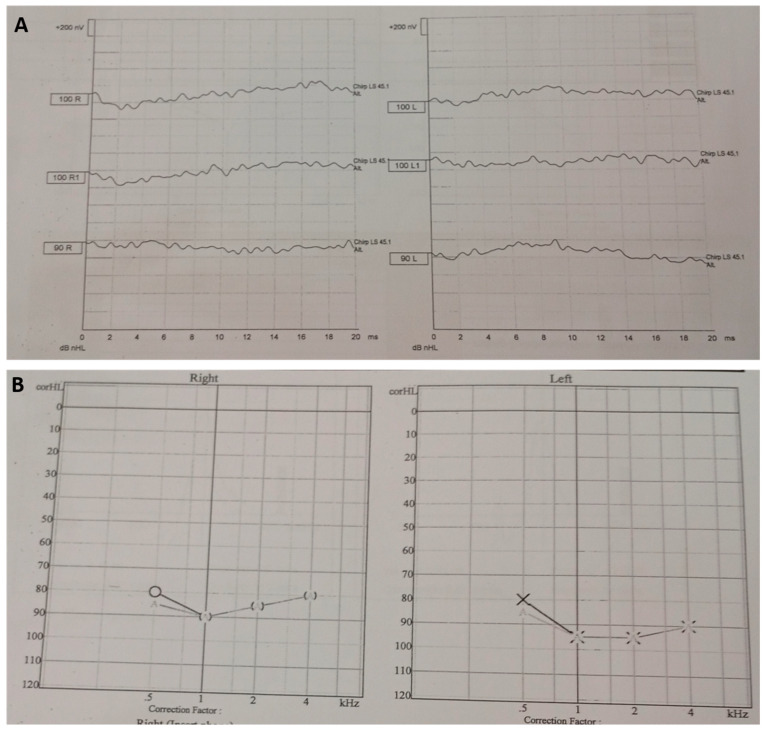 Figure 1
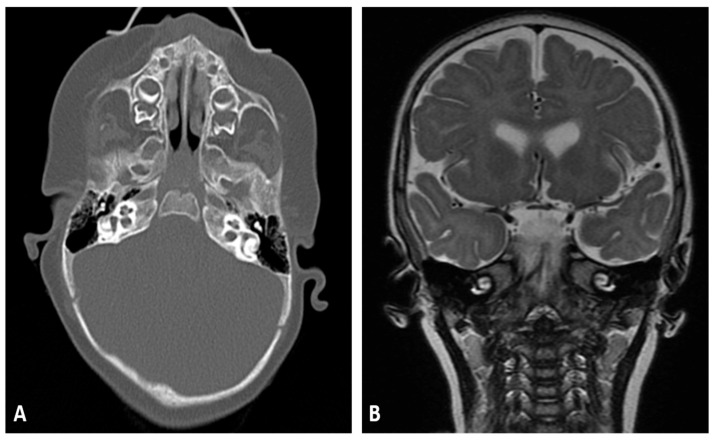 Figure 2
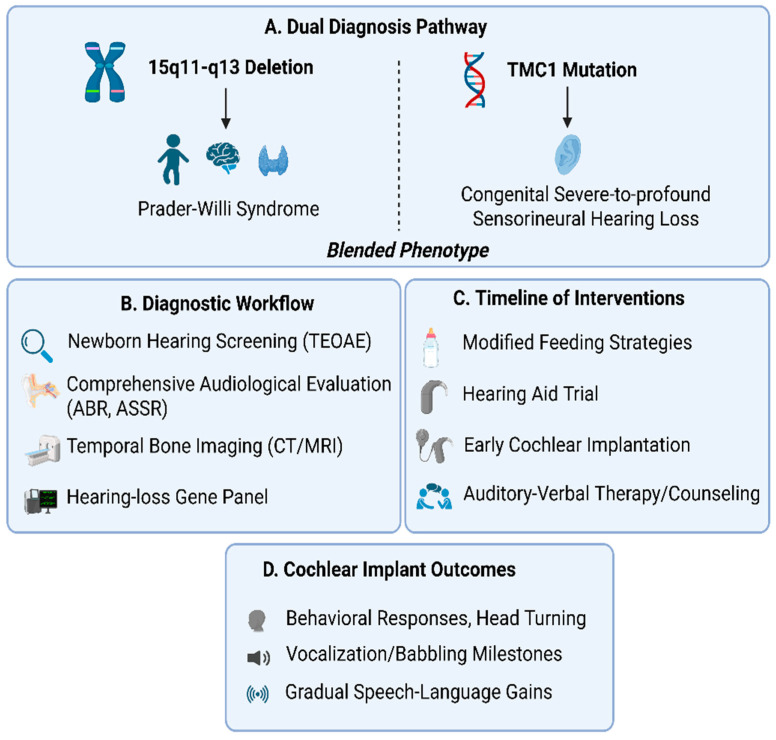 Figure 3
Peer Reviews
No public reviews on file for this paper yet. If you reviewed it on a platform where reviews are public (OpenReview, ICLR, NeurIPS, ICML), you can paste yours below so the community can read it here.
Videos
No videos yet. Explain this paper in a talk, walkthrough, or lecture? Add one.
Taxonomy
TopicsGenetic Syndromes and Imprinting · Genomics and Rare Diseases · Congenital heart defects research