Giant Right Sphenoid Wing Meningioma as a Reversible Frontal Network Lesion: A Pseudo-bvFTD Case with Venous-Sparing Skull-Base Resection
Valentin Titus Grigorean, Octavian Munteanu, Felix-Mircea Brehar, Catalina-Ioana Tataru, Matei Serban, Razvan-Adrian Covache-Busuioc, Corneliu Toader, Cosmin Pantu, Alexandru Breazu, Lucian Eva

TL;DR
A large meningioma near the sphenoid wing can mimic dementia but may be reversed through careful surgical removal.
Contribution
This case demonstrates that a giant sphenoid wing meningioma can cause pseudo-bvFTD symptoms and be surgically reversed.
Findings
The patient showed frontal-based dysexecutive syndrome mimicking bvFTD but was caused by a meningioma.
Venous-sparing skull-base surgery led to significant postoperative frontal function recovery.
Contrast-enhanced imaging and frontal testing can help identify surgically remediable pseudo-dementia cases.
Abstract
Background and Clinical Significance: Giant sphenoid wing meningiomas are generally viewed as skull base masses that compress frontal centers and their respective pathways gradually enough to cause a dysexecutive–apathetic syndrome, which can mimic primary neurodegenerative disease. The aim of this report is to illustrate how bedside phenotyping and multimodal imaging can disclose similar clinical presentations as surgically treatable network lesions. Case Presentation: An independent, right-handed older female developed an incremental, two-year decline of her ability to perform executive functions, extreme apathy, lack of instrumental functioning, and a frontal-based gait disturbance, culminating in a first generalized seizure and a newly acquired left-sided upper extremity pyramidal sign. Standardized neuropsychological evaluation revealed a predominant frontal-based dysexecutive…
Genes, proteins, chemicals, diseases, species, mutations and cell lines named across the full text — each resolved to its canonical identifier and authoritative record.
Click any figure to enlarge with its caption.
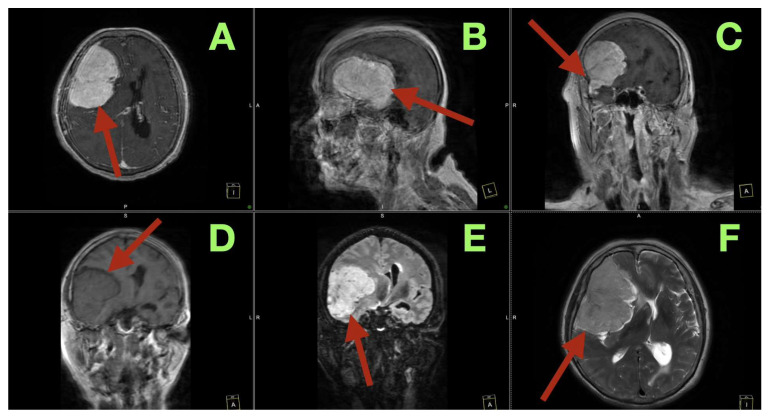 Figure 1
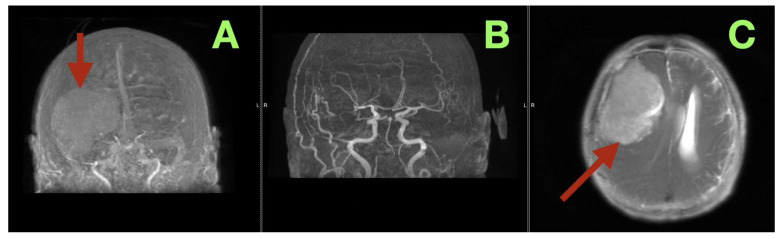 Figure 2
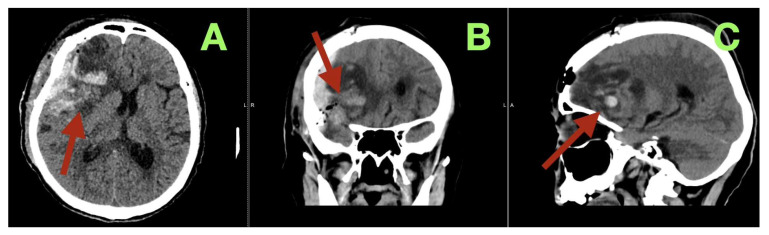 Figure 3
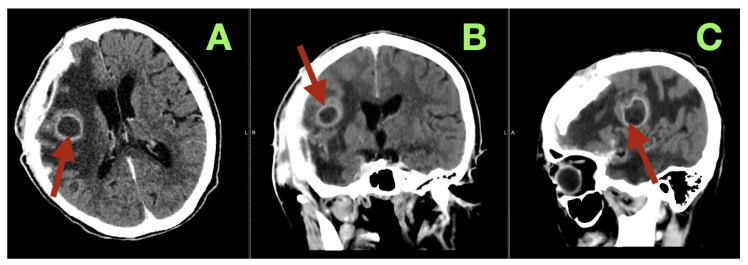 Figure 4
Peer Reviews
No public reviews on file for this paper yet. If you reviewed it on a platform where reviews are public (OpenReview, ICLR, NeurIPS, ICML), you can paste yours below so the community can read it here.
Videos
No videos yet. Explain this paper in a talk, walkthrough, or lecture? Add one.
Taxonomy
TopicsMeningioma and schwannoma management · Trigeminal Neuralgia and Treatments · Head and Neck Surgical Oncology