Rate-Adaptive Information Reconciliation for CV-QKD Systems at Low Signal-to-Noise Ratios
Huiting Fu, Jisheng Dai, Yan Feng, Han Hai, Huayong Ge, Peng Huang, Xue-Qin Jiang

TL;DR
This paper introduces new protocols for improving key distribution in quantum systems by adapting to low signal quality.
Contribution
The paper proposes two novel rate-adaptive information reconciliation protocols (TIR and SIR) for CV-QKD systems.
Findings
The proposed protocols achieve over 98.5% reconciliation efficiency at SNRs below −20 dB.
The protocols maintain a secret key rate in long-distance quantum key distribution.
TIR and SIR outperform existing rate-adaptive IR protocols in reconciliation efficiency.
Abstract
In continuous-variable quantum key distribution (CV-QKD) systems, information reconciliation (IR) is a crucial step that significantly affects the secret key rate (SKR). The fixed-rate error-correcting codes used in IR are highly sensitive to changes in the signal-to-noise ratio (SNR) and cannot maintain a high reconciliation efficiency in practical CV-QKD systems. To address this issue, we first propose a rate-adaptive IR protocol, namely Threshold-based IR (TIR), which changes the code rate of low-density parity-check (LDPC) codes by selectively revealing bits with lower reliability and adjusting their log-likelihood ratios (LLRs). Then, we propose a rate-adaptive IR protocol, namely Sorting-based IR (SIR), which not only adjusts the code rate according to variations in SNR, but also enables the CV-QKD systems to achieve high reconciliation efficiency over a wide range of SNRs.…
Click any figure to enlarge with its caption.
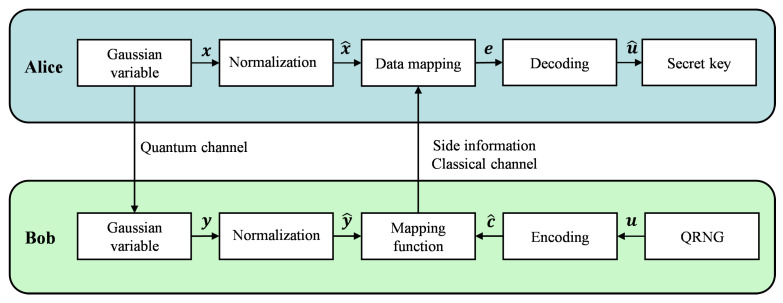 Figure 1
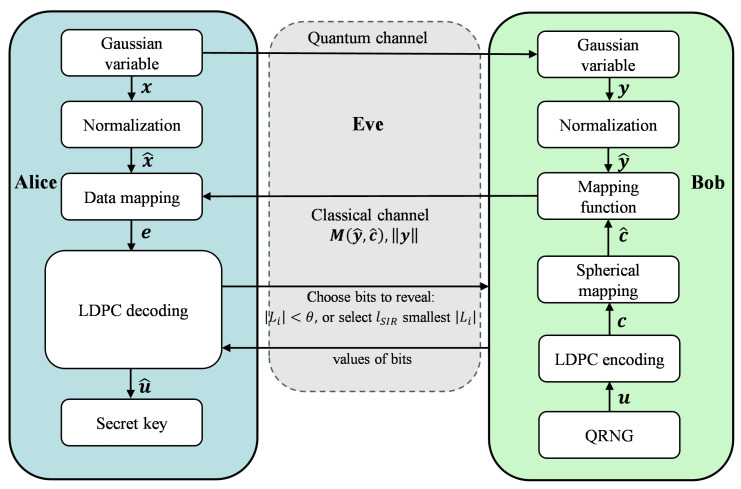 Figure 2
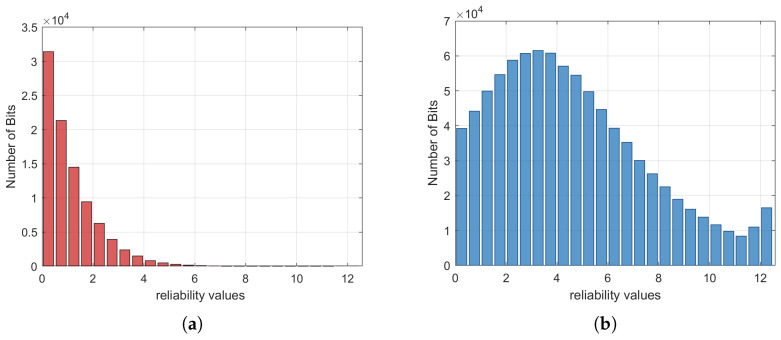 Figure 3
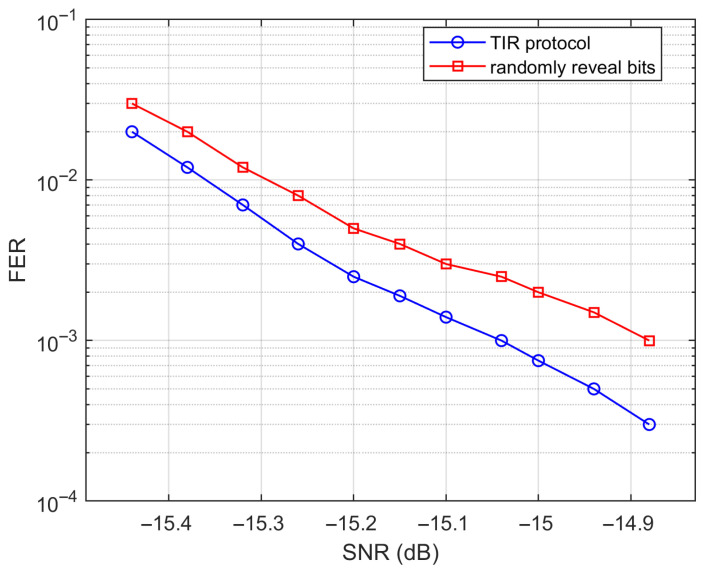 Figure 4
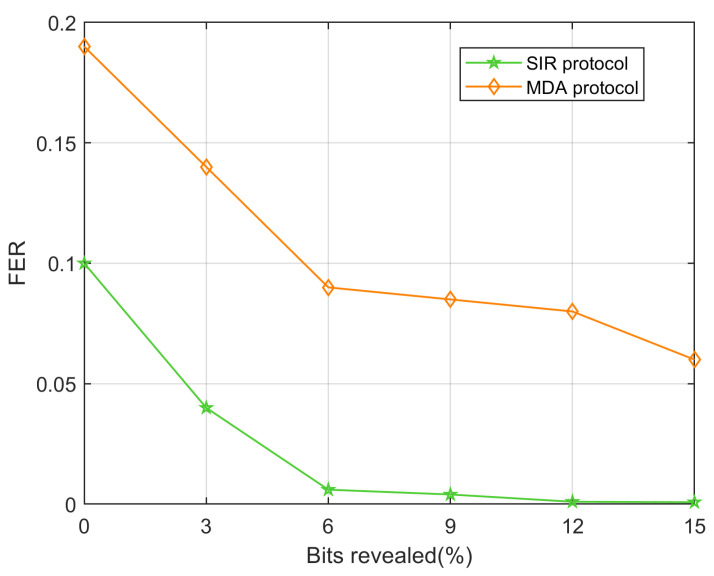 Figure 5
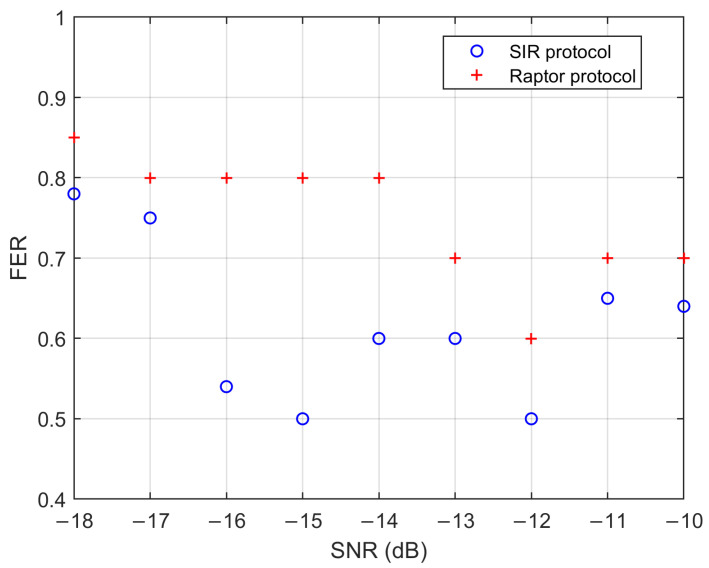 Figure 6
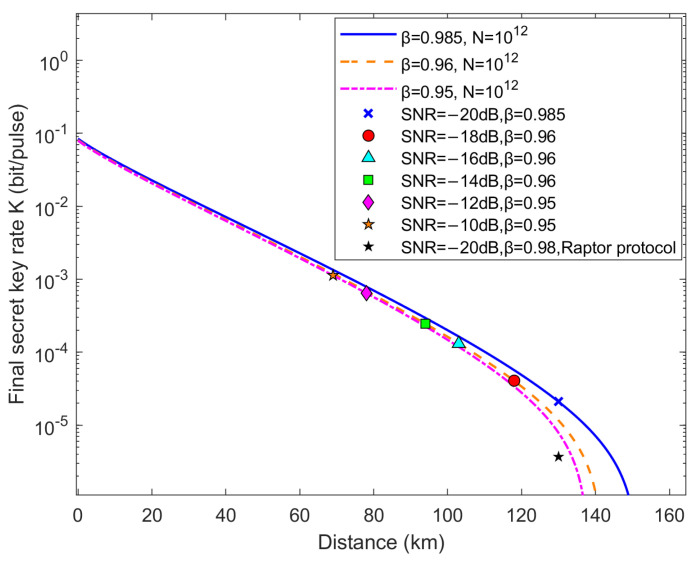 Figure 7
Peer Reviews
No public reviews on file for this paper yet. If you reviewed it on a platform where reviews are public (OpenReview, ICLR, NeurIPS, ICML), you can paste yours below so the community can read it here.
Videos
No videos yet. Explain this paper in a talk, walkthrough, or lecture? Add one.
Taxonomy
TopicsQuantum Information and Cryptography · Quantum Computing Algorithms and Architecture · Optical Network Technologies