Short-Term Efficacy and Safety of Elobixibat for Chronic Constipation Assessed by Rectal Ultrasonography: A Retrospective Observational Study
Momoko Tsuda, Tomoyuki Onodera, Kanako Konishi, Norishige Maiya, Mio Matsumoto, Kimitoshi Kubo, Sayaka Kudo, Yoshiyuki Hosoi, Mototsugu Kato

TL;DR
This study shows that elobixibat is effective and safe for short-term treatment of chronic constipation in patients without fecal retention, as determined by rectal ultrasonography.
Contribution
The study evaluates elobixibat's efficacy and safety using rectal ultrasonography classification for chronic constipation, a novel approach.
Findings
94.4% of patients without fecal retention had spontaneous bowel movements within 3 days of starting elobixibat.
Adverse events were rare, with only two patients experiencing mild abdominal discomfort.
Abstract
Background/Objectives: Ultrasonography (US) is a non-invasive and repeatable examination for evaluating chronic constipation. However, few studies have explored treatment decisions based on rectal US findings. To date, the efficacy and safety of elobixibat have not been evaluated using rectal US classification in patients with chronic constipation. This study aimed to evaluate the short-term efficacy and safety of elobixibat in patients with chronic constipation classified as “no fecal retention” by rectal US. Methods: We retrospectively analyzed 32 patients with chronic constipation who underwent rectal US and received elobixibat (10 mg/day) between May 2019 and December 2024. Rectal US findings classified patients into four groups: no fecal retention, fecal retention without hard stools, fecal retention with hard stools, and gas retention. The primary endpoint was the response rate of…
Genes, proteins, chemicals, diseases, species, mutations and cell lines named across the full text — each resolved to its canonical identifier and authoritative record.
Click any figure to enlarge with its caption.
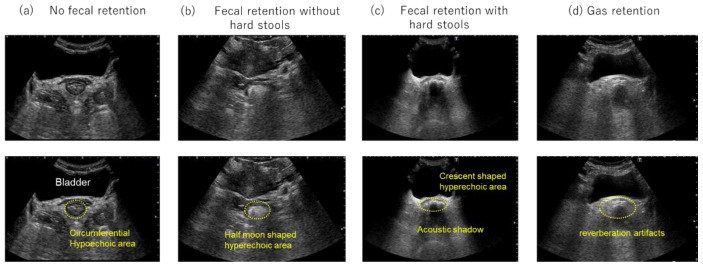 Figure 1
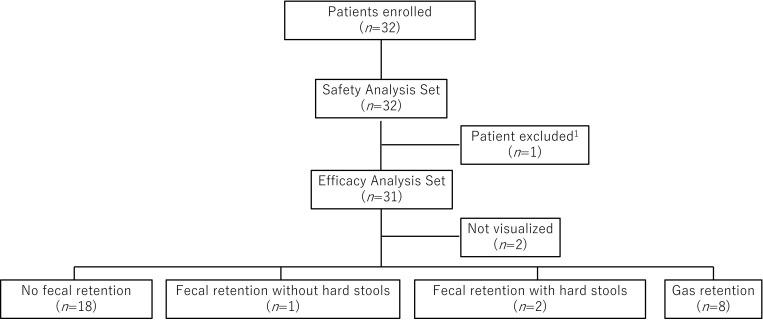 Figure 2
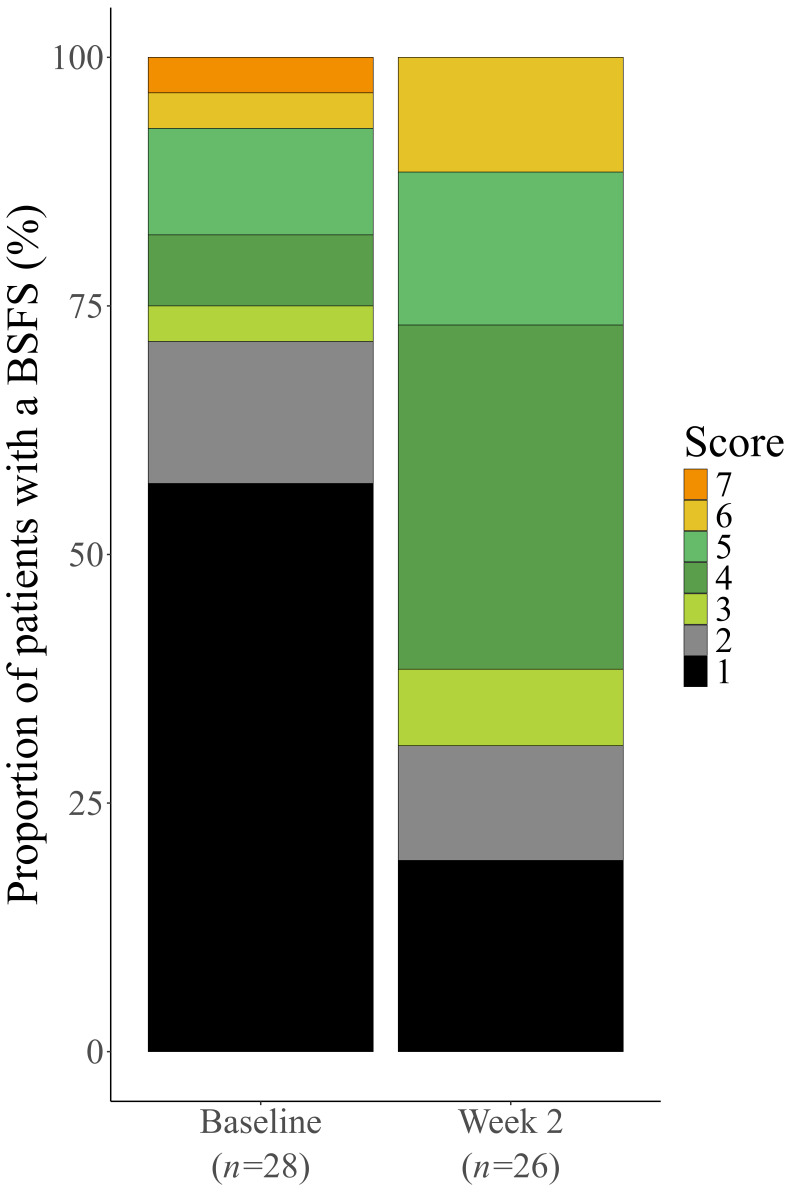 Figure 3
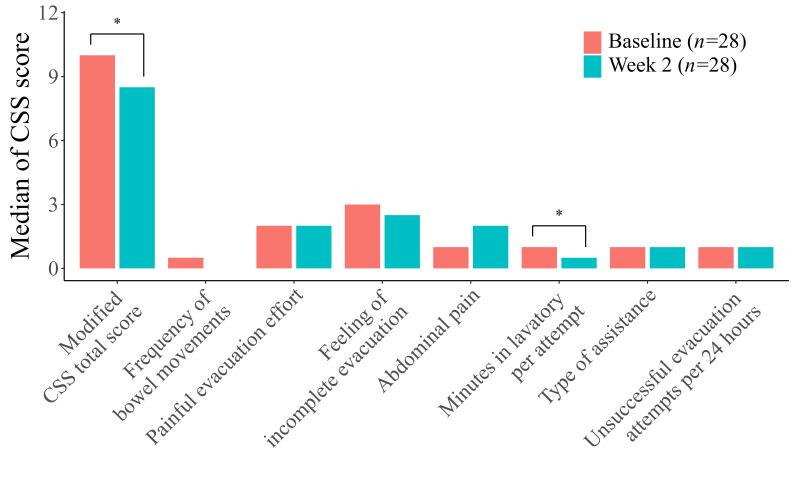 Figure 4
- —EA Pharma (Tokyo, Japan)
- —Mochida Pharmaceutical Co., Ltd. (Tokyo, Japan)
Peer Reviews
No public reviews on file for this paper yet. If you reviewed it on a platform where reviews are public (OpenReview, ICLR, NeurIPS, ICML), you can paste yours below so the community can read it here.
Videos
No videos yet. Explain this paper in a talk, walkthrough, or lecture? Add one.
Taxonomy
TopicsGastrointestinal motility and disorders · Gastroesophageal reflux and treatments · Pelvic floor disorders treatments
1. Introduction
In Japan, 2.8% of men and 4.4% of women are reported to experience constipation, which significantly impacts quality of life (QOL) [1,2,3]. In routine clinical practice, constipation is often managed without objective or standardized assessment tools, and treatment decisions therefore rely largely on patients’ subjective symptom reports. This dissatisfaction often drives patients to attempt self-management, leading to treatment that increasingly deviates from appropriate care.
Ultrasonography (US) is a non-invasive examination that can be performed repeatedly. Consequently, it has been considered useful for evaluating chronic constipation, which often requires repeated assessment [4,5,6]. Furthermore, the Study Group for US for Chronic Constipation proposed diagnosis and treatment algorithms based on rectal US findings and compiled them into a consensus document [5,7]. The consensus document classifies chronic constipation into three categories (“no fecal retention,” “fecal retention without hard stools,” and “fecal retention with hard stools”) based on rectal US findings and proposes appropriate management for each category.
Elobixibat, an ileal bile acid transporter (IBAT) inhibitor, blocks bile acid reabsorption in the ileum, thereby increasing the amount of bile acids entering the colon [8]. These bile acids increase water and electrolyte influx into the colon, triggering strong bowel movements. In addition, elobixibat lowers rectal sensory thresholds and restores the urge to defecate in patients with chronic constipation [9,10]. Therefore, elobixibat is a promising treatment option for constipation because its mechanism differs from that of conventional laxatives [7,10].
The diagnosis and treatment algorithm for chronic constipation using rectal US findings recommends elobixibat, an IBAT inhibitor, as a first-line treatment for patients with “no fecal retention” whose condition does not improve with lifestyle modification or dietary therapy [7]. This algorithm was developed based on expert opinion as well as drug characteristics. However, few studies have validated this three-category US classification and the corresponding management strategies, indicating the need for further evaluation. Moreover, in real-world practice, the presence of rectal gas cannot be ignored. Rectal evacuation disorder (RED) is a leading cause of intractable constipation not represented in the current three-category classification. Gas retention in the rectum and colon has been reported in patients with RED [11]. In addition, gas retention in the descending colon has also been described among patients reporting incomplete evacuation [12]. These patients may present with features not explained by the three-category classification, indicating that gas-dominant constipation is not well represented in the current system.
This retrospective observational study aimed to evaluate the short-term efficacy and safety of elobixibat in patients with chronic constipation classified as “no fecal retention” by rectal US. Furthermore, the study addressed gas-dominant constipation by expanding the conventional three-category classification to four categories through the addition of “gas retention”: “no fecal retention,” “fecal retention without hard stools,” “fecal retention with hard stools,” and “gas retention.” We retrospectively analyzed patients with chronic constipation who underwent rectal US and received elobixibat and evaluated treatment outcomes according to this four-category classification. This study demonstrates that rectal US-based classification, especially the “no fecal retention” category, provides a practical framework for guiding elobixibat therapy in patients with chronic constipation.
2. Materials and Methods
2.1. Study Participants
This retrospective, single-arm observational study utilized data collected between May 2019 and December 2024 at Hakodate Medical Center and Sapporo Cancer Screening Center. The study enrolled 32 patients aged ≥18 years with chronic constipation, diagnosed according to Japanese clinical guidelines, who underwent rectal US and received elobixibat [6,13]. Patients who underwent rectal US on the day before the first elobixibat administration and received the drug at the recommended dose of 10 mg/day were included. The exclusion criteria were as follows: a history of hypersensitivity to elobixibat; confirmed or suspected intestinal obstruction caused by tumors, hernia, or other causes; suspected constipation secondary to organic disease; or the use of intestinal cleansing agents, enemas, or bowel lavage from 2 days before to 3 days after rectal US.
2.2. Observation Period and Data Collection
Patient data were collected from the day before elobixibat initiation until 2 weeks after treatment. Information was collected from medical records and questionnaires, including age, sex, height, weight, comorbidities, prior medications, rectal US findings, colonic diameters, elobixibat dosing, spontaneous bowel movements (SBMs) during the first 3 days after elobixibat initiation, Bristol Stool Form Scale (BSFS), Constipation Scoring System (CSS), and adverse events [14,15].
2.3. Assessment of Bowel Movements
Bowel function was assessed by documenting the presence or absence of SBMs during the first 3 days after elobixibat initiation using patient questionnaires. SBMs were defined as bowel movements occurring without the use of bisacodyl suppositories, enemas, or digital disimpaction. Patients who experienced SBMs within this period were defined as responders.
2.4. Stool Form and Constipation Scoring
Stool consistency and constipation severity were evaluated using the BSFS and calculated modified CSS scores, respectively, based on entries in medical records and questionnaires. The modified CSS total score was calculated by subtracting the item “duration of constipation” from the CSS total score. BSFS and CSS were assessed at baseline and 2 weeks after treatment.
2.5. Ultrasonography (US)
Rectal ultrasound images were obtained using an Aplio i700^®^ system (Canon Medical Systems, Tochigi, Japan) equipped with a convex probe (PVI-475BX). Imaging conditions were set as follows: depth, 14–21 cm; frequency, 4.0 MHz; gain, 73–80 dB; and dynamic range, 60 dB. Rectal US was performed in the supine position using a transabdominal approach with the probe placed on the suprapubic region. Examinations were conducted by two physicians following previously reported methods [16,17]. A 1-day training session was held before study initiation to standardize the examination technique among the physicians. Rectal US images were assessed by sonographers, who had access to clinical symptoms and prior treatments.
2.6. Rectal US Classification
To classify rectal findings, the conventional three-category classification (no fecal retention, fecal retention without hard stools, and fecal retention with hard stools) was expanded by adding a fourth category, “gas retention.” The “gas retention” category was defined as the presence of multiple echoes with reverberation artifacts in the rectum on transabdominal US (Figure 1).
2.7. Measurement of Colonic Diameter
To measure colonic diameter, US was performed at five sites: ascending colon, transverse colon, descending colon, sigmoid colon, and rectum [4]. Up to three measurements (proximal, middle, and distal) were obtained for each site. The diameter for each site was calculated as the average of its measurements, and the mean colonic diameter was obtained by averaging across all sites. Colonic diameter was assessed at baseline only.
2.8. Statistical Analysis
All analyses were conducted using R (version 4.4.1; R Core Team, Vienna, Austria, 2024). The efficacy analysis was performed using the per-protocol set, which included patients who met all eligibility criteria, did not meet any exclusion criteria, continued treatment until the scheduled assessment, and had available data. The safety analysis set included all patients who received at least one dose of elobixibat. Baseline characteristics were summarized for both analysis sets. Safety outcomes, including adverse events and treatment discontinuations, were evaluated in the safety analysis set, whereas all other analyses were conducted in the efficacy analysis set.
As this was a retrospective study, the sample size was not determined based on statistical power calculations but was set according to the number of patients that could reasonably be collected at the participating sites. Missing data were not imputed; all analyses were based on observed cases. Continuous variables are summarized as means with standard deviations or medians with interquartile ranges, and categorical variables as frequencies and percentages. The Wilson score method was used to calculate 95% confidence intervals (CIs). Before-and-after values were compared using the Wilcoxon signed-rank test. A two-sided p-value < 0.05 was considered statistically significant. A correlation analysis was conducted to examine the association between mean colonic diameter and rectal US classification. For this analysis, only patients with measurements available for all five colonic regions were included. We used linear regression models with “no fecal retention” as the reference group to estimate differences in transverse diameter.
3. Results
3.1. Patient Enrollment and Analysis Sets
During the study period, 249 patients underwent rectal US, and 110 were prescribed elobixibat after the procedure. Among them, 32 patients met the eligibility criteria and were enrolled in the study. All 32 patients were included in the safety analysis set. One patient with a colostomy was excluded from the efficacy analysis set, leaving 31 patients for efficacy evaluation. Based on rectal US findings, 18 patients were classified as “no fecal retention,” 1 as “fecal retention without hard stools,” 2 as “fecal retention with hard stools,” and 8 as “gas retention.” Rectal US findings could not be visualized in two patients (Figure 2).
3.2. Patient Characteristics
Patient characteristics are summarized in Table 1. Most patients were women in the efficacy and safety analysis sets. The mean age was 56.8 years in the efficacy set and 56.5 years in the safety set. Baseline bowel movement data (median) for the efficacy and safety sets, respectively, were as follows: BSFS score, 1.0 and 1.0; CSS total score, 13.5 and 13.5; and modified CSS total score, 10.0 and 10.0. CSS sub-scores were as follows: frequency of bowel movements, 1.0 and 1.0; painful evacuation effort, 2.0 and 2.0; feeling of incomplete evacuation, 3.0 and 3.0; abdominal pain, 1.0 and 1.0; minutes in lavatory per attempt, 1.0 and 1.0; type of assistance, 1.0 and 1.0; unsuccessful evacuation attempts per 24 h, 1.0 and 1.0; and duration of constipation, 3.0 and 3.0 (Table 1).
3.3. Proportion of Responders with SBMs Within 3 Days After the First Dose of Elobixibat
The primary endpoint was the proportion of responders in the “no fecal retention” category who had SBMs within 3 days after the first dose of elobixibat. In this category, 94.4% (95% CI, 74.2–99.0%) achieved SBMs. Response rates were 100% in the “gas retention” category (95% CI, 67.6–100.0%). The observed response rate across all four categories was 96.6% (95% CI, 82.8–99.4%) (Table 2). Both patients whose rectal US findings were not visualized also responded.
3.4. Proportion of Responders with SBMs on Day 1 Following the First Dose of Elobixibat
On day 1, 83.3% (95% CI, 60.8–94.2%) of patients in the “no fecal retention” category achieved SBMs. Response rates were 100% in the “gas retention” category (95% CI, 67.6–100.0%). The observed response rate across all four categories was 89.3% (95% CI, 72.8–96.3%) (Table 3).
3.5. Stool Consistency Outcomes (BSFS)
Changes in stool consistency were evaluated using the BSFS. In patients classified as “no fecal retention,” the median BSFS scores were 1.5 (1.0–5.0) at baseline and 4.0 (2.5–5.0) at week 2, showing no significant difference. In contrast, patients in the “gas retention” category demonstrated a significant improvement in BSFS scores from 1.0 (1.0–3.0) at baseline to 4.0 (2.5–4.5) at week 2 (p = 0.0350). When analyzed across all four categories, BSFS scores significantly improved from 1.0 (1.0–3.5) at baseline to 4.0 (2.0–5.0) at week 2 (p = 0.0104) (Table 4).
We also analyzed the distribution of stool consistency in the total cohort. The proportion of patients with a BSFS score of 1 or 2 decreased from 71.4% (20/28 patients) at baseline to 30.8% (8/26 patients) after elobixibat treatment. The proportion of patients with a BSFS score of 3–5 increased from 21.4% (6/28 patients) to 57.7% (15/26 patients), and that of patients with a BSFS score of 6 or 7 increased from 7.1% (2/28 patients) to 11.5% (3/26 patients). These findings indicate that elobixibat shifted stool consistency toward normal or softer stools (Figure 3).
3.6. Constipation Scoring System (CSS) Outcomes
3.6.1. Modified CSS Total Score
Changes in the modified CSS total score were evaluated. In patients classified as “no fecal retention,” the median score decreased from 10.0 (7.0–14.0) at baseline to 8.0 (6.0–12.0) at week 2, with no significant difference. In patients classified as “gas retention,” the score decreased from 10.0 (6.0–10.0) at baseline to 6.0 (3.0–11.5) at week 2, but the change was not statistically significant (p = 0.0502). When analyzed across all four categories, the modified CSS total score significantly decreased from 10.0 (7.5–13.5) at baseline to 8.5 (5.0–12.0) at week 2 (p = 0.0231) (Table 5).
3.6.2. Modified CSS Sub-Scores
Changes in individual CSS sub-scores were also examined. No significant differences were observed in any sub-score when patients were classified by rectal US classification.
However, when analyzed across all four categories, the sub-score “minutes in lavatory per attempt” showed significant improvement after elobixibat treatment (p = 0.0046). No other sub-scores demonstrated significant changes (Table 6, Figure 4).
3.7. Relationship Between Colonic Diameter and Rectal US Classification
The relationship between the mean transverse colonic diameter and rectal US classification was evaluated. The mean diameter was 25.00 ± 1.23 mm in patients with “no fecal retention,” and 28.86 ± 1.43 mm in those with “gas retention.” The overall mean diameter across all four categories was 27.31 ± 3.41 mm (Table 7). A correlation ratio of 0.694 was observed between the total classification and mean transverse diameter, indicating a positive association (Table S1).
Linear regression analysis showed that the mean transverse diameter was significantly greater in patients with “gas retention” (p = 0.0027) than in those without fecal retention (Table 8).
3.8. Safety
Adverse events occurred in two patients (6.3%) in the safety analysis set (Table 9). All events were mild and resolved without intervention. No serious adverse events occurred, and no patients discontinued elobixibat during the 2-week observation period.
4. Discussion
This retrospective study demonstrated that elobixibat was highly effective and well tolerated in patients with chronic constipation, particularly in those categorized as “no fecal retention” on rectal US. The primary endpoint, defined as the proportion of responders achieving SBMs within 3 days of the first dose, was 94.4% in this group, underscoring the rapid therapeutic benefit of elobixibat. Early symptom relief is clinically relevant because it improves treatment adherence and patient satisfaction. The day 1 response rate (83.3%) was also consistent with previous Phase 3 data (≤24 h: Elobixibat, 86%; Placebo, 41%) [18]. However, these results are provided for supportive context only and should be interpreted carefully, as differences in study design and conditions preclude direct comparison across trials.
The therapeutic benefit in the “no fecal retention” group can be explained by the unique pharmacological properties of elobixibat. Unlike conventional laxatives, elobixibat promotes bowel movements through multiple mechanisms: inhibition of IBAT to increase bile acid flow and fluid secretion, acceleration of large intestinal motility, and restoration of the urge to defecate [9,10]. Kessoku et al. recently reported that, in patients with “no fecal retention,” elobixibat significantly improved complete SBMs, colonic transit time, and the urge to defecate compared with magnesium oxide [19]. Other studies have also shown that elobixibat enables switching from, or reducing the dose of, stimulant laxatives [20,21]. Together, these findings highlight elobixibat’s clinical value as a first-line therapy for patients without fecal retention.
Patients with rectal gas retention also responded favorably to elobixibat, suggesting its potential role in gas-dominant constipation. In this category, all patients achieved SBMs within 3 days. Gas retention has been associated with RED and incomplete evacuation [11,12]. Elobixibat has been reported to improve rectal sensory thresholds [9], suggesting it may be particularly effective for constipation accompanied by gas retention. Although decreased rectal sensation has been proposed as an underlying mechanism [22], it requires confirmation in future studies. In addition, structural defecatory disorders, such as rectocele or megacolon, cannot be excluded by rectal US alone, and complementary diagnostic modalities remain necessary [6]. These results are supportive and hypothesis-generating and should be interpreted with caution. Taken together, these findings suggest that rectal gas retention may represent a distinct and clinically relevant constipation phenotype. Future prospective studies with larger sample sizes are warranted to clarify the pathophysiology of gas-dominant constipation and to determine whether rectal US–based identification of gas retention can guide personalized therapeutic strategies.
In the analysis including all four categories, the BSFS score significantly improved from 1.0 to 4.0 after 2 weeks of elobixibat treatment. A BSFS score of 4 is an important indicator of QOL improvement in patients with chronic constipation [23]. In the present study, improvement in stool form following elobixibat administration suggests a potential contribution to enhanced patient QOL, representing a clinically relevant outcome. Moreover, the modified CSS total score significantly decreased from 10.0 to 8.5, indicating that elobixibat may contribute to reducing defecation-related discomfort. Although improvements in the CSS total score can be observed as early as 2 weeks of treatment [24], other studies have been reported with longer treatment durations. In hemodialysis patients with chronic constipation, CSS improved significantly at 12 weeks, and these improvements were maintained with long-term treatment [25,26].
The impact of rectal US classification was further reflected in colonic diameter measurements. Patients in the “fecal retention with hard stools” and “gas retention” categories had significantly larger transverse colonic diameters than those in the “no fecal retention” group, indicating that hard stool and gas retention are physiologically linked with upstream colonic dilatation. The results are consistent with previous findings suggesting that elobixibat may improve stool and gas distribution, as reflected by colonic diameter measurements [27]. This supports the clinical utility of rectal US as a non-invasive tool for stratifying constipation phenotypes.
Elobixibat was generally safe and well tolerated in this cohort. Only two patients (6.3%) reported mild gastrointestinal adverse events (abdominal distension and abdominal pain), both of which resolved spontaneously without treatment discontinuation. This profile aligns with previous clinical trials, underscoring the suitability of elobixibat for the long-term management of chronic constipation [18,28].
Some limitations of this study should be noted. The retrospective design, small sample size, and short observation period limit the strength of causal inference. Because there was no control or comparator group, potential biases, such as information bias (e.g., reliance on medical records for symptom assessment), cannot be excluded. In addition, as the study population consisted exclusively of outpatients, patients with more advanced physical limitations were less likely to be included, which may have introduced selection bias. The number of eligible patients was markedly reduced because the study included only those who initiated elobixibat the day after rectal US, excluded individuals who had already been receiving the drug, and excluded patients who underwent enema rather than pharmacologic treatment; consequently, the overall sample size was limited to 32 patients. These design constraints should be considered when interpreting the findings. Subgroup sample sizes were particularly small in the “fecal retention without hard stools” and “fecal retention with hard stools” categories. Accordingly, subgroup analyses outside the “no fecal retention” group should be regarded as exploratory and interpreted with caution. Formal inter-observer reliability was not quantitatively assessed in this study. Although all assessors underwent standardized training prior to study initiation and previous studies have shown that US-based assessment of constipation can be performed reliably by trained non-physician healthcare staff [29], future prospective studies should incorporate formal evaluation of inter-observer reliability. Although this study demonstrates meaningful short-term improvements in stool consistency (BSFS) and constipation severity (CSS), the clinical interpretation of these outcomes inherently requires a longer observation period. The observation period was short and focused on early outcomes; thus, long-term improvements in stool consistency, symptom severity, and QOL could not be assessed. Prior studies have demonstrated the sustained efficacy of elobixibat over longer follow-up periods [26,30], and extended follow-up will be necessary to delineate long-term trajectories of stool normalization and symptom fluctuation, as well as their impact on daily functioning or QOL. Moreover, the epidemiological data presented here are specific to the Japanese population, as the study was conducted exclusively in Japan; therefore, generalizability to other populations remains uncertain. Future studies will need to validate these findings in larger, prospective, multicenter cohorts; include extended follow-up to assess long-term outcomes (stool consistency, symptom severity, and QOL) and to fully characterize the symptomatic and functional benefits of elobixibat; incorporate formal quantitative inter-observer reliability testing; and clarify the role of gas-dominant constipation while refining rectal US–based treatment algorithms for broader clinical application.
Elobixibat showed clear and rapid efficacy in patients with chronic constipation, particularly in those with “no fecal retention” on rectal US. Patients with rectal gas retention also benefited, highlighting the value of incorporating this category into diagnostic algorithms. These findings support rectal US-based classification as a practical tool for guiding treatment and confirm elobixibat as an effective first-line option for patients without fecal retention.
The reference list from the paper itself. Each links out to its DOI / PubMed record.
- 1Summary Report of Comprehensive Survey of Living Conditions Available online: https://www.mhlw.go.jp/english/database/db-hss/dl/report_gaikyo_2022.pdf 2022(accessed on 5 September 2025)
- 2Chang J.Y. Locke G.R.3rd Mc Nally M.A. Halder S.L. Schleck C.D. Zinsmeister A.R. Talley N.J. Impact of functional gastrointestinal disorders on survival in the community Am. J. Gastroenterol.201010582283210.1038/ajg.2010.4020160713 PMC 2887253 · doi ↗ · pubmed ↗
- 3Tomita T. Kazumori K. Baba K. Zhao X. Chen Y. Miwa H. Impact of chronic constipation on health-related quality of life and work productivity in Japan J. Gastroenterol. Hepatol.2021361529153710.1111/jgh.1529533047825 · doi ↗ · pubmed ↗
- 4Manabe N. Kamada T. Kusunoki H. Hata J. Haruma K. Usefulness of ultrasonographic evaluation of stool and/or gas distribution for the treatment strategy of chronic constipation JGH Open 2019331031510.1002/jgh 3.1216231406924 PMC 6684505 · doi ↗ · pubmed ↗
- 5Matsumoto M. Misawa N. Tsuda M. Manabe N. Kessoku T. Tamai N. Kawamoto A. Sugama J. Tanaka H. Kato M. Expert consensus document: Diagnosis for chronic constipation with faecal retention in the rectum using ultrasonography Diagnostics 20221230010.3390/diagnostics 1202030035204390 PMC 8871156 · doi ↗ · pubmed ↗
- 6Ihara E. Manabe N. Ohkubo H. Ogasawara N. Ogino H. Kakimoto K. Kanazawa M. Kawahara H. Kusano C. Kuribayashi S. Evidence-based clinical guidelines for chronic constipation 2023 Digestion 2025106628910.1159/00054091239159626 PMC 11825134 · doi ↗ · pubmed ↗
- 7Kessoku T. Matsumoto M. Misawa N. Tsuda M. Miura Y. Uchida A. Toriumi Y. Onodera T. Arima H. Kawamoto A. Expert consensus document: An algorithm for the care and treatment of patients with constipation based on ultrasonographic findings in the rectum Diagnostics 202414151010.3390/diagnostics 1414151039061648 PMC 11276071 · doi ↗ · pubmed ↗
- 8Acosta A. Camilleri M. Elobixibat and its potential role in chronic idiopathic constipation Ther. Adv. Gastroenterol.2014716717510.1177/1756283 X 14528269 PMC 410770925057297 · doi ↗ · pubmed ↗