Some New Maximally Chaotic Discrete Maps
Hyojeong Choi, Gangsan Kim, Hong-Yeop Song, Sangung Shin, Chulho Lee, Hongjun Noh

TL;DR
This paper introduces a new discrete chaotic map that achieves maximum chaos, making it highly unpredictable and useful for applications like cryptography.
Contribution
A new discrete chaotic map is proposed and proven to achieve asymptotically maximal chaos among permutation maps.
Findings
The proposed map is a bijection for all control parameters.
The discrete Lyapunov exponent of the map approaches the maximum possible value as m increases.
Numerical experiments confirm high chaos through entropy and correlation analysis.
Abstract
In this paper, we first prove (Theorem 1) that any two inputs producing the same output in a symmetric pair of discrete skew tent maps always have the same parity, meaning that they are either both even or both odd. Building on this property, we then propose (Definition 1) a new discrete chaotic map and prove that (Theorem 2) the proposed map is a bijection for all control parameters. We further prove that (Theorem 3) the discrete Lyapunov exponent (dLE) of the proposed map is not only positive but also approaches the maximum value among all permutation maps over the integers {0,1,…,2m−1} as m gets larger. In other words, (Corollary 1) the proposed map asymptotically achieves the highest possible chaotic divergence among the permutation maps over the integers {0,1,…,2m−1}. To provide some further evidence that the proposed map is highly chaotic, we present at the end some results from…
Genes, proteins, chemicals, diseases, species, mutations and cell lines named across the full text — each resolved to its canonical identifier and authoritative record.
Click any figure to enlarge with its caption.
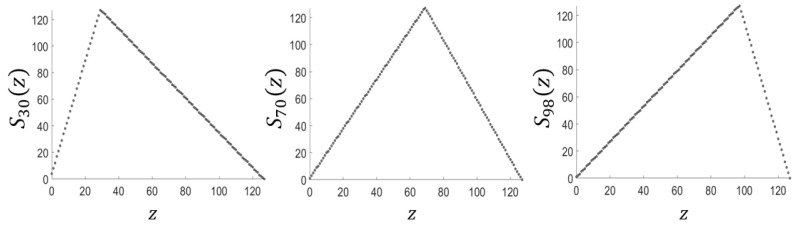 Figure 1
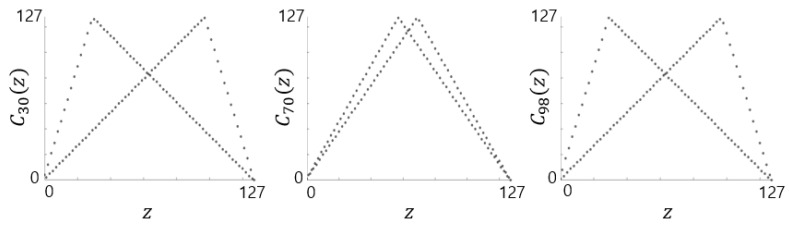 Figure 2
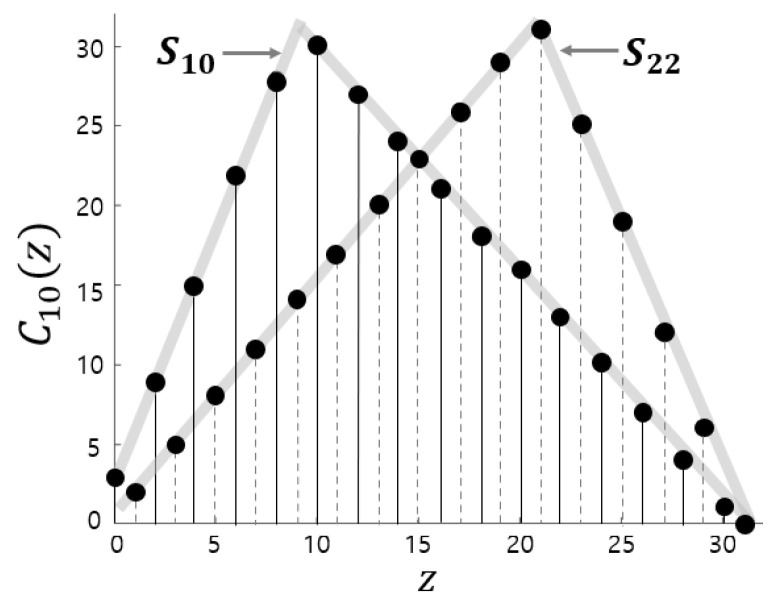 Figure 3
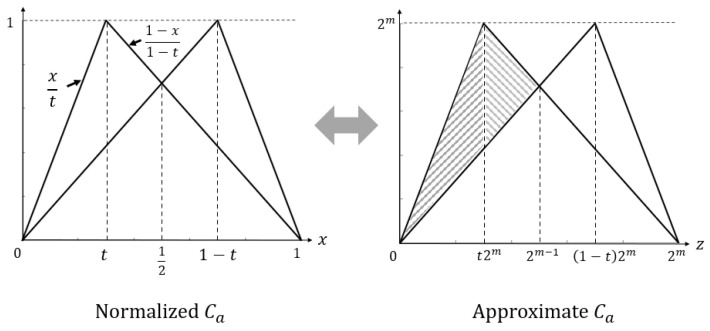 Figure 4
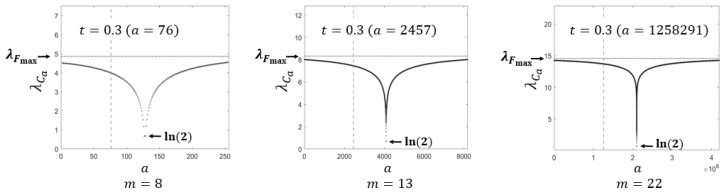 Figure 5
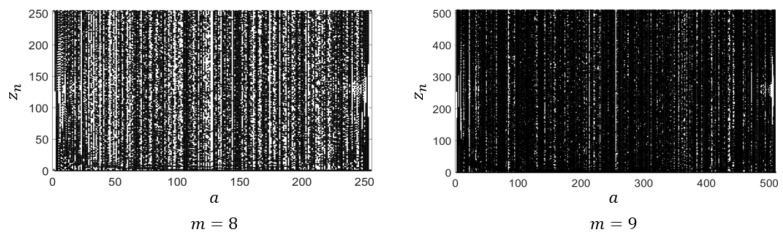 Figure 6
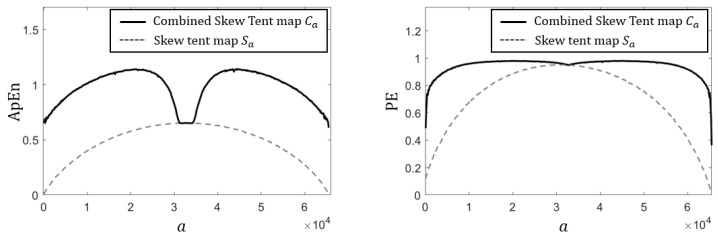 Figure 7
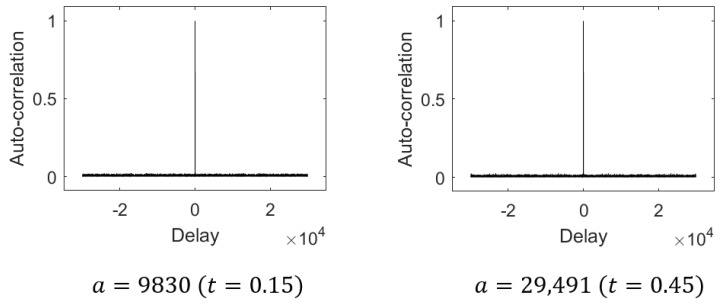 Figure 8
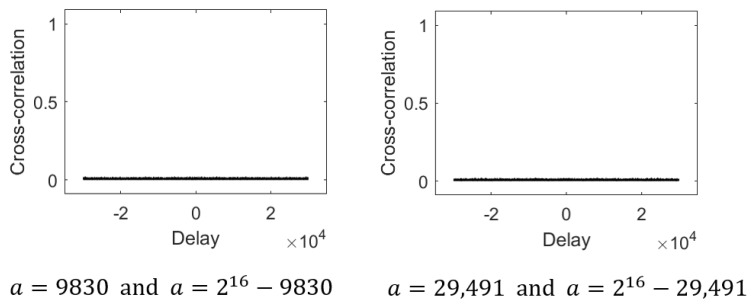 Figure 9
- —Korea Research Institute for defense Technology planning and advancement(KRIT)
- —Korea government (Defense Acquisition Program Administration)
Peer Reviews
No public reviews on file for this paper yet. If you reviewed it on a platform where reviews are public (OpenReview, ICLR, NeurIPS, ICML), you can paste yours below so the community can read it here.
Videos
No videos yet. Explain this paper in a talk, walkthrough, or lecture? Add one.
Taxonomy
TopicsChaos control and synchronization · Chaos-based Image/Signal Encryption · Mathematical Dynamics and Fractals
1. Introduction
Chaos has attracted significant attention in various engineering fields due to its inherent properties such as sensitivity to initial conditions, aperiodic behavior, and broadband spectrum. In particular, chaotic systems have been widely utilized in cryptography [1,2,3,4], communication systems [5,6,7], and pseudo-random number generation (PRNG) [3,8,9,10,11], where their intrinsic complexity and unpredictable behavior play a crucial role in enhancing security and improving randomness.
Conventional chaotic maps are defined over the real field. When such maps are implemented on digital hardware, the inherent dynamical properties are inevitably degraded due to the limitations of finite precision [12,13,14,15,16,17,18,19,20]. In the finite-precision domain, rounding and truncation errors accumulate over iterations, resulting in the disturbances in the generated trajectories. This issue is particularly critical for chaotic systems, because even some initially close trajectories diverge after some iterations due to the sensitivity to the initial conditions, which is quantified by the Lyapunov exponent [12]. Moreover, the extent of degradation varies with the computational precision of the hardware [13,15,21], preventing the preservation of the expected chaotic behavior in the digital domain. As a result, when a chaotic map is implemented digitally, it may suffer from the finite-precision effects. This may result in not only the generated trajectories to differ from the ideal chaotic behavior but also some of their statistical properties modified [20].
To address these limitations and enable practical applications of chaos, several techniques have been proposed to enhance the robustness of chaotic maps in the digital domain [3,16,17,19,22]. For example, ref. [17,22] proposed a perturbation framework to disturb chaotic orbits and avoid extreme dynamic degradation. In ref. [3], least significant bit extension was applied to the binary shift chaotic map to generate true chaotic orbits under finite precision. Finally, ref. [16,19] analyzed the impact of digital circuits on chaotic systems and introduced a control term to improve periodic orbits.
Meanwhile, to clarify the notion of chaos in digital environments, several studies have focused on defining chaos in the discrete domain [23,24,25]. For example, ref. [23] demonstrated that even when a continuous chaotic system is quantized into a semi-digital form, it can still satisfy Devaney’s definition of chaos under certain conditions. In addition, ref. [24,25] introduced the Discrete Lyapunov Exponent (dLE) as a reformulation of the conventional Lyapunov exponent for discrete systems. These works showed that when the size of the discrete space tends to infinity, a positive dLE implies chaotic behavior, and emphasized that bijective structures can eliminate stable periodic orbits, enabling sustained chaotic dynamics.
Building on these foundations, various studies have proposed new chaotic maps in discrete spaces and analyzed their dynamical behavior. These studies primarily evaluate whether the proposed maps exhibit chaotic properties using the dLE [9,14,26,27,28,29]. For example, ref. [9] introduced a digitalized modified logistic map, while ref. [14] proposed a discrete chaotic map family based on the discrete Arnold Cat Map over integer rings. In [29], it was shown that the integer sequences derived from interpreting the states of a primitive LFSR exhibit chaotic behavior. This is further generalized to the case where the connection polynomial is irreducible [30]. In addition, various discrete chaotic systems have been proposed, including those based on the composition of permutations [27], as well as integer- and finite-field-based constructions [26,28]. Discrete chaotic maps defined in the discrete domain play a vital role in cryptography and pseudorandom number generation, and continued research is required to support their broader use in various digital applications.
The skew tent map is known to exhibit chaotic behavior over the entire range of control parameters , and owing to this property, it has been widely applied in various fields [1,31,32,33,34]. However, despite this advantage, under finite-precision implementation, binary sequences generated by a single skew tent map can pass the NIST SP800-22 tests only when t is extremely close to 0.5, and their correlation properties are also unsatisfactory [31]. This ultimately serves as a limitation that restricts the inherent advantage of exploiting the entire range of , thereby diminishing the potential applications of skew tent map-based sequences [31].
In this paper, we introduce a new discrete chaotic map which leverages an interesting structural property of the digitalized skew tent map. The proposed map satisfies the definition of discrete chaos for all control parameters and, as the size of the discrete space increases, its dLE approaches the maximal value attainable in the same domain. It can therefore be regarded as a maximally chaotic map as defined in [25,35], meaning that it exhibits the most chaotic behavior among maps defined over the same discrete space. Furthermore, numerical experiments confirm that the proposed map generates integer sequences with high complexity, and the derived binary sequences also demonstrate superior complexity and correlation properties, validating their potential use in various applications.
The remainder of this paper is organized as follows. Section 2 introduces the proposed map. Section 3 investigates its chaotic behavior through dLE analysis. Section 4 presents numerical experiments demonstrating the improved correlation and randomness properties of the proposed map compared to the skew tent map. Finally, Section 5 discusses some concluding remarks for future research.
2. Discrete Skew Tent Map and the Proposed Map
The original skew tent map [1,24,31] is defined over the interval of real numbers as follows:
where is a control parameter. It is known to exhibit chaotic behavior for all values of t [1,31]. When is discretized with m-bit precision, it can be redefined as a discrete skew tent map, which is a bijection over the integers in the range , and can be expressed as follows [1]:
where is an integer control parameter. Figure 1 shows the phase portrait of the discrete skew tent map with for the various values of the control parameter a.
Theorem **1.**Let be an integer. Let and denote the discrete skew tent maps defined in (2) with the control parameters a and , respectively. For any two integers , if , then (mod 2).
Proof. For convenience, we represent the control parameter as , where is an odd integer and . We rewrite and as follows:
and
Now, we will go through all the values of z in the first equation of in the range or . Due to the ceiling function, we distinguish these values of into two cases. Case 1 is where is a multiple of and Case 2 is where is not a multiple of .
- Case 1. We consider the values of in the first equation of for some i. Then the values of will match with those of the first equation of corresponding to the input . Therefore, both and
must have the same parity. We note that then the value from will not have any match with the second equation of the map above since is a bijection.
- Case 2. We consider the values of that is not a multiple of in the first equation of , and observe in this case that
This time, the value above can be matched with some values from the second equation of the map above. Now, assume that
and . Then, we have or , and both z and have the same parity. Note again that is a bijection. Therefore, since any of the values from the first equation of for has been matched with the second equation of , it cannot be matched with the first equation of .
Remaining cases are the values of the input to the second equation of . The cases when the output match with either the first or the second equation of the map can be done similarly. □
Recall that z and always have the same parity if . Therefore, by picking up any one of and for all even inputs and picking up the other for all odd inputs, we may construct a new bijection over the same set of integers in the range .
Definition 1. For , we define a map as
where is a given control parameter.
Figure 2 shows the phase portraits of the proposed map with for three different control parameters. Interestingly, the phase portraits for and (=128 − 30) appear visually similar, yet they produce completely different output sequences. This difference in output behavior is further supported by their low cross-correlation values, as discussed in Section 4.4.
Figure 3 illustrates how the proposed map is constructed according to Definition 1. In this example, for is formed by sampling at even indices and at odd indices, visually demonstrating the piecewise composition of the map. We note that when , the pair and coincide, and the proposed map becomes the same as the discrete skew tent map with , which is in fact the discrete tent map.
Theorem **2.**For any control parameter , the proposed map defined in (3) is a bijection over the integers in the range .
Proof. The in (3) is constructed by combining two symmetric skew tent maps and by taking for only even i and taking for only edd i. Therefore, the input domain remains the same as . Recall that both and are bijections over the same range . By Theorem 1, when restricted to even and odd inputs, the output ranges of and are disjoint and now their union becomes the range . □
3. Chaotic Behavior of the Proposed Map
We now analyze the chaotic behavior of the proposed map. In general, a permutation F is said to be discretely chaotic if its dLE satisfies [24,25]
where M is the size of the discrete domain of F.
Theorem 3. Let m be a positive integer and consider the proposed map with control parameter . Then, the discrete Lyapunov exponent asymptotically approaches as m increases, for all a, except for .
The dLE of is known to be when [24].
Proof. To clarify the notion of neighborhood in a discrete ordered set, consider the domain of the map . Here, the neighbors of are and for . It is to be noted that has only one neighbor 1, and also has only one neighbor . Then, the dLE of a permutation on the set is defined as follows [24,25]:
where for and .According to the definition of the dLE in (5), it is computed by averaging the logarithmic differences between the outputs of neighboring input values over the domain. To analyze how these differences behave for the proposed map as m increases, we introduce a normalized real parameter , which is independent of m, and express the control parameter a in terms of t as
Then, the normalized proposed map is a combination of a pair of symmetric skew tent maps in (1), which is shown in Figure 4. Note that corresponds to the control parameter which is not considered here. Accordingly, we focus on the parameter range ∖{0.5} in the proof.Then the value in (5) becomes approximately the area under the natural log of the absolute difference between two lines in the figure. Since the left and right are symmetric, we only have to calculate the left part (shaded part) and double the result. It consists of two parts: and , where x is the the normalized real variable corresponding to the discrete variable z by the relation
Then, for , the difference becomes
For , the difference becomes
Therefore, the value in (5) can now be computed using the approximate in Figure 4 as follows:
as m gets larger and larger. □
Remark 1. The largest dLE has been derived for all permutations over the discrete phase space , where M is an even integer [25,35]. When , the largest dLE is given by
The permutations that achieve this largest are referred to as maximal discrete chaotic maps, as they possess the largest possible dLE among all permutations on phase spaces of the same size [25,35]. It is easy to see that as m gets larger and larger. We extend this notion and define the asymptotic version of this maximal chaos.
Definition **2.**A discrete chaos map F is called asymptotically maximally discrete chaotic if its dLE satisfies
where is given in (6).
Corollary 1. The proposed map for any control parameter ∖ is asymptotically maximally discrete chaotic.
Figure 5 compares the dLE of the proposed map with the maximal dLE among all permutations over the set , computed from (6), for , and . The horizontal dashed line marks the maximal dLE for each m, and the vertical dashed line indicates the location of the control parameter corresponding to . Notably, the local minimum of always occurs at , and this value equals , consistent with the dLE of the symmetric skew tent map or the proposed map as previously mentioned. This figure illustrates how the ratio gradually approaches 1 as m increases, as indicated by Corollary 1.
4. Numerical Simulations
4.1. Bifurcation Diagrams
The bifurcation diagram is a graphical tool used to visualize the dynamic behavior of a chaotic system. It shows how the output states of the chaotic map are distributed as its control parameter varies within a given interval [7].
Figure 6 presents the bifurcation diagrams of the proposed map for and , obtained by iterating the map from the initial state . For each control parameter a, the integer states are plotted to illustrate how the distribution evolves as a varies. As shown in both cases of Figure 6, the state points are densely and almost uniformly dispersed over the entire phase space, forming a distribution that nearly covers the full interval . Although a few short-period cycles appear for certain control parameters, these are dependent on the initial condition; for most cases, the trajectories generated from still occupy the entire state space densely. Therefore, the bifurcation diagrams confirm that the proposed map maintains nearly ergodic and well-dispersed behavior over a broad parameter range.
4.2. Complexity of Integer Sequences
To evaluate the complexity of integer sequences generated by the proposed map and the discrete skew tent map, we employ two widely used entropy-based measures: approximate entropy (ApEn) [36] and permutation entropy (PE) [37].
ApEn quantifies the regularity and unpredictability of a time series by estimating the logarithmic likelihood that similar patterns of length L remain similar within a tolerance r when extended to length [36]. It is then computed as the logarithmic difference between the average probabilities of similarity for pattern lengths L and . In this evaluation, we adopt commonly used parameters and , where denotes the standard deviation of the sequence and r serves as the threshold for determining whether two subsequences are considered similar [36]. A higher ApEn value indicates greater complexity and lower predictability, which are desirable characteristics of chaotic sequences.
PE quantifies the complexity of a time series by evaluating the distribution of ordinal patterns formed by subsequences of length L separated by an embedding delay D [37]. Each subsequence is ranked in ascending order, and the relative frequencies of all possible order permutations are computed to obtain a normalized Shannon entropy value. In this evaluation, we adopt the commonly used parameters and , as suggested in [22,37]. Larger PE values imply more uniformly distributed ordinal patterns, reflecting higher dynamical complexity and stronger chaotic behavior.
We consider the case of , for which the control parameter a ranges over (0, 65,536), and compute ApEn and PE for the output sequences. The results, presented in Figure 7, confirm that the proposed map consistently produces significantly more complex and less predictable integer sequences than the discrete skew tent map.
4.3. Randomness of Binary Sequences
We use the NIST SP800-22 statistical test suite [38], which comprises 15 sub-tests conducted at a significance level of . A test is considered passed if its pass rate is at least 0.96 [38].
The simplest method for generating binary sequences is the threshold-based conversion, which directly reflects the statistical bias of the map’s time series. It is well known that discrete skew tent maps fail to pass the NIST tests under this method [31]. To examine whether the proposed map exhibits such bias, we first generated binary sequences using the threshold-based method and evaluated them with the NIST test suite.
In this threshold-based approach, binary sequences are generated by iterating and mapping each state to 0 if and to 1 otherwise. We set and extract 100 subsequences of length from a single sequence of length . Table 1 reports the pass rates of each sub-test for binary sequences generated by , where for various values of t. For sub-tests with multiple components (marked with an *), the minimum proportion is reported. As shown in Table 1, the proposed map passes all NIST tests for every tested value of a, suggesting that its output sequences are statistically well balanced.
To further validate the randomness of the proposed map, we generated binary sequences using an XOR-based conversion under the same experimental conditions as the threshold-based case. In this approach, a new binary sequence was obtained by performing a three-bit XOR operation across different bit positions of each m-bit integer output, specifically the 1st, -th, and m-th bits. Table 2 presents the NIST test results for the XOR-based sequences generated from the proposed map with . As shown, these sequences also pass all NIST tests for every tested value of a, indicating that the generated binary sequences exhibit strong statistical randomness.
4.4. Correlation Analysis of Binary Sequences
Auto-correlation and cross-correlation are key metrics for evaluating the dependency structure in (binary) sequences from chaotic maps [19,31]. In this subsection, we examine these properties for the proposed map by generating binary sequences using the same binary mapping rules described in the previous subsection.
Figure 8 shows the auto-correlation results for binary sequences generated from the proposed map using the threshold-based conversion. Each sequence has a length of 30,000 with , and two representative control parameters were tested: (left) and a = 29,491 (right). In both cases, the maximum side-lobe values remain approximately 0.0225. Under the same parameters, the XOR-based sequences exhibited a comparable maximum side-lobe value of approximately 0.0237.
As mentioned earlier, two proposed maps and have visually similar phase portraits (Figure 2 for and ), but they are in fact distinct in detail. Figure 9 shows the cross-correlation between sequences generated from the two proposed maps: and (left), and a = 29,491 and − 29,491 (right), both with . The maximum cross-correlation values are 0.022 and 0.023, respectively, indicating sufficiently low inter-sequence correlations.
The current result is only some supporting evidence to demonstrate that binary sequences generated from the proposed map through some simple conversion rules can still exhibit reasonably good correlation properties in practice. The proof or the optimization of the correlation performance is beyond the scope of the present work. We note further that the correlation characteristics may be improved by employing more sophisticated binary mapping rules.
5. Concluding Remarks
In this paper, we proposed the new discrete chaotic map derived from a pair of symmetric discrete skew tent maps. We proved that it is bijective and asymptotically maximally discrete chaotic. We also conducted computational analyses on both the dynamical behavior of the map and the complexity of its derived sequences. The results demonstrate that the proposed map exhibits desirable characteristics such as uniformity, unpredictability, strong randomness, and low correlation. These properties make the proposed map particularly suitable for PRNG design, where statistical balance and unpredictability are essential, and also indicate its potential applicability to cryptography, secure communications, digital watermarking, and other information-security-related systems.
Periodicity of output sequences is another fundamental aspect of discrete dynamical systems. While some empirical observations have been made, a comprehensive understanding of how the period length behaves within the parameter space of the proposed map is still lacking and could be further explored in future work. As illustrated in the bifurcation diagrams, most control parameters yield long-period trajectories, whereas short cycles occasionally appear for specific control parameters and initial conditions. A more systematic investigation is therefore required to clarify how the period length depends on the control parameters, initial conditions, and the structure of the discrete state space.
Furthermore, the proposed map is based on a symmetric two-piecewise structure, and its extension to multi-piecewise forms could also be considered in future work. Although the proposed map already achieves asymptotically maximally discrete chaos, increasing the number of segments may not necessarily yield stronger chaotic behavior. Nevertheless, there remains potential to design new discrete chaotic maps within this framework by extending the discrete skew tent map to multi-piecewise forms. A rigorous theoretical investigation is therefore required to determine whether such extensions can also preserve chaotic behavior.
The reference list from the paper itself. Each links out to its DOI / PubMed record.
- 1Masuda N. Aihara K. Cryptosystems with discretized chaotic maps IEEE Trans. Circuits Syst. I Fundam. Theory Appl.2002492840
- 2Paul B. Pal S. Agrawal A. Trivedi G. Triple pendulum based nonlinear chaos generator and its applications in cryptography IEEE Access 20221012707312709310.1109/access.2022.3226515 · doi ↗
- 3Öztürk I. KiliçR. Utilizing true periodic orbits in chaos-based cryptography Nonlinear Dyn.20211032805281810.1007/s 11071-021-06235-3 · doi ↗
- 4Su Y. Xia H. Chen Z. Chen H. Huang L. A Novel One-Dimensional Chaotic System for Image Encryption Through the Three-Strand Structure of DNA Entropy 20252777610.3390/e 2708077640870248 PMC 12385667 · doi ↗ · pubmed ↗
- 5He J. Yuan G. Chen Z. Gao X. Acquisition of time and doppler shift in WFRFT encrypted chaotic direct sequence spread spectrum system IEEE Access 20221011800011801110.1109/ACCESS.2022.3220891 · doi ↗
- 6Baptista M.S. Chaos for communication Nonlinear Dyn.20211051821184110.1007/s 11071-021-06644-4 · doi ↗
- 7Tang J. Zhang Z. Huang T. Two-dimensional cosine-sine interleaved chaotic system for secure communication IEEE Trans. Circuits Syst. II Exp. Briefs 2024712479248310.1109/TCSII.2023.3337145 · doi ↗
- 8Tutueva A.V. Karimov T.I. Moysis L. Nepomuceno E.G. Volos C. Butusov D.N. Improving chaos-based pseudo-random generators in finite-precision arithmetic Nonlinear Dyn.202110472773710.1007/s 11071-021-06246-0 · doi ↗