Adverse Outcome Pathway 298: Increase in Reactive Oxygen Species Leading to Human Treatment-Resistant Gastric Cancer
Shihori Tanabe, Sabina Quader, Ryuichi Ono, Horacio Cabral, Edward J. Perkins

TL;DR
This paper describes a biological pathway showing how increased reactive oxygen species can lead to treatment-resistant gastric cancer through specific signaling events.
Contribution
The paper introduces AOP 298, a novel adverse outcome pathway linking ROS to treatment-resistant gastric cancer via Wnt/beta-catenin and EMT.
Findings
Sustained ROS levels trigger Wnt/beta-catenin signaling and EMT in gastric cancer.
EMT induced by Wnt signaling leads to treatment-resistant cancer with stem cell-like traits.
AOP 298 outlines four key event relationships connecting ROS to therapy resistance.
Abstract
This research aims to elucidate a pathway starting with increases in reactive oxygen species (ROS) and leading to human treatment-resistant gastric cancer through Wnt/beta-catenin signaling and epithelial–mesenchymal transition (EMT). The main topic in this article is Adverse Outcome Pathway (AOP) 298, entitled “increase in reactive oxygen species (ROS) leading to human treatment-resistant gastric cancer.” It consists of a molecular initiating event (MIE), “increase in ROS”; three key events (KEs), namely “porcupine-induced Wnt secretion and Wnt signaling activation,” “beta-catenin activation,” and “epithelial–mesenchymal transition (EMT)”; and an adverse outcome (AO), “treatment-resistant gastric cancer,” illustrating a mechanism of human treatment-resistant gastric cancer induced by drugs, therapy, or radiation. Injury causes resistance in human gastric cancer. Adverse Outcome…
Genes, proteins, chemicals, diseases, species, mutations and cell lines named across the full text — each resolved to its canonical identifier and authoritative record.
Click any figure to enlarge with its caption.
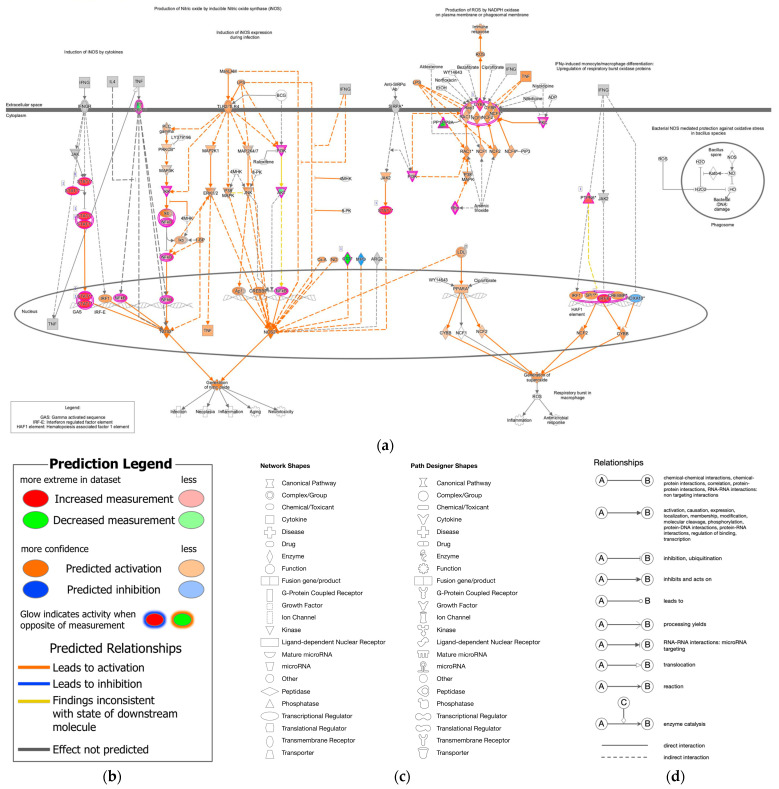 Figure 1
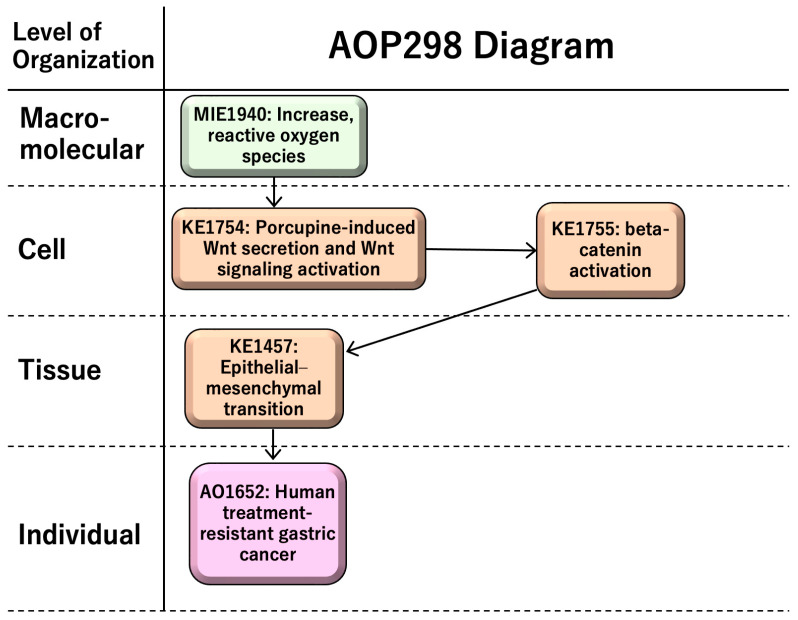 Figure 2
- —Japan Agency for Medical Research and Development (AMED)
- —Strategic International Collaborative Research Program
- —Japan Society for the Promotion of Science (JSPS) KAKENHI
Peer Reviews
No public reviews on file for this paper yet. If you reviewed it on a platform where reviews are public (OpenReview, ICLR, NeurIPS, ICML), you can paste yours below so the community can read it here.
Videos
No videos yet. Explain this paper in a talk, walkthrough, or lecture? Add one.
Taxonomy
TopicsWnt/β-catenin signaling in development and cancer · Cancer Cells and Metastasis · Gastric Cancer Management and Outcomes
1. Introduction
Molecular signaling pathway networks are regulated in epithelial–mesenchymal transition (EMT) and cancer stem cells (CSCs), which exhibit anti-cancer drug-resistant features. The NRF2-mediated oxidative stress response network included molecules related to EMT regulation through the growth factor pathway and the production of nitric oxide and reactive oxygen species in macrophages such as PI3K and AKT [1,2,3]. NRF2 signaling regulated EMT in gastric cancer [4]. Additionally, EMT induction increased metastasis and cisplatin resistance in gastric cancer, which involved Nrf2 signaling [5].
This research aims to ensure the safety of therapeutics such as anti-cancer drugs by revealing the molecular mechanisms that contribute to their efficacy and side effects or unexpected and off-targeted adverse effects. Chemicals induce molecular alterations and body responses. Recent progress in cellular and molecular network pathway analysis has revealed the activation mechanisms of cellular signal transduction upon cancer and chemical stimulation. In developing anti-cancer drugs such as molecular-targeting therapeutics, identifying target molecules and inhibiting or activating the signaling transduction related to the target molecules is important. Anti-cancer therapeutics targeting the Wnt/beta-catenin signaling pathway regulating cell self-renewal, the Hedgehog signaling pathway, Notch signaling pathway, and EGFR receptor signaling pathway have been developed and approved; however, off-target effects for molecular network pathways are not fully understood. To elucidate the safety of molecular-targeted and cellular therapeutics using multipotent stem cells, it is critical to predict unexpected off-target network pathways. Molecular network pathway analysis utilizing the existing abundant data in databases is needed [6,7]. This study aims to predict the side effects or adverse effects of different therapeutics by analyzing the molecular network pathway dynamism utilizing data from databases.
ROS consist of free oxygen radicals, such as superoxide, hydroxyl radical, nitric oxide, organic radicals, peroxyl radicals, alkoxyl radicals, thiyl radicals, sulfonyl radicals, thiyl peroxyl radicals, and disulfides, as well as non-radical ROS such as hydrogen peroxide, singlet oxygen, ozone/trioxygen, organic hydroperoxides, hypochlorite, peroxynitrite, nitrosoperoxycarbonate anion, nitrocarbonate anion, dinitrogen dioxide, nitronium, and highly reactive lipid- or carbohydrate-derived carbonyl compounds [8]. ROS have double-edged effects, which may affect tumorigenesis. ROS play crucial roles in protecting humans from infection, whereas prolonged excess ROS cause several diseases, including cancer, sensory impairment, and cardiovascular, neurological, and psychiatric diseases [9]. Nicotinamide adenine diphosphate (NADPH) oxidase catalyzes the production of superoxide through the one-electron reduction of oxygen and produces ROS [10] (Figure 1).
2. Outline of AOP298
2.1. Structure of AOP298
AOP 298, entitled “increase in reactive oxygen species (ROS) leading to human treatment-resistant gastric cancer,” consists of a molecular initiating event (MIE1; KE1115), an increase in ROS; key events (KEs), namely porcupine-induced Wnt secretion and Wnt signaling activation (KE1; KE1754), beta-catenin activation (KE2; KE1755), and epithelial–mesenchymal transition (EMT) (KE3; KE1457); and an adverse outcome (AO; KE1651)—namely, treatment-resistant gastric cancer (Figure 2). AOP 298 includes four KE relationships (KERs): “increase in ROS leads to porcupine-induced Wnt secretion and Wnt signaling activation,” “porcupine-induced Wnt secretion and Wnt signaling activation leads to beta-catenin activation,” “beta-catenin activation leads to EMT,” and “EMT leads to treatment-resistant gastric cancer” (https://aopwiki.org/aopwiki/snapshot/pdf_file/298-2025-08-15T02:01:48+00:00.pdf) (accessed on 4 December 2025) (Supplementary Material S1).
ROS have both benefits and risks for human health; chronic ROS, which is prolonged excess ROS, induces sustained tissue damage and macrophage activation. Porcupine-induced Wnt secretion in macrophages induces proliferation and beta-catenin activation, leading to epithelial–mesenchymal transition (EMT). EMT induces cancer migration and drug resistance, causing human treatment-resistant gastric cancer. AOP298-related information is summarized in Table 1.
2.2. Summary of Scientific Evidence Assessment
2.2.1. MIE1; KE1115: Increase in Reactive Oxygen Species (ROS)
Increases in ROS are observed when cells are exposed to various stressors such as allergens, ionizing radiation, and chemicals [11]. ROS include free radicals (e.g., superoxide anion, hydroxyl radicals, nitric oxide, nitrogen dioxide, organic radicals, peroxyl radicals, alkoxyl radicals, thiyl radicals, sulfonyl radicals, thiyl peroxyl radicals, and disulfide) and non-radical ROS (hydrogen peroxide, singlet oxygen, ozone/trioxygen, organic hydroperoxides, hypochloride, peroxynitrite, nitrosoperoxycarbonate anion, nitrocarbonate anion, dinitrogen dioxide, nitronium, and highly reactive lipid- or carbohydrate-derived carbonyl compounds). Increases in ROS contribute to various diseases.
2.2.2. KE1; KE1754: Porcupine-Induced Wnt Secretion and Wnt Signaling Activation
Sustained tissue damage induces inflammation. Wnt/beta-catenin signaling is essential for intestinal homeostasis, where macrophage-derived Wnt in intestinal repair is crucial for rescuing intestinal stem cells from radiation lethality [9].
2.2.3. KE2; KE1755: Beta-Catenin Activation
The oncoprotein beta-catenin stabilizes and translocates to the nucleus, followed by induction of the ZEB1 transcription factor, which promotes epithelial–mesenchymal transition (EMT) [12]. One of the important signaling pathways inducing EMT is the canonical Wnt/beta-catenin pathway, where beta-catenin acts as a coactivator of T-cell and lymphoid enhancer (TCF-LEF) factors [13]. Beta-catenin/TCF4 binds to the ZEB1 promoter and induces transcription, leading to EMT, a main hallmark of malignant cells [12].
2.2.4. KE3; KE1457: Epithelial–Mesenchymal Transition (EMT)
It is known that EMT plays an important role in therapeutic resistance and drug responses in human gastric cancer [7,14,15,16]. EMT is a critical regulator of the CSC phenotype and drug resistance [14] and is involved in the metastasis of gastric cancer [17,18]. Triggering receptor expressed on myeloid cells 2 (TREM2)—a key gene in gastric cancer progression—promotes EMT [19].
2.2.5. AO; KE1651: Treatment-Resistant Gastric Cancer
Gastric cancer can be classified as diffuse- or intestinal-type with an mRNA ratio of CDH2 to CDH1 [20]. Diffuse-type gastric cancer, which has a poor prognosis and is treatment-resistant, has up-regulated genes that are involved in EMT [21,22]. Gastric cancer-derived mesenchymal stromal cell-primed macrophages promote metastasis and EMT in gastric cancer [23].
Scientific evidence of AOP298 is provided as support for the biological plausibility of KERs (Table 2), for the essentiality of KEs (Table 3), and as empirical support for KERs (Table 4).
3. Discussion
AOP298, entitled “increase in ROS leading to treatment-resistant gastric cancer,” consists of several components: “increase in ROS” as an MIE; “Porcupine-induced Wnt secretion and Wnt signaling activation,” “beta-catenin activation,” and “epithelial–mesenchymal transition (EMT)” as intermediate KEs; and “treatment-resistant gastric cancer” as an AO. The AOP’s description is based on a mechanism of drug resistance, metastasis, and gastric cancer progression, and its application involves the risk assessment of anti-cancer drugs and the development of anti-cancer treatment.
Chronic low-level increased ROS play crucial roles in the development of radioresistant gastric cancer via tumor microenvironment alteration and EMT [35]. Specific cellular adaptations—e.g., up-regulation of antioxidant systems such as Nrf2 or changes in mitochondrial function—may maintain the chronic state. Radiation promotes the metastasis of cancer via ROS and EMT [50]. The extent of ROS levels appears to be critical in balancing cancer cell growth and cell death [51]. Oxidative stress is linked to numerous inflammatory diseases and cancer, where oxidative stress and inflammation drive tumor cell proliferation, migration, invasion, and metastasis [52].
The tumor microenvironment (TME), consisting of immune cells, natural killer cells, the extracellular matrix, etc., plays a critical role in tumor initiation, development, and metastasis by manipulating redox signaling [53,54]. Interactions among tumor-associated macrophages, gastric cancer cells, and natural killer cells induce immune checkpoint molecules that interact with immune cells in the TME of gastric cancer, thereby evading anti-tumor immunity. [55]. Cancer cells use chronic ROS to neutralize, exhaust, and suppress anti-tumor immune cells [53]. Persistent oxidative stress signals from cancer cells transform fibroblasts into pro-tumorigenic cancer-associated fibroblasts [53]. Chronic ROS is crucial for activating the TME in treatment-resistant cancer.
There is a possibility that non-canonical Wnt signaling, independent of beta-catenin, is involved in EMT in prostate cancer [56]. Non-canonical Wnt signatures, such as ROR2 and FZD7, are correlated with poor prognosis in gastric cancer [57]. The involvement of non-canonical pathways needs to be further investigated. The TGF-beta and SMAD signaling pathway induces EMT and gastric cancer [58], while the PI3K/AKT/mTOR signaling pathway modulates EMT and gastric cancer [59]. Hippo signaling is also implicated in gastric cancer [60]. The pathway network of gastric cancer and other cancers, with cross-talk among various signaling pathways, would be interesting to investigate in the future.
4. Conclusions
AOP298, entitled “increase in ROS leading to human treatment-resistant gastric cancer,” illustrates a pathway beginning with chronic increases in ROS, inducing Wnt signaling activation and leading to EMT and treatment-resistant gastric cancer in humans. Its description includes a mechanism of drug resistance, metastasis, and gastric cancer progression, which can be applied to the risk assessment of anti-cancer drugs, such as drug resistance prediction, and the development of anti-cancer treatments.
The reference list from the paper itself. Each links out to its DOI / PubMed record.
- 1Zhang Q. Liu J. Duan H. Li R. Peng W. Wu C. Activation of Nrf 2/HO-1 signaling: An important molecular mechanism of herbal medicine in the treatment of atherosclerosis via the protection of vascular endothelial cells from oxidative stress J. Adv. Res.202134436310.1016/j.jare.2021.06.02335024180 PMC 8655139 · doi ↗ · pubmed ↗
- 2Han X. Zhang Q. Cao D. Wang Y. Wang S. He Q. Zhao J. Chen X. Based on network pharmacology and experimental validation, berberine can inhibit the progression of gastric cancer by modulating oxidative stress Transl. Cancer Res.20251455456810.21037/tcr-24-73239974399 PMC 11833373 · doi ↗ · pubmed ↗
- 3Hu S. Feng J. Wang M. Wufuer R. Liu K. Zhang Z. Zhang Y. Nrf 1 is an indispensable redox-determining factor for mitochondrial homeostasis by integrating multi-hierarchical regulatory networks Redox Biol.20225710247010.1016/j.redox.2022.10247036174386 PMC 9520269 · doi ↗ · pubmed ↗
- 4Guan D. Zhou W. Wei H. Wang T. Zheng K. Yang C. Feng R. Xu R. Fu Y. Li C. Ferritinophagy-mediated ferroptosis and activation of Keap 1/Nrf 2/HO-1 pathway were conducive to EMT inhibition of gastric cancer cells in action of 2,2′-di-pyridineketone hydrazone dithiocarbamate butyric acid ester Oxid. Med. Cell Longev.20222022392066410.1155/2022/392066435237380 PMC 8885181 · doi ↗ · pubmed ↗
- 5Gupta J. Ahmed A.T. Tayyib N.A. Zabibah R.S. Shomurodov Q. Kadheim M.N. Alsaikhan F. Ramaiah P. Chinnasamy L. Samarghandian S. A state-of-art of underlying molecular mechanisms and pharmacological interventions/nanotherapeutics for cisplatin resistance in gastric cancer Biomed. Pharmacother.202316611533710.1016/j.biopha.2023.11533737659203 · doi ↗ · pubmed ↗
- 6Tanabe S. Quader S. Ono R. Cabral H. Aoyagi K. Hirose A. Yokozaki H. Sasaki H. Molecular network profiling in intestinal- and diffuse-type gastric cancer Cancers 202012383310.3390/cancers 1212383333353109 PMC 7765985 · doi ↗ · pubmed ↗
- 7Tanabe S. Quader S. Cabral H. Ono R. Interplay of EMT and CSC in cancer and the potential therapeutic strategies Front. Pharmacol.20201190410.3389/fphar.2020.0090432625096 PMC 7311659 · doi ↗ · pubmed ↗
- 8Liou G.Y. Storz P. Reactive oxygen species in cancer Free Radic. Res.20104447949610.3109/1071576100366755420370557 PMC 3880197 · doi ↗ · pubmed ↗