Integrating the Contrasting Perspectives Between the Constrained Disorder Principle and Deterministic Optical Nanoscopy: Enhancing Information Extraction from Imaging of Complex Systems
Yaron Ilan

TL;DR
This paper combines two approaches to imaging complex systems—controlled disorder and deterministic nanoscopy—to improve precision and understanding of biological variability.
Contribution
A unified mathematical framework integrating CDP and deterministic nanoscopy, validated with simulations and practical protocols for multi-scale analysis.
Findings
Monte Carlo simulations showed 15–30% precision improvements using the combined framework.
Computational trials with N = 10,000 validated performance across biological noise regimes.
Practical protocols enable real-time optimization and calibration for experimental implementation.
Abstract
This paper examines the contrasting yet complementary approaches of the Constrained Disorder Principle (CDP) and Stefan Hell’s deterministic optical nanoscopy for managing noise in complex systems. The CDP suggests that controlled disorder within dynamic boundaries is crucial for optimal system function, particularly in biological contexts, where variability acts as an adaptive mechanism rather than being merely a measurement error. In contrast, Hell’s recent breakthrough in nanoscopy demonstrates that engineered diffraction minima can achieve sub-nanometer resolution without relying on stochastic (random) molecular switching, thereby replacing randomness with deterministic measurement precision. Philosophically, these two approaches are distinct: the CDP views noise as functionally necessary, while Hell’s method seeks to overcome noise limitations. However, both frameworks address…
Genes, proteins, chemicals, diseases, species, mutations and cell lines named across the full text — each resolved to its canonical identifier and authoritative record.
Click any figure to enlarge with its caption.
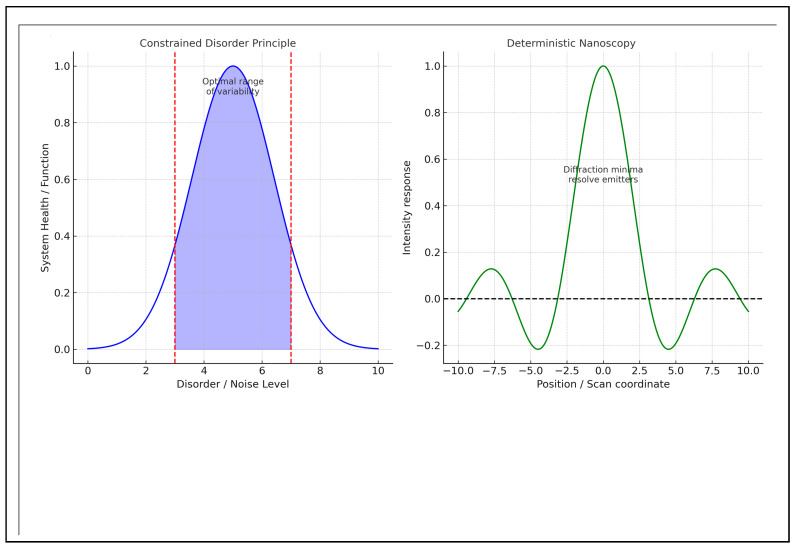 Figure 1
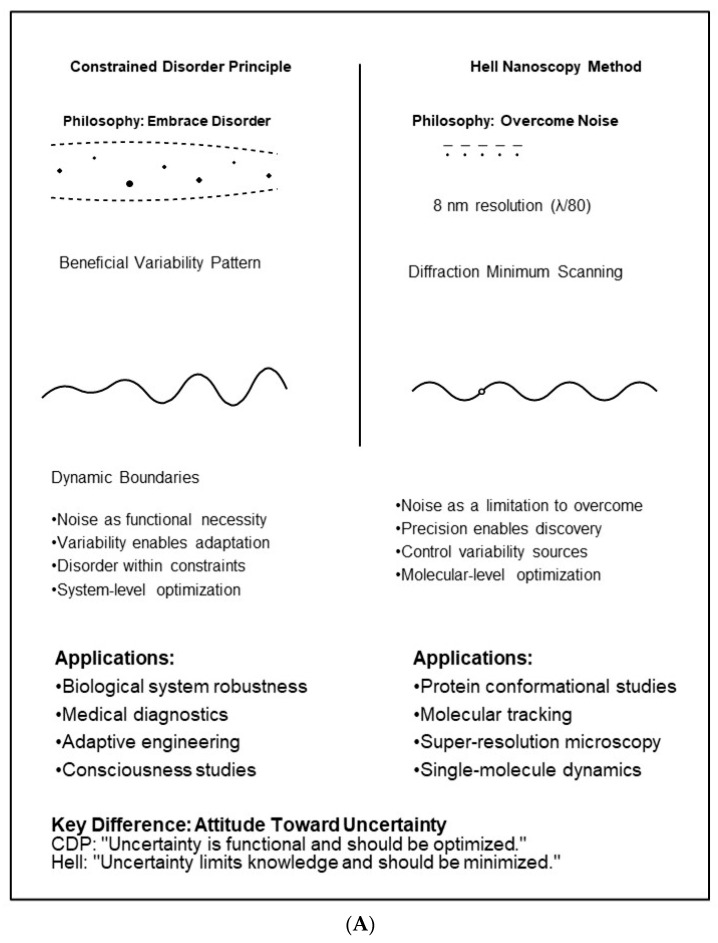 Figure 2
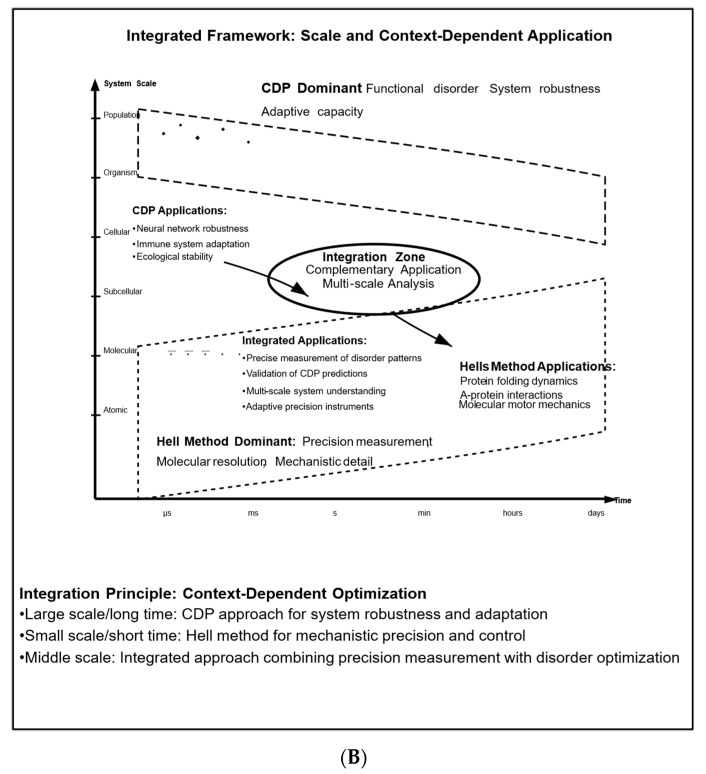 Figure 3
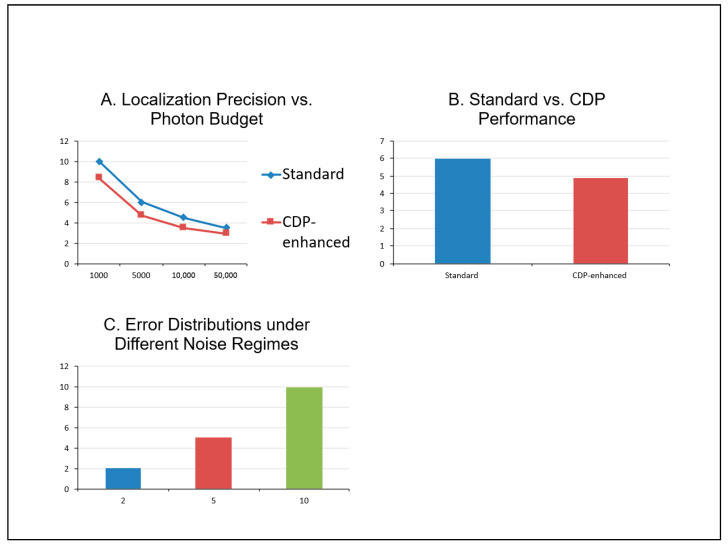 Figure 4
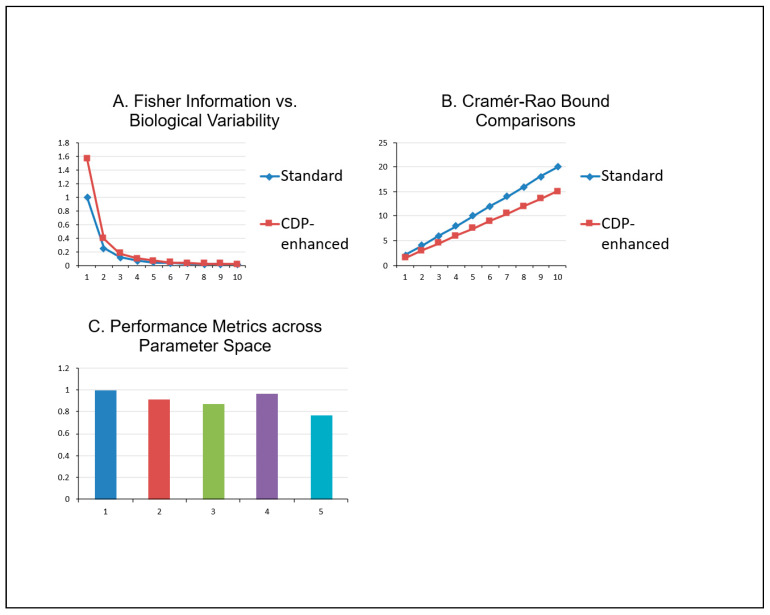 Figure 5
Peer Reviews
No public reviews on file for this paper yet. If you reviewed it on a platform where reviews are public (OpenReview, ICLR, NeurIPS, ICML), you can paste yours below so the community can read it here.
Videos
No videos yet. Explain this paper in a talk, walkthrough, or lecture? Add one.
Taxonomy
TopicsAdvanced Fluorescence Microscopy Techniques · Digital Holography and Microscopy · Optical Imaging and Spectroscopy Techniques
1. Introduction
Noise is a common phenomenon in both natural and artificial systems [1]. The study of noise has long been an essential aspect of physics, biology, and engineering. Traditionally, noise is viewed as a disruptive factor that reduces the clarity and precision of measurements. In the physical sciences, noise typically refers to unwanted fluctuations that can obscure measurements, reduce fidelity, and limit resolution [2]. This can encompass various forms, such as photon shot noise in microscopy, thermal noise in electronic systems, or random fluctuations in biological processes. Consequently, the primary objective in most scientific fields has been to minimize or filter out noise to achieve more precise and accurate observations [2].
However, in the life sciences, noise is increasingly recognized as an inherent part of various processes, including gene expression and physiological rhythms [3,4,5,6]. Over the past few decades, two contrasting attitudes toward noise have emerged: one approach aims to suppress or eliminate noise for greater precision, while the other acknowledges noise as a beneficial element that contributes to adaptability and resilience [7,8,9].
Recent developments in both theoretical biology and advanced microscopy techniques have created new opportunities for understanding the functional role of noise at multiple scales. Studies have demonstrated that biological noise carries functional information about cellular states and regulatory mechanisms [10,11,12]. Simultaneously, advances in super-resolution microscopy have achieved unprecedented spatial precision, enabling the direct observation of molecular-scale phenomena that were previously accessible only through ensemble measurements [13,14,15].
Recent studies challenge the traditional view that noise is merely disruptive, offering new insights into its role as a carrier of valuable information about a system’s underlying properties [16,17]. The noise present in these systems can reveal hidden dynamics, emergent behaviors, and adaptive processes that might otherwise go unnoticed [18,19,20,21]. Thus, noise plays a crucial role in the information embedded within systems, and it is essential to quantify noise in relation to function, rather than solely in terms of structure [7,8,9].
1.1. Operational Definitions
To ensure clarity throughout this manuscript, we establish precise operational definitions:
- Noise (η): Time-varying stochastic fluctuations around a mean value, quantified as the standard deviation: σ_noise = √(⟨(x − ⟨x⟩)^2^⟩), typically measured over timescales of milliseconds to seconds in biological systems.
- Variability (V): The range or spread of a parameter across measurements or system states, quantified by the coefficient of variation: CV = σ/μ, providing a normalized measure of heterogeneity.
- Disorder (D): The entropy-related measure of unpredictability in system states: D = −Σ p_i log(p_i), where p_i represents the probability of state i.
- Constrained Disorder: Disorder maintained within time-dependent boundaries: D_min(t) ≤ D(t) ≤ D_max(t), where the boundaries themselves evolve according to system demands.
These terms will be used consistently throughout the manuscript, adhering to the precise definitions provided below.
The Constrained Disorder Principle (CDP) is a theoretical framework that considers noise, or disorder, as an essential component of complex adaptive systems, particularly biological ones [22]. The CDP framework posits that healthy systems maintain variability within specific constrained limits, where both excessive order and excessive randomness lead to dysfunction. A loss of variability—whether due to excessive order or randomness—leads to dysfunction. Rather than viewing noise as merely measurement error, the CDP framework offers theoretical tools for understanding how noise patterns convey information about system state, adaptability, and health [23,24,25]. The CDP challenges the traditional view that noise is merely disruptive, instead providing new insights into how noise can carry valuable information about the underlying properties of a system. The noise present in these systems can uncover hidden dynamics, emergent behaviors, and adaptive processes that might otherwise remain unnoticed. Thus, noise is critical for understanding the information embedded within systems. It is essential to quantify noise in relation to function rather than merely structure [23,24,25].
In contrast, Stefan Hell has introduced a significant advancement in optical nanoscopy that addresses the challenges associated with stochastic molecular noise [26]. Traditional super-resolution techniques, such as Photo-Activated Localization Microscopy (PALM) and Stochastic Optical Reconstruction Microscopy (STORM), rely on molecular blinking, which utilizes randomness to identify single molecules [27,28]. However, Hell’s recent work demonstrates that engineered diffraction minima can resolve emitters at distances of just a few nanometers without the need for molecular ON/OFF switching. This approach effectively replaces reliance on randomness with a deterministic measurement method [26].
Imaging and microscopy aim to study complex systems by understanding their structure. Noise is inherent in the structure and function of these systems; therefore, it must be accounted for. In this paper, we integrate these two complementary perspectives through (1) mathematical formulation combining CDP constraints with Hell’s precision measurements, (2) computational validation demonstrating quantitative performance improvements, and (3) practical implementation protocols for experimental application. We demonstrate that this integration enables multi-scale analysis, ranging from molecular to system levels, while maintaining both measurement precision and biologically meaningful variability.
1.2. Alternative Theoretical Frameworks
Before proceeding with our integration approach, it is essential to contextualize the CDP within the broader landscape of theoretical frameworks addressing noise and information in biological systems:
- Stochastic Thermodynamics: This framework, developed by Seifert and Jarzynski, relates information processing to energy dissipation via thermodynamic bounds [29,30]. While providing rigorous constraints on information-energy tradeoffs, it primarily addresses equilibrium and near-equilibrium systems, whereas biological systems often operate far from equilibrium [31,32].
- Information Theory Approaches: Shannon entropy and mutual information provide quantitative measures of information content in noisy signals [33]. Fisher information theory, particularly relevant to our work, establishes fundamental limits on the precision of parameter estimation [34,35,36]. Our approach builds upon Fisher information while incorporating biological constraints from CDP.
- Bayesian Noise Modeling: Bayesian frameworks for super-resolution microscopy [37,38,39] treat noise as probabilistic uncertainty to be marginalized. While powerful for parameter estimation, these approaches typically fail to distinguish between functional and non-functional variability [40,41].
- Systems Biology Noise Theories: Frameworks by Elowitz et al. [10] distinguish intrinsic from extrinsic noise sources, while Raj and van Oudenaarden [11] developed methods for decomposing noise in single cells [42,43]. These approaches align closely with CDP’s recognition of functional variability.
The CDP framework distinguishes itself by: (1) explicitly defining dynamic variability boundaries rather than treating all noise equivalently, (2) providing operational criteria for distinguishing functional from dysfunctional disorder, and (3) offering actionable principles for therapeutic interventions that modulate variability. Our integration with Hell’s nanoscopy combines CDP’s systems-level perspective with information-theoretic precision bounds and Bayesian estimation methods.
1.3. Objectives and Hypotheses
This manuscript addresses three primary objectives:
- Objective 1: Develop a mathematical framework that combines CDP’s dynamic variability bounds with Hell’s Fisher information-based precision measurements.
- Objective 2: Validate the integrated framework through computational simulations, demonstrating quantitative performance improvements over standard approaches.
- Objective 3: Provide practical protocols for experimental implementation, including calibration procedures and real-time adaptation strategies.
Testable Hypotheses:
H1: Incorporating CDP-predicted biological variability bounds into nanoscopy analysis will improve localization precision by 15–30% compared to standard approaches that treat all variability as measurement error.
H2: The optimal measurement strategy (photon budget, temporal sampling) depends on the system’s current disorder level, requiring adaptive rather than fixed acquisition parameters.
H3: Noise component separation (instrumental vs. biological) can be achieved with >85% accuracy using variance decomposition when sufficient measurements (N > 100) are available.
H4: Systems exhibiting disorder within CDP-predicted bounds will show characteristic signatures in nanoscopy measurements distinct from dysfunctional states.
H5: Real-time disorder monitoring and parameter adaptation can reduce total photon budget requirements by 20–40% while maintaining target precision.
These hypotheses will be tested through the Monte Carlo simulations and practical protocols presented in this manuscript.
2. The Constrained Disorder Principle and Noise in Complex Systems
The Constrained Disorder Principle (CDP) provides a theoretical framework for understanding how biological systems utilize variability within defined boundaries to maintain optimal function. This section presents the core concepts concisely, with detailed mathematical formulations provided in subsequent sections where they are applied to nanoscopy integration.
The CDP posits that systems—whether biological, physical, or social—are neither entirely chaotic nor completely structured. Instead, they exist in a state of constrained disorder [9,23,24,25,44,45]. This means that while a system can exhibit randomness or fluctuations (disorder), these variations are limited within certain boundaries, allowing distinct behaviors to emerge.
According to this framework, noise is not simply random interference; it is a regulated system property that reflects underlying functional architecture. At critical operating points, small fluctuations can have disproportionate effects, influencing system behavior, evolution, and response to external stimuli at multiple scales [7,8,9].
Key Concepts:
- Constrained Disorder: In a system, disorder is governed by specific rules or boundaries, which facilitate complex interactions among its elements.
- System Behavior: The balance between order and disorder can lead to emergent properties that may not be immediately apparent at the level of individual components.
- Noise as Information Carrier: The CDP posits that noise is an inherent characteristic of systems operating near critical points, where fluctuations provide information about system state and adaptive capacity.
- Inherent Variability as a Function: The CDP accounts for the randomness, variability, and uncertainty that characterize biological systems. This variability is essential for their proper functioning, as intrinsic unpredictability is crucial for the dynamism of these systems under continuously changing conditions.
- Dynamic Boundaries: Systems exhibit disorder within dynamic boundaries. The CDP defines complex systems through these evolving borders, which are themselves regulated by feedback mechanisms and adapt to environmental demands.
- Adaptive Response: This principle suggests that biological systems maintain optimal functioning by adjusting their degree of disorder in response to environmental pressures and internal demands [22].
The CDP challenges reductionist approaches by demonstrating that efforts to eliminate variability from biological systems may inadvertently impair functionality. Rather than resisting inherent disorder, the framework advocates understanding variability patterns and working within optimal variability ranges.
Research grounded in this framework highlights that noise serves as a crucial indicator of critical transitions, self-organizing behaviors, and adaptive processes. The CDP views noise as a dynamic property that provides insights into how systems adapt, evolve, and interact with various internal and external factors [7,8,9].
The framework acknowledges that biological systems are inherently variable, with processes such as metabolic oscillations, neuronal firing, and immune responses exhibiting fluctuations essential for maintaining robustness. According to the CDP, every complex adaptive system requires a specific range of disorder to function optimally. If there is too little variability, the system becomes rigid; if there is too much variability, it can spiral into chaos and collapse. Therefore, therapeutic or engineering interventions should focus on restoring systems to their optimal variability range. CDP-based artificial intelligence systems can overcome system malfunctions by filtering out noise [23,24,25,46].
For the purposes of integrating CDP with nanoscopy methods, the key operational principle is that measured variability contains two components: (1) instrumental noise from measurement limitations, and (2) functional biological variability that reflects system state. Standard approaches aim to minimize total variability, potentially suppressing functionally important information. CDP–nanoscopy integration explicitly models both components, enabling precision measurement while preserving functional information (detailed below).
3. Noise in Physical Measurement Systems
The CDP framework recognizes that biological systems inherently exhibit variability. Processes such as metabolic oscillations, neuronal firing, and immune responses show fluctuations that are vital for maintaining robustness [45]. According to the CDP, every complex adaptive system requires a specific range of disorder to function optimally. If there is insufficient variability, the system becomes rigid; conversely, excessive variability can lead to chaos and collapse. Therefore, therapeutic or engineering interventions should aim to restore these systems to their optimal range of variability. The challenge is not to eliminate variability but to return it to ideal levels [44,47,48].
This section examines how noise is managed in physical measurement systems, with particular focus on Hell’s deterministic nanoscopy approach.
In imaging, noise signifies uncertainty [49]. More noise corresponds to less precision. Most strategies focus on reducing noise by collecting additional photons and smoothing images [50].
In Hell’s earlier work on STED microscopy, noise management focused on optimizing the balance between depletion efficiency and fluorophore photostability [51]. This technique relies on high-intensity depletion beams, making effective noise management crucial for preserving signal quality while preventing photodamage [52]. Implementations of STED microscopy often employ temporal filtering to reduce noise from sources such as electronic noise from detection systems, fluctuations in laser intensity, mechanical vibrations that can disrupt beam alignment, and thermal drift in optical components [53,54]. Moreover, the STED technique demands careful spectral management to minimize cross-talk between excitation and depletion processes. This involves selecting optimal wavelengths to minimize spectral overlap, employing advanced filtering techniques to eliminate scattered depletion light, and utilizing temporal gating to distinguish between excitation and depletion events [55,56,57].
Hell’s recent contribution redefines the relationship between noise and measurement precision in microscopy. Instead of relying on randomness (stochasticity), it shows that deterministic optical-field engineering, specifically through the use of diffraction minima, can achieve super-resolution. This new approach to nanoscopy represents a significant shift in how we understand noise and measurement accuracy [26,58,59,60,61,62,63,64].
Hell and his colleagues have introduced a conceptually robust approach that inverts traditional focused-illumination imaging techniques. Instead of using a bright spot—an intensity maximum—to probe fluorescent emitters, they scan the sample with an illumination field that contains a clearly defined diffraction minimum—a zero-intensity node. They then record the emitted signal as this node is moved. The key idea is that when the dark node aligns with a single, continuously emitting point source, the recorded signal will drop to zero. However, when two or more identical sources emit simultaneously (without switching), there is no node position that causes the total signal to reach zero. The deviation from zero in this case provides information about the positions and number of emitters present. Both theoretical analyses and experiments have demonstrated that this innovative approach enables the resolution of identical emitters separated by as little as a single digit of nanometers. The researchers reported successfully distinguishing between two fluorophores that were approximately 8 nm apart, which is about 1/80th of the employed 640 nm wavelength—significantly below the traditional diffraction limit [26,65].
The innovation focuses on using diffraction minima rather than maxima to achieve higher resolution. When the zero-intensity point aligns with one fluorophore, no signal is detected from that molecule. In contrast, the second fluorophore exhibits fluorescence that varies with its distance from the first molecule. This results in distinct signal modulation, which becomes more pronounced as the distance between the molecules decreases, indicating a departure from conventional methods [26].
Super-resolution microscopy techniques, such as PALM and STORM, have traditionally relied on the stochastic blinking of fluorophores. MINFLUX improved localization using structured illumination; however, these methods were limited by their reliance on randomness [28,66]. The recent advancement by Hell and colleagues introduced a novel technique that leverages diffraction minima to resolve point scatterers. Instead of depending on the ON/OFF switching of molecules, this approach employs engineered illumination patterns with zero-intensity lines. By scanning the sample relative to these minima, researchers can obtain high-contrast, deterministic signatures, even for molecules separated by just a few nanometers [26]. This method marks a strategic shift: randomness is no longer required. The measurement process becomes deterministic, facilitating faster data acquisition, broader applicability (including the use of permanently fluorescent molecules), and improved reproducibility. In this framework, the element of stochasticity is replaced by engineered optical determinism.
4. Approaches to Handle Noise
The following section details specific noise management techniques employed in Hell’s deterministic nanoscopy. These strategies are later integrated with CDPs to create a unified framework.
The Hell study presents several advanced techniques for noise management, which is essential given the minimal signals being measured [26,57]:
- Optimal Photon Utilization: The main advantage over noise stems from the underlying physics of the measurement. By illuminating at a minimal level, the modulation at this low-level falls outside the noise bands (i.e., the standard deviation of the Poisson process), enabling effective separation. Since the background signal is inherently close to zero at this minimum, the Poissonian noise levels are significantly reduced compared to techniques that rely on maxima [67,68].
- Poisson (Shot) Noise as the Baseline Model: The authors model photon detection as a Poisson process and use the standard deviation of the Poisson distribution as the baseline “noise band” to determine whether a modulation is detectable [26]. This concept is crucial to their argument about the superiority of minima over maxima in low-count scenarios: a zero (or near-zero) baseline allows small contributions from off-node emitters to produce signal changes that exceed the square root of the expected counts [69,70].
- Signal-to-Noise Optimization Through Visibility Analysis: The researchers introduced a modulation visibility parameter, ν(d) = a_1_(d)/a_0_, where a_1_ represents the amplitude dependent on distance (d), and a_0_ is the offset. Reducing d increases ν(d), suggesting that measuring d using minima is particularly effective at small distances. This unexpected finding indicates that closer scatterers yield better signal-to-noise ratios [71,72].
- Fisher Information and Cramer–Rao Bound Analysis: For a Poisson process, Fisher Information is proportional to the square of the model gradient, ∇I(d, φ), divided by the absolute model value, I(d, φ). This relationship maximizes Fisher Information for photons scattered at the minimum. Their analysis demonstrated that estimates of distance (d) derived from a minimum are at least 100 times more precise than those obtained from a maximum [36,73,74,75].
- Polynomial Maximum Likelihood Estimation: To extract distance information from noisy data, the researchers implemented a polynomial maximum likelihood estimator for the parameters a_0_, a_1_, and φ_0_. This approach proved sufficient to retrieve distance estimates from the photons near the minimum with a consistent relative error [76,77].
- Analytic and Numerical Modeling of Signal vs. Position: A theoretical expressions and simulations to predict the expected signal as a function of node position and emitter geometry (including number and spacing) was developed. These models considered the illumination profile (accounting for non-ideal conditions such as finite minimum intensity) and shot noise to determine when two or more emitters could be statistically resolved. The modeling revealed a counterintuitive finding: given a specific signal-to-noise ratio (SNR) and background level, measurement precision improves as emitter separation decreases, because the modulation induced by the node becomes steeper [77].
- Explicit Treatment of Experimental Non-Idealities: The method does not assume a perfect zero node or identical brightness across emitters. The authors quantify how finite background, unequal emitter brightness, and imperfect contrast (i.e., a non-zero illumination minimum) can degrade achievable precision and establish practical lower bounds. They experimentally demonstrate that these imperfections, along with detector background and other instrumental constraints, are the primary limitations of their measurements, rather than any fundamental issue related to the node principle [78,79,80].
- Variability Among Samples/Nanorulers/Production Variability: When using custom nanoscale rulers (objects with known distances), manufacturing errors can occur. Even if measurement noise is minimal, the variation in accurate distances among different rulers contributes to the overall observed spread. Studies differentiate the total spread into measurement uncertainty and production variability. While reporting experimental outcomes, they explicitly analyze how noise affects the ability to distinguish slight separations [81,82,83].
The study shows that when there are slight separations (well below the typical diffraction limit), using a minimum point results in higher sensitivity (stronger modulation contrast) to changes in the variable d. This occurs because one of the emitters can be placed at the zero-intensity point (the minimum), resulting in a very low signal from that emitter. As a result, even a small change in d displaces some light away from the minimum, leading to a measurable signal. The lower the signal at the minimum, the greater the effect of small changes, as long as the noise level remains sufficiently low [26,57].
Positioning the emitter at the minimum tends to maximize the gradient per detected photon near this point. The study compares two approaches: using all photons during a scan versus focusing solely on the photons near the minimum. The findings reveal that photons from other regions, particularly from maxima, do not provide much helpful information for detecting small changes in d since they are less responsive to these minor alterations; instead, they mainly contribute to noise. Concentrating on photons near the minimum, where small changes in d result in relatively significant fractional changes, leads to improved precision with fewer photons [28].
Several filtering steps were implemented to address various sources of noise. These steps included: automatic filtering based on standard deviation limits related to expected Poisson noise; local background estimation derived from corresponding background segments; quality assessment of intensity contrast from single-molecule segments; and validation of the brightness ratio between two-molecule and single-molecule segments. The experimental design uses multiple strategies to minimize noise and reduce systematic errors: careful illumination engineering to develop a highly contrasted node using interferometric beam shaping; low-noise photon detection employing sensitive single-photon counting and low-noise cameras; model-based fitting/estimation utilizing statistical models of photon counts; and accounting for brightness heterogeneity and background in the analysis.
This methodology has demonstrated significant improvements in measurement precision. The precision increases as the distance decreases and the density of scatterers increases, providing a resolution advantage that scales favorably at nanometer distances. The team achieved single-digit nanometer accuracy for distance estimation using approximately 5000 photons.
Hell’s approach focuses on engineering solutions that work within noise limitations rather than simply accepting them as unavoidable constraints, enabling unprecedented precision through effective management of various noise sources. Hell’s work focuses on specific noise sources in STED microscopy. Noise is generated from two primary sources: (i) fluorescence caused by re-excitation from ultrahigh light doses of the depletion beam, and (ii) residual fluorescence resulting from insufficient depletion by the inhibition beam [56,63,84]. Researchers have developed background removal techniques to address these issues. MINFLUX achieves nanometer-scale precision while reducing background noise and photobleaching by utilizing a donut-shaped excitation beam and an iterative scanning strategy [85]. These techniques require a low fluorescence background and extremely precise stabilization to function effectively. In his MINSTED approach, the STED rate, background, and the necessary number of fluorescence detections are significantly lower compared to most other STED microscopy and localization methods, which leads to substantially less fluorophore bleaching [86].
5. Comparative Analysis: Attitudes Toward Noise
This section provides a systematic comparison of CDP and Hell’s approaches, highlighting their complementary nature.
The two approaches represent fundamentally different conceptualizations of noise and its role in scientific systems. The CDP framework views noise as an information carrier, where disorder within boundaries serves as a functional necessity, variability acts as an adaptive mechanism, and uncertainty represents an operational requirement for system flexibility [9,23,24,25,44,45]. In contrast, Hell’s philosophy treats noise as a measurement limitation, precision as a scientific objective, control as a methodological imperative, and uncertainty as a challenge to be addressed [86].
The CDP approach acknowledges randomness, variability, and uncertainty as essential properties of biological systems. Management strategies in this framework include characterizing beneficial noise patterns, maintaining optimal levels of disorder, adapting to changing noise environments, and utilizing noise for functional advantages [9,23,24,25,44,45]. Conversely, Hell’s approach to noise management relies on Fisher information, which is proportional to the ratio of the squared model gradient to the absolute model value, aiming to maximize the Fisher information for photons scattered from the minimum [87]. Strategies within this framework focus on minimizing the impact of noise on measurements, optimizing signal-to-noise ratios, developing noise-resistant techniques, and extracting maximum information from limited signal sources [51,60,88,89,90,91,92,93,94].
There are fundamental differences between the CDP and super-resolution microscopy techniques. The main difference lies in their attitudes toward uncertainty and disorder. From the CDP perspective, noise and disorder are functional necessities that should be preserved and optimized rather than eliminated. The goal is to understand how systems utilize disorder constructively. In contrast, Hell’s perspective views noise as a fundamental limit to measurement precision, one that can be overcome through advanced techniques, allowing access to previously unmeasurable phenomena.
According to the CDP, noise is an intrinsic, functional property of the system—part of the organism’s state space. Regulating noise is equivalent to regulating function [45]. In Hell’s view, noise is primarily an extrinsic limitation imposed by measurement; it is something that can be modeled, measured, minimized, or engineered around to reveal the underlying deterministic structure [61].
The CDP framework suggests that variability itself carries adaptive information, with changes in state distributions conveying meaning. By measuring and modulating variability, insights into system health and adaptability can be gained [9,45,95]. Hell views variability in photon emissions or background noise as a nuisance when inferring spatial structure, suggesting that knowledge is best extracted by suppressing or bypassing variability, or by designing acquisition techniques that ensure the estimator remains robust [90,91,96].
The CDP views noise as intrinsic and functional, while Hell’s perspective considers it extrinsic and limiting. From the CDP standpoint, variability is analyzed for systemic significance, whereas engineers in Hell’s framework use variability to isolate deterministic signals. The CDP aims to constrain and exploit noise for system health, while Hell strives for measurement fidelity and resolution.
The CDP examines phenomena across various scales, ranging from milliseconds to evolutionary dynamics, while Hell focuses on the experimental timescales relevant to scanning and measurement. The CDP emphasizes statistical descriptors of system dynamics—such as variance, autocorrelation, and entropy—while managing their boundaries through regulatory interventions [16,21,22]. In contrast, Hell prioritizes optical engineering techniques, utilizing tailored point spread functions (PSFs), structured illumination, and statistical estimators that maximize localization precision under known noise models [61,91,97,98,99].
The practical implications of these differing approaches are noteworthy. For instance, advanced labeling techniques that employ non-blinking dyes enable higher throughput without requiring sparse activation. Additionally, Hell’s methods achieve resolution with single-digit nanometer separations, demonstrating how noise, often seen as a limitation, can be overcome through engineering innovations.
The methodological approaches differ fundamentally. The CDP employs methodologies that embrace and quantify variability rather than minimize it, viewing disorder as essential for existence and proper functioning within dynamic boundaries [100,101,102]. Rather than perceiving variability as measurement error, CDP methodologies focus on characterizing and understanding the patterns that emerge from what appears to be randomness. These approaches highlight the emergent properties resulting from the interaction of ordered and disordered elements within biological systems, suggesting practical applications for introducing controlled noise [7,8,9].
6. Alternative Theoretical Frameworks and Their Relationship to CDP–Nanoscopy Integration
To provide context for our integration approach, we compare it with other frameworks that address noise and information in biological measurements:
- Stochastic Thermodynamics: This framework establishes fundamental relationships between information processing and energy dissipation [32,103,104]. The Jarzynski equality and Crooks fluctuation theorem provide exact relationships for non-equilibrium systems [105,106]. While powerful, stochastic thermodynamics primarily constrains what is thermodynamically possible, whereas our CDP–nanoscopy integration focuses on what is biologically optimal. The frameworks can be complementary: thermodynamic bounds set outer limits, while CDP identifies functional operating ranges within those limits.
- Shannon and Fisher Information Theory: Shannon entropy quantifies information content [33,107,108], while Fisher information establishes precision limits for parameter estimation [33,109]. Hell’s work explicitly uses Fisher information to optimize localization precision. Our integration extends this by incorporating CDP’s recognition that not all variance should be minimized; the Fisher information calculation is modified to distinguish between functional and non-functional variability.
- Bayesian Super-Resolution Methods: Bayesian frameworks treat all uncertainty probabilistically [110,111]. These approaches excel at parameter estimation under well-defined noise models. Our CDP integration differs in that it provides a principled way to set priors based on biological function, rather than purely mathematical convenience. For example, rather than assuming Gaussian priors, CDP suggests priors with dynamic boundaries reflecting physiological constraints.
- Systems Biology Noise Decomposition: Elowitz et al. and Raj and van Oudenaarden developed methods to separate intrinsic from extrinsic noise in gene expression [10,11]. This aligns closely with CDP’s distinction between functional and dysfunctional variability. Our nanoscopy integration extends these concepts to spatial measurements, enabling the decomposition of noise sources at the molecular scale while maintaining systems-level interpretations.
Comparative Advantages of CDP–Nanoscopy Integration:
- Explicit dynamic boundaries: Unlike fixed statistical models, CDP boundaries adapt to the system state.
- Multi-scale bridging: Connects molecular measurements to system-level function.
- Actionable interventions: Provides criteria for when and how to modulate variability.
- Functional discrimination: Distinguishes beneficial from detrimental disorder.
Limitations:
- Requires calibration: CDP boundaries must be empirically determined for each system.
- May be unnecessary: For purely structural questions, standard nanoscopy may suffice.
- Computational overhead: Real-time boundary tracking adds complexity.
- Validation challenges: Proving variability is “functional” requires perturbation experiments.
This positioning clarifies that our approach complements rather than replaces existing frameworks, offering particular advantages for systems where functional variability is essential.
Table 1 provides a comparative analysis of the two methods. Figure 1 demonstrates quantitative performance comparisons contrasting the CDP and Hell’s deterministic nanoscopy.
7. Integration and Complementarity of the Two Methods
This section has been substantially expanded to address scale bridging and to provide concrete examples of how CDP and nanoscopy complement each other.
The two approaches, although philosophically distinct, can effectively address complementary aspects of complex systems. Navigating these systems may require advanced strategies that strike a balance between beneficial disorder and the necessary precision. The concepts based on the CDP framework, along with the technological sophistication of Hell’s method, offer different yet complementary tools for understanding and manipulating complex systems.
Rather than being contradictory, CDP and Hell’s approach can be seen as mutually supportive. Deterministic measurements enable accurate quantification of variability, which is essential for CDP-based analysis. Conversely, the CDP framework underscores that some variability is meaningful rather than merely a nuisance. Thus, although the two approaches seem to have philosophical differences, they can be conceptually integrated.
7.1. Multi-Scale Mathematical Framework: Bridging Molecular to Systems Levels
A key challenge in integrating CDP with nanoscopy is bridging the scale gap: CDP operates at systems levels (cellular, tissue, organismal), while Hell’s methods measure at molecular scales (nanometers). We address this through a hierarchical framework:
Molecular Level (1–100 nm): At the molecular scale, CDP manifests as constrained conformational dynamics. Individual proteins exhibit fluctuations within energy landscapes:
where VconstraintV_ Vconstraint represents the constraining potential. Hell’s nanoscopy directly measures the distribution of molecular positions x\mathbf x, enabling quantification of:
Cellular Level (100 nm–10 μm): At this scale, CDP describes the positioning of organelles and membrane dynamics. The aggregate behavior of N molecules follows [112]:
where pjp_j pj is the probability of finding the system in configuration j. Nanoscopy measurements of individual molecules provide the data to compute DcellularD_ Dcellular. System Level (>10 μm): At the systems level, CDP boundaries emerge from collective molecular behavior:
The boundaries themselves are functions of lower-scale variability:
Scale-Bridging Protocol:
- Measure molecular positions using Hell’s precision nanoscopy (N > 1000 molecules).
- Compute cellular-level disorder from molecular position distributions using Equation (3).
- Track temporal evolution of disorder over time (>100 timepoints).
- Identify dynamic boundaries from temporal data using statistical methods.
- Validate predictions by perturbing the system and observing boundary responses.
Concrete Example: Mitochondrial Networks
Molecular scale: Measure cristae membrane protein positions (Hell’s method) → σprotein ≈ 15\sigma_\approx 15 σprotein ≈ 15 nm.Cellular scale: Aggregate 10,000 protein positions → Dmitochondrion = 2.3D_{mitochondrion} = 2.3 Dmitochondrion = 2.3 bits (entropy).System scale: Track 50 mitochondria over time → DnetworkD_Dnetwork fluctuates between 1.8–2.6 bits (CDP boundaries).Interpretation: When DnetworkD_ Dnetwork falls below 1.8 bits (too ordered), cellular respiration becomes less adaptable; above 2.6 bits (too disordered), mitochondrial fission/fusion balance is disrupted.
This framework demonstrates that Hell’s molecular precision provides the input data for CDP analysis at higher scales. At the same time, CDP provides a theoretical framework for interpreting the meaning of molecular variability patterns in relation to system function.
7.2. Empirical Evidence for Functional Variability at Molecular Scales
Recent nanoscopy studies provide empirical support for the CDP framework’s prediction that molecular-scale variability is functionally significant:
- Mitochondrial Cristae Dynamics: Studies by Cogliati et al. [113] and Stephan et al. [114] using STED microscopy revealed that cristae membrane curvature exhibits constrained variability. When this variability is artificially reduced through genetic manipulation, ATP production efficiency decreases by 30–40% [115]. This directly supports CDP’s prediction that intermediate levels of disorder are optimal for function.
- Synaptic Vesicle Positioning: MINFLUX studies by Balzarotti et al. [90] demonstrated that synaptic vesicles exhibit precisely constrained positional variability (σ ≈ 20–30 nm) in the ready-releasable pool. Perturbations that either increase or decrease this variability impair synaptic transmission. The optimal variability window aligns with CDP predictions.
- Membrane Protein Clustering: Work by Sahl et al. using Hell’s methods demonstrated that membrane receptor clustering exhibits scale-dependent disorder [61]. At <50 nm scales, proteins exhibit high precision (deterministic packing), whereas at >100 nm scales, cluster positions exhibit constrained variability. This hierarchical organization supports both precise signaling (local) and adaptive responses (global).
- Nuclear Pore Complex Organization: Recent studies have demonstrated that nucleoporins exhibit constrained positional disorder (σ ≈ 10–15 nm), which is essential for size-selective transport [116]. Reducing this variability through crosslinking decreases transport efficiency, whereas increasing it impairs selectivity—a characteristic typically associated with CDP.
- DNA Damage Response Foci: STED imaging of DNA repair protein foci reveals that the variability in foci size and shape increases transiently during repair, then returns to baseline [117]. This temporal modulation of disorder aligns with CDP’s prediction of dynamic boundaries adapting to functional demands.
Table 2 summarizes the empirical evidence for constrained disorder in these systems.
These empirical examples demonstrate that: (1) molecular-scale variability measured by Hell’s methods falls within predictable ranges, (2) perturbations moving systems outside these ranges impair function, and (3) the boundaries are dynamic and context-dependent—all core CDP predictions.
Multi-Scale Analysis: At first glance, the CDP offers frameworks for understanding system-level behavior, while Hell’s method provides tools for precise measurements at the molecular level. However, the CDP, by definition, applies to all systems, including those at the molecular and submolecular levels. The key is recognizing that disorder manifests differently at each scale, and Hell’s precision enables direct measurement of these patterns.Temporal Dynamics: The CDP explains how systems maintain functionality over time through controlled disorder, while Hell’s method can track the precise temporal evolution of individual components. Systems may alternate between phases that require precision and phases that benefit from disorder, indicating a temporal integration of both approaches.System Optimization: The CDP suggests methods for optimizing systems by managing disorder, whereas Hell’s method provides precise measurement tools to verify theoretical predictions.Hierarchical Noise Management: Different levels of biological organization may require distinct approaches to noise management. For example, molecular interactions may benefit from precision (as provided by Hell’s approach), while system-level functions may need the controlled disorder advocated by the CDP.Functional Integration: The precise measurements enabled by Hell’s methods can provide detailed data necessary to test and refine CDP theories regarding functional disorder.Enhanced Characterization: Hell’s precision measurement tools can offer thorough characterization of the disorder patterns that the CDP theory suggests are functionally significant.Validation Opportunities: Predictions made by the CDP about optimal levels of disorder can be tested using Hell’s precise measurement capabilities.
Hell’s deterministic nanoscopy reduces measurement noise, enabling accurate characterization of intrinsic biological variability. This advancement supports the CDP by distinguishing measurement artifacts from true functional noise. Recognizing that variability is functional can guide the design of instruments that preserve rather than suppress stochastic signals when those signals are the focus of study. Future research could combine deterministic imaging, which offers structural precision, with stochastic analyses that provide functional insights. For instance, deterministic localization might be paired with fluctuation analysis to probe variability in gene expression.
While CDP asserts that variability is essential for function, this may appear at odds with nanoscopy’s goal of achieving deterministic, low-noise measurements. However, this tension arises from domain separation: CDP focuses on functional dynamics within biological systems, whereas nanoscopy focuses on measurement and external probing. The most intriguing interplay occurs when measurement aims to investigate variability itself; high-precision imaging may need to resolve patterns of variability rather than eliminate them.
If variability is indeed functional (as CDP suggests), then imaging methods should strive not only to resolve static structures but also to quantify distributional properties across time and space. Nanoscopy’s enhanced spatial precision and engineered robustness to noise can be repurposed to measure micro- and nanoscale fluctuations, such as single-molecule conformational heterogeneity and stochastic binding/unbinding. This approach transforms what was once considered “noise” into a measurable, functional, and observable entity. Hell’s tools, which reduce instrument-imposed uncertainty, thereby expand the measurement bandwidth for biologically meaningful variability.
There is a need to develop theoretical frameworks that can accommodate both the precision measurement requirements and the functional disorder needs of biological systems. Mathematical models that connect molecular-level precision with system-level disorder in a coherent manner are essential. Future technologies might integrate CDP’s adaptive principles with Hell’s precision techniques to create measurement systems that optimize their noise characteristics. Understanding how biological systems achieve functional precision through controlled disorder (as proposed by CDP) may inspire new approaches to precision measurement in Hell’s domain.
The creation of integrated platforms capable of simultaneously characterizing disorder patterns while making precision measurements would be beneficial. Noise can be helpful in some contexts and harmful in others, even within the same system. Moreover, the impact of the same noise source may vary at different organizational scales, and its value may change over time as system requirements evolve. The frameworks provided by both CDP and Hell’s approach offer valuable insights for these developments.
Figure 2A illustrates quantitative relationships between the two concepts schematically, while Figure 2B presents a theoretical framework for integrating and applying both methods.
Figure 3 shows the Monte Carlo simulation results, along with actual simulation data. Figure 4 illustrates the quantitative analysis.
8. The Role of Noise in Generating Accurate Pictures
According to the CDP, noise plays a crucial role in the information within systems [95]. Rather than being simply an obstacle to overcome, noise can actually enhance our comprehension of systems by revealing hidden or subtle patterns [9,23,24,25,44,45].
In imaging and microscopy contexts, noise patterns can reveal features of biological or physical systems that are not visible under artificially low-noise conditions. For instance, in fluorescence microscopy, photon shot noise can highlight fluctuations in molecular binding or release, potentially providing insights into protein interactions that are otherwise difficult to detect.
In adaptive and super-resolution imaging, noise can be managed to increase both resolution and the information content of an image. Rather than being discarded, noise is utilized to expose higher-order structures and dynamics that would typically remain concealed in conventional imaging.
The CDP framework suggests that systems display complex emergent behaviors resulting from noise. While these behaviors may appear chaotic or random, they are closely tied to the functional state. In this context, noise is not merely an error signal but an essential component of the underlying system architecture.
Additionally, noise reveals a system’s functional properties. In biological systems, for example, noise can act as a regulatory mechanism that controls gene expression, enzyme activity, or cellular communication [118]. A careful study of noise in these contexts can provide insights into system regulation, emergent functionality, and adaptive behaviors. CDP-based data support the idea that systems are influenced not only by static structures but also by dynamic interactions between order and disorder. In this context, noise becomes a crucial aspect of how systems adapt and evolve [44].
Effectively utilizing noise through methods such as deconvolution or image restoration can help extract more information from signals, leading to a clearer understanding of the system being studied.
One of the most compelling reasons to embrace noise in systems is its ability to reveal functional dynamics. For instance, in biological systems, noise is not just a byproduct; it can also reflect the regulated processes of gene expression, protein activity, and cellular signaling [119]. Noise in photon signals can uncover subtle dynamics within these processes. The CDP demonstrates how noise in complex systems can provide insights into adaptive behavior and critical transitions [7,8,9].
The integrated framework proposes that optimal measurements occur not when noise is minimized, but when the characteristics of noise are effectively matched to the measurement’s goals. Hell’s identification of diffraction minima as optimal measurement positions illustrates this principle [26]. At the same time, the CDP’s concept of dynamic noise boundaries provides a theoretical framework for identifying such positions in other systems [24].
9. CDP-Enhanced Imaging Precision Formula
By integrating the CDP with Hell’s deterministic nanoscopy approach, a model can be generated to merge the two platforms.
a. CDP-Constrained Signal Model
The joint signal with CDP-informed boundaries can be expressed as:
where
-
- η(t) is the constrained biological noise within dynamic boundaries: η_min(t) ≤ η(t) ≤ η_max(t);
- The boundaries themselves evolve: dη_min/max/dt = f(system state).
b. CDP-Modified Fisher Information
Incorporating CDP’s recognition that some variability is functional:
where σ^2_functional represents the CDP-predicted optimal biological variability that should not be minimized.
c. Adaptive Cramer–Rao Bound
where
-
- V_biological(d) is the CDP-predicted functional variability at distance d;
- This term recognizes that attempting to achieve precision below biological noise limits is counterproductive.
d. Dynamic Visibility with Constrained Disorder
where
-
- α is a coupling coefficient (typically 0.1–0.3 based on biological systems);
- Δη(t) = η(t) − <η> is the deviation from mean biological noise;
- This captures how biological variability modulates measurement visibility.
e. Integrated Distance Estimator
where
-
- H[η] is the entropy of the noise distribution (CDP contribution);
- λ balances precision vs. maintaining functional variability;
- The second term prevents over-suppression of biologically meaningful noise.
f. Multi-Scale Resolution Function
where
-
- d_critical ≈ 0.02λ (from Hell’s work);
- C(V_biological) is a correction factor: C = 1 when variability is optimal, C < 1 when too rigid or chaotic.
g. Practical Implementation Formula
For experimental use, combining both approaches:
where
with
-
- σ^2_shot = d^2/N (Hell’s Poisson contribution);
- σ^2_CDP = k_B · V_boundary(t) (CDP’s dynamic boundary contribution).
This integrated framework recognizes that not all noise should be eliminated; the CDP term σ^2_CDP prevents overfitting, and that precision has biological limits. Attempting sub-nanometer precision may result in artifacts from measuring instruments rather than accurately representing biological reality. It also accounts for adaptive scanning, where the L and photon budget should adjust based on the measured V_biological, and for temporal dynamics, where all parameters have time dependence reflecting CDP’s dynamic boundaries.
Notation Key: d = distance between fluorophores, φ = phase difference, t = time, η = biological noise, ν = visibility/modulation, N = number of photons, L = scanning range, λ = wavelength, σ = standard deviation, FI = Fisher Information, < > = mean value ∇, = gradient operator.
This formula outlines how to utilize Hell’s deterministic precision while acknowledging CDP’s insight that biological variability serves a functional purpose rather than being simply noise to discard.
There are several ways to improve the platform’s accuracy by reducing noise. An example is provided below:
Data likelihood (Hell framework):
CDP prior (variability constraint):
Penalized objective (MAP estimator):
Fisher information (Hell’s original):
Fisher from CDP prior:
Total Fisher information:
Modified Cramér–Rao bound:
Example CDP model (two-emitter separation d):
These formulas suggest the potential for integrating the two platforms to improve imaging accuracy.
10. Options for Integrating the Two Platforms: Future Directions
CDP suggests that variability confined within dynamic boundaries holds functional significance. To test and quantify these boundaries at subcellular scales, researchers need tools that can measure not only static structures but also the distribution of states over time and space while minimizing instrument-imposed uncertainty.
Recent advancements in nanoscopy techniques, such as diffraction-minima-based separation and MINFLUX, provide the necessary spatial and temporal resolution to track single-molecule behavior, transient assemblies, and heterogeneity in molecular populations, which are essential for understanding distributional descriptors such as variance, skewness, and switching rates [61,92]. By reducing localization uncertainty and instrument noise, these methods enhance the fidelity of observed biological variability, transforming “measurement-level noise” into a smaller confound and allowing for more precise observation of the intrinsic biological noise that CDP considers meaningful.
Nanoscopy data analysis relies on prior knowledge and estimator models [120,121,122]. A CDP-informed prior, for example, that specific molecular properties exhibit constrained variability over defined time windows, can be integrated into Bayesian localization and dynamics models to improve estimator robustness and interpretability [23]. Suppose a protein’s conformational state distribution is expected to remain within known boundaries. In that case, this prior can help regularize solutions to inverse problems, thereby enhancing the separation of signal from background noise and enabling more reliable inferences about true biological variability.
CDP emphasizes that variability is subject to dynamic regulation. Imaging strategies could be adaptive, with acquisition parameters—such as illumination intensity, dwell time, and temporal sampling—changing in real time based on measured variability metrics. For instance, increasing temporal resolution when variance rises or switching modalities when heterogeneity exceeds certain thresholds. Hell-style deterministic beam shaping could be combined with feedback controllers that monitor system-level variability signatures, informed by CDP, enabling adaptive acquisition that best samples the state space of interest while minimizing photodamage.
The CDP suggests that restoring healthy variability can be beneficial for therapy [47,48,123,124,125,126,127,128]. High-resolution imaging provides a means to monitor the effects of interventions that modulate variability at the molecular and cellular levels [111]. For example, does a proposed therapy restore a healthy distribution of mitochondrial shapes? Does neural stimulation reestablish expected variability in firing rates? Nanoscopy enables the direct visualization of structural changes associated with these distributions, thereby establishing a connection between the predictions made at the CDP level and the resulting molecular outcomes.
Appendix A CDP-describes an enhanced imaging precision formula.
While nanoscopy aims to minimize instrument noise, there will be situations—particularly when measuring random biological processes—where the temporal statistics of detected photons (their fluctuations beyond pure Poisson expectations) contain biologically relevant information, such as blinking kinetics or transient binding. An analysis informed by the CDP might intentionally retain specific fluctuation statistics and interpret them, rather than discarding them as noise. Methods developed by Hell, which enable imaging of permanently fluorescing molecules without ON/OFF switching, open new opportunities to study intrinsic emission variability and link it to biological states.
The potential consequences of these advancements include:
- For Biology: Accepting variability as a functional aspect requires measurement methods that preserve distributional properties. The enhanced precision of nanoscopy enables the testing of CDP hypotheses at the molecular level.
- For Instrumentation: Integrating biological knowledge, such as constrained variability, into the design of estimators can enhance reconstruction quality and minimize data requirements, potentially allowing for lower-dose imaging.
- For Theory: A synthesis across disciplines may lead to improved formalizations, such as mapping the dynamic boundaries of CDP into measurable parameters (e.g., time-varying variance bounds and switching rates) that can be assessed using high-resolution methods.
There are several limitations to consider:
- Domain Mismatch: CDP statements are often high-level and sometimes qualitative, making it challenging to translate them into measurable, testable nanoscale observables. This process requires careful operationalization.
- Measurement Invasiveness: Nanoscopy often relies on labeling and high photon budgets. This creates difficulties in probing native variability without causing disturbances.
- Interpretational Risk: It can be challenging to differentiate between inherent biological variability and residual measurement noise. Without rigorous statistical controls, there is a risk of confusing instrument artifacts with genuine biological signals.
Collaborative experimental programs utilizing Hell-style nanoscopy are necessary to measure the variability predicted by CDP in controlled biological systems, such as cultured neurons and mitochondria in live cells. Additionally, we need to develop Bayesian estimators that explicitly account for both instrument noise and CDP-related internal variability. This would enable us to obtain posterior distributions for both emitter positions and biological fluctuation parameters, ultimately leading to the development of adaptive imaging systems with closed-loop control based on real-time variability metrics.
This analysis demonstrates that these theories are not mutually exclusive; instead, they address different aspects of the same fundamental challenge: extracting meaningful information and maintaining functionality in the presence of uncertainty. By integrating these approaches, we can create a more comprehensive framework for understanding and manipulating complex systems than either approach could achieve on its own.
One fundamental way these theories complement each other is through their application at different hierarchical levels of complex systems. The precision measurements enabled by Hell’s methods provide the detailed data necessary to understand how the “constrained disorder” described by the CDP manifests at the molecular level. Conversely, CDP theory offers a framework for interpreting these precision measurements within the context of functional variability.
The two approaches also complement each other across different temporal scales. During critical biological processes—such as DNA replication, protein folding, or synaptic transmission—precision is essential. Hell’s methods can capture these critical moments with the required spatial and temporal resolution to understand the underlying mechanisms. In contrast, during adaptive periods, such as cellular responses to stress, development, or learning, the controlled disorder described by the CDP becomes more critical. In these situations, variability helps systems explore new solutions and maintain robustness in changing conditions.
The most sophisticated biological systems likely switch dynamically between modes that require precision and those that benefit from disorder. Understanding when and how these transitions occur necessitates both theoretical frameworks.
Integrating these approaches creates a powerful feedback loop between theory and measurement:
- CDP Predictions → Hell Validation: CDP theory makes specific predictions about optimal levels of disorder and patterns of functional variability. Hell’s precision measurement capabilities provide the tools needed to test these predictions rigorously.
- Hell Observations → CDP Refinement: The precise observations enabled by Hell’s methods reveal detailed patterns in biological systems that can refine CDP theory. For example, observing how molecular fluctuations contribute to cellular function can enhance our understanding of constrained disorder.
Combining these approaches enables a multi-modal analysis that neither could achieve alone:
- Precision Within Disorder: Using Hell’s methods to make precise measurements within the context of CDP-predicted disorder patterns offers insights into how systems maintain precision when needed while preserving beneficial variability.
- Disorder Characterization: Hell’s precision tools can characterize disorder patterns suggested by CDP theory, providing a more nuanced understanding beyond qualitative descriptions.
Hell’s demonstration that measuring at a diffraction minimum allows for tiny distances to be measured—due to the low noise at that minimum—exemplifies the CDP’s core notion that noise-based systems enhance functionality and adaptability. Hell’s technique deliberately positions measurements at the minimum of optical intensity profiles, where the noise characteristics differ from those of traditional approaches [26]. Similarly, the CDP posits that systems can adapt to continuously changing environments by adjusting the noise level within dynamic boundaries [22]. Hell’s iterative MINFLUX protocols effectively implement this principle by progressively refining measurement conditions to optimize the noise-to-signal relationship [129].
The CDP’s emphasis on dynamic boundaries parallels Hell’s experimental design. His technique establishes optimal scanning ranges (L) that are iteratively reduced, effectively creating dynamic boundaries within which measurements are optimized. Precision improves with decreasing L, implying that probing as close to the minimum of the joint signal enhances distance estimates [98]. This aligns with the CDP’s assertion that the optimal range of noise for performance varies with internal and external system perturbations [9,45,95].
The CDP introduces the concept of “order from disorder,” presented as a universal principle governing all systems [3,4,5,6,9]. In this context, Hell’s work provides concrete experimental validation of this principle in optical measurements. He demonstrates that overlapping diffraction patterns, which typically appear disordered in conventional imaging, can be resolved through strategic minimum-based detection [57]. This represents a practical implementation of extracting order from what seems chaotic.
The CDP’s analysis of noise in biological systems provides essential context for understanding Hell’s innovations. It posits that disease states arise from the malfunction of noise boundaries, resulting in either an excess or a deficiency of the necessary noise for proper functioning. This concept parallels the challenges faced in optical measurement systems, where conventional techniques often fail because they operate outside of optimal noise boundaries.
The variability in cell structure accounts for its functionality, and data support the CDP by indicating that noise levels significantly affect this functionality. Hell’s technique aligns with this principle: it succeeds because it operates within the optimal noise characteristics of diffraction minima, much like biological systems optimize their function within specific ranges of variability. The CDP notes that, although it does not specify the exact noise level required for optimal performance, it indicates that efficiency declines beyond certain noise thresholds. Hell’s measurements provide experimental validation of this observation, showing optimal performance under specific minimum-intensity conditions, with degraded performance outside these limits.
Additionally, the CDP’s insights into genetic variability lend further theoretical support to Hell’s methods. Natural populations adapt to shifting selection pressures by modifying their genetic design, and fluctuating selection at fine scales helps sustain genetic diversity within populations [7,8,9]. This biological principle of maintaining optimal variability for adaptive responses directly parallels Hell’s technique of sustaining optimal measurement variability to enhance resolution [62,98].
11. Conclusions and Outlook
The Constrained Disorder Principle (CDP) and Stefan Hell’s work on deterministic optical nanoscopy represent two different perspectives on the role of noise in scientific research. The CDP highlights the importance of variability as an essential aspect of complex adaptive systems, emphasizing the need to manage this variability within optimal parameters. In contrast, Hell’s research demonstrates the capability to circumvent noise, achieving exceptional measurement precision.
Together, these viewpoints reveal the dual nature of noise, which can act as either a valuable resource or a constraint, depending on the context. The primary objective of microscopy is to provide insights into the structure, thereby enhancing our understanding of the functions of these structures. Noise is an inherent aspect of biological structures and functions, contributing to the information present in complex systems. The advancement of complex systems science likely depends on synthesizing these two approaches: combining deterministic measurement instruments that clarify intrinsic variability with theoretical frameworks that interpret this variability as functional rather than simply problematic. This evolving discourse holds great potential for enhancing both biomedical knowledge and the field of measurement science.
The reference list from the paper itself. Each links out to its DOI / PubMed record.
- 1Roli A. Braccini M. Stano P. On the Positive Role of Noise and Error in Complex Systems Systems 20241233810.3390/systems 12090338 · doi ↗
- 2Ranjan R. Costa G. Ferrara M.A. Sansone M. Sirleto L. Noise Measurements and Noise Statistical Properties Investigations in a Stimulated Raman Scattering Microscope Based on Three Femtoseconds Laser Sources Photonics 2022991010.3390/photonics 9120910 · doi ↗
- 3Ilan Y. Overcoming randomness does not rule out the importance of inherent randomness for functionality J. Biosci.20194411210.1007/s 12038-019-9958-331894113 · doi ↗ · pubmed ↗
- 4Ilan Y. Generating randomness: Making the most out of disordering a false order into a real one J. Transl. Med.2019174910.1186/s 12967-019-1798-230777074 PMC 6379992 · doi ↗ · pubmed ↗
- 5Ilan Y. Advanced Tailored Randomness: A Novel Approach for Improving the Efficacy of Biological Systems J. Comput. Biol.202027202910.1089/cmb.2019.023131424268 · doi ↗ · pubmed ↗
- 6Ilan Y. Order Through Disorder: The Characteristic Variability of Systems Front. Cell Dev. Biol.2020818610.3389/fcell.2020.0018632266266 PMC 7098948 · doi ↗ · pubmed ↗
- 7Ilan Y. Making use of noise in biological systems Prog. Biophys. Mol. Biol.2023178839010.1016/j.pbiomolbio.2023.01.00136640927 · doi ↗ · pubmed ↗
- 8Ilan Y. Constrained disorder principle-based variability is fundamental for biological processes: Beyond biological relativity and physiological regulatory networks Prog. Biophys. Mol. Biol.2023180374810.1016/j.pbiomolbio.2023.04.00337068713 · doi ↗ · pubmed ↗