An Annotated Checklist of Symbiotic Copepods of Mollusks in the Global Oceans: A Review of Diversity, Hosts and Geographical Distributions
Jing Sun, Huidong Ju, Xin Du, Congmei Xu, Muhammad Saleem Chang, Ziteng Liu, Xiaobing Li

TL;DR
This paper compiles a detailed checklist of symbiotic copepods found in marine mollusks worldwide, highlighting their diversity, hosts, and geographic spread.
Contribution
The paper provides a comprehensive annotated checklist of symbiotic copepods associated with mollusks, summarizing over 340 species and their relationships.
Findings
342 symbiotic copepod species are associated with over 435 mollusk species, mainly bivalves and gastropods.
Cyclopoida is the most common order of these symbiotic copepods.
Many species remain poorly studied, indicating a need for further research.
Abstract
Symbiotic copepods usually live in the gills, mantle cavity and visceral mass of the marine mollusks, with hosts including polyplacophorans, bivalves, scaphopods, gastropods, and cephalopods. However, our understanding is limited regarding these copepods that are symbiotic with mollusks in the global oceans. To close this gap, we compiled a detailed list of copepods associated with mollusks found in the global oceans based on a review of the existing literature. This list includes information on species diversity, host associations, and geographical distributions. We report that 342 species of symbiotic copepods are associated with more than 435 species of mollusks, primarily bivalves and gastropods, with a few found in other molluscan classes. The most common order of the symbiotic copepods is Cyclopoida. However, many species have not been properly studied or collected, emphasizing…
Click any figure to enlarge with its caption.
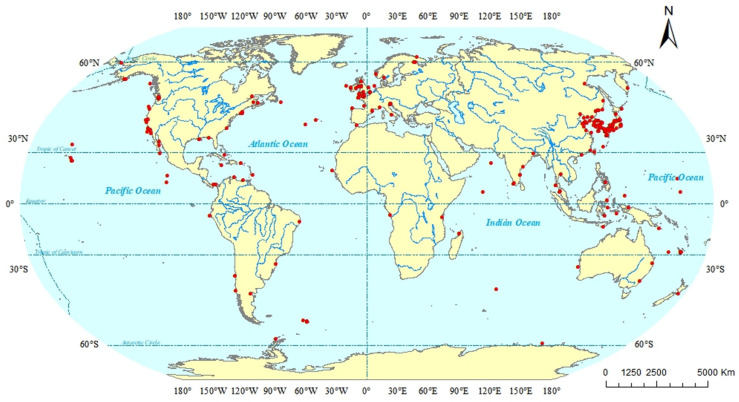 Figure 1
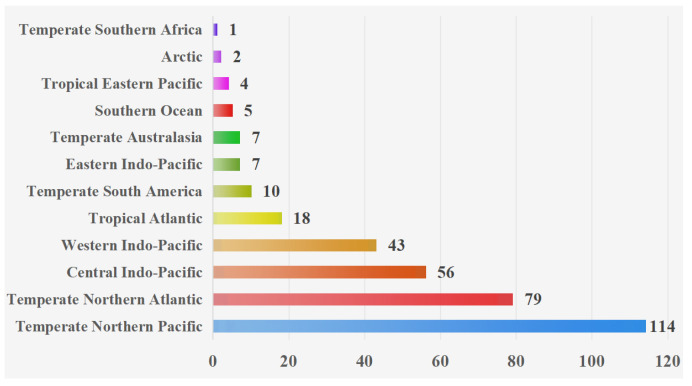 Figure 2
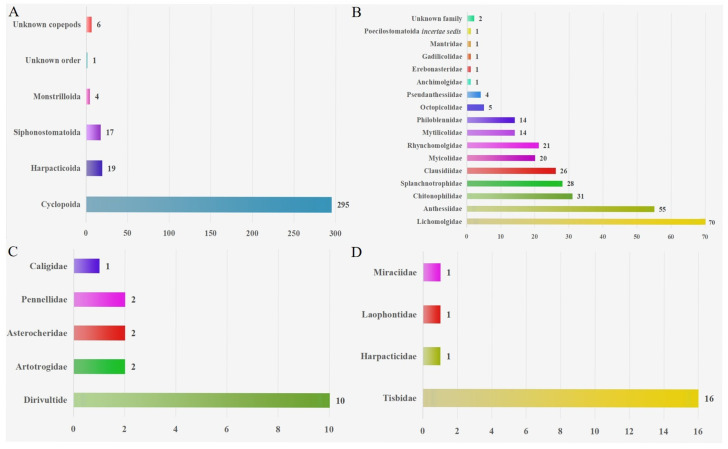 Figure 3
- —Natural Science Foundation of Hebei Province
- —Science Research Project of Hebei Education Department
- —Scientific Research Project for Talented Scholars of Hebei Agricultural University
- —Innovation and Entrepreneurship Project of the Ocean College, Hebei Agricultural University
- —National Natural Science Foundation of China
Peer Reviews
No public reviews on file for this paper yet. If you reviewed it on a platform where reviews are public (OpenReview, ICLR, NeurIPS, ICML), you can paste yours below so the community can read it here.
Videos
No videos yet. Explain this paper in a talk, walkthrough, or lecture? Add one.
Taxonomy
TopicsMarine Biology and Ecology Research · Protist diversity and phylogeny · Marine Toxins and Detection Methods
1. Introduction
Copepods are one of the most species-rich animal groups on the earth and can be found in seawater or freshwater, where they lead planktonic, benthic, or parasitic lives [1,2]. To date, approximately 15,045 species have been described, about one-third of which are commensal or parasitic [3]. As the most abundant group of marine zooplankton, copepods are an indispensable component of the food chain. Within marine food webs, they play a crucial role: on one hand, they drive the operation of biogeochemical cycles, and on the other hand, they facilitate the smooth transfer of energy from primary producers to higher trophic levels. Due to the high sensitivity of copepod populations to the impacts of climate change and human activities, they have become highly valuable model organisms in the fields of ecology and ecotoxicology [4,5]. However, there are still significant gaps in our knowledge of these crucial organisms. Firstly, their taxonomic system remains unstable. Based on morphological characteristics, the classification system of Huys and Boxshall divides copepods into 10 orders [2]. However, the phylogenetic relationships among the entire subclass Copepoda and its various groups are still controversial [2]. For instance, Khodami et al. reclassified the order Poecilostomatoida into Cyclopoida, while some families formerly in Poecilostomatoida were assigned to the suborder Ergasilida within Cyclopoida [6]. Secondly, the research focus is heavily skewed. The majority of research on marine symbiotic copepods has focused on the parasitic copepods of fish, particularly genera Caligus Müller O.F., 1785 and Lepeophtheirus von Nordmann, 1832, commonly known as sea lice, which pose significant threats to aquaculture [7,8]. In contrast, relatively scant studies have been carried out regarding the symbiotic biology of copepods that associate with invertebrates [9]. This narrow focus substantially limits a comprehensive understanding of the diversity and ecological functions of these invertebrate-symbiotic groups.
Mollusks are important hosts for symbiotic copepods, with hosts spanning polyplacophorans, bivalves, scaphopods, gastropods, and cephalopods. It has been known for more than a century that mollusks are appropriate hosts for copepods [10]. Over 430 mollusk species serve as hosts, with the majority belonging to bivalves [11]. According to Boxshall and O’Reilly, around 280 copepod species are known to act as parasites or associates with mollusks, and an overwhelming proportion of these are marine species within the order Cyclopoida [12]. As a form of symbiosis, parasitism in molluscan copepods manifests in two primary types: ectoparasitism and endoparasitism [13]. Most of these copepods have cyclopiform or only slightly modified bodies, which applies particularly to ectoparasitic forms found on the gills and in the mantle cavity of the mollusks. In contrast, the more modified forms have elongate bodies, often with reduced segmentation and appendages, and in many cases, they inhabit the intestinal tracts of their hosts [14]. With the development of semi-intensive, intensive brackish water and marine aquaculture, the importance of parasitic copepods as disease-causing agents is becoming more and more obvious [15]. Consequently, understanding the biology of parasites is not only critical for advancing ecological knowledge, but also essential as a prerequisite for the conservation of host populations [16]. However, there are still many gaps in the taxonomic research on symbiotic copepods of mollusks. So far, the copepods of mollusks have only been summarized in specific sea areas of some countries, such as Korea and Japan, but a global review of these symbiotic copepods is currently lacking. In order to understand the species compositions and host distributions of copepod species, and enrich the data of marine biodiversity, we review the literature and summarize the copepod species of mollusks in a table.
2. Methods
A scoping review was conducted to synthesize existing knowledge on symbiotic copepods of mollusks in the global oceans. Databases were searched using a combination of the terms “mollus*”, “Bivalv*”, “Cephalopod*”, “Gastropod*”, “Polyplacophora*”, “Monoplacophora*”, “Aplacophora*”, “Scaphopod*”, “parasit*”, “symbio*”, “associ*” and “copepod*”. For each search result obtained, the abstract and introduction were reviewed to determine relevance. In addition to the databases, gray literature from university theses and conference presentations was searched.
The data are presented as a table compiled from the literature. The symbiotic copepods are presented in alphabetical order within the categories of order, family, genus, and species, with records of their hosts, geographical locations, and references.
3. Results
The symbiotic copepods with mollusks recorded in this study comprise 342 species. These species are classified into five orders, 28 families, and 86 genera, including one unidentified order and one unidentified family. Six additional copepod specimens remained unidentified at the species level (Table 1; Supplementary Materials).
Cyclopoida includes 17 families and 65 genera; Siphostomatoida includes five families and 11 genera; Harpacticoida includes four families and seven genera; and Monstrilloida includes one family and two genera. These copepods have a symbiotic relationship with most groups of mollusks, including polyplacophorans, bivalves, scaphopods, gastropods, and cephalopods. Among these hosts, bivalves constitute the most common host group, with over 205 species identified, followed by approximately 165 species of gastropods and about 65 species from other molluscan classes. Among these symbiotic copepods, Cyclopoida and Siphostomatoida are primarily associated with bivalves; Harpacticoida is found predominantly in cephalopods; and Monstrilloida occurs mainly in gastropods.
Based on the geographical distributions of copepods symbiotic with mollusks, a collection area map (as depicted in Figure 1) was constructed. Through this map, the specific geographical locations of the symbiotic copepods can be directly discerned. Following the classification scheme by Spalding et al., the marine ecoregions are divided into 12 realms [183,184]. Copepods symbiotic with mollusks are widely distributed across diverse ecosystems and exhibit a global geographic range (Figure 2). The majority of documented observations are concentrated in the Temperate Northern Pacific (114 species) and the Temperate Northern Atlantic (79 species), while research data from regions such as the Temperate Southern Africa (one species) and the Arctic (two species) remain relatively scarce. In this paper, the Cyclopoida is the dominant order (295 species), followed by the Harpacticoida (19 species), Siphonostomatoida (17 species), Monstrilloida (four species), and one unidentified order (one species). In addition, six specimens remained unidentified at the species level (Figure 3). Among the symbiotic copepods, the order Cyclopoida accounts for the largest proportion and the order Monstrilloida has the smallest proportion.
4. Discussion
Copepods are usually small and inconspicuous aquatic crustaceans, but they are extremely numerous. Due to the economic value of hosts, most studies on marine symbiotic copepods in the world have mainly focused on copepods of fish, while relatively few studies have been conducted on the copepods symbiotic with invertebrates [9].
In this review, symbiotic copepods of mollusks are found in 42 countries (as shown in Table 1). Among them, the copepods of mollusks from Japan account for the largest proportion, which may be related to its geographical location and economic condition. Japan is bordered by the Pacific Ocean to the east and the Sea of Japan to the west, which provides this country with abundant fishery resources and important sea transportation routes. Consequently, it has certain advantages in the research on copepods symbiotic with mollusks compared with other countries. Symbiotic copepods are distributed in Pacific Ocean, Atlantic Ocean, Indian Ocean and Arctic Ocean (as shown in Table 1 and Figure 1). Among them, the largest number of known symbiotic copepod species has been found in the Pacific Ocean, while the fewest have been found in the Arctic Ocean. This low diversity in the Arctic Ocean is likely related to its harsh climatic conditions. Due to the cold climate in the Arctic Ocean, scientific research work is rarely carried out.
Copepods symbiotic with mollusks are predominantly found in the Temperate Northern Pacific and the Temperate Northern Atlantic. This distribution pattern may be attributed to the complex coastlines of these regions, which feature diverse habitat types. The high habitat heterogeneity provides a wider range of ecological niches and host options for different symbiotic copepods. Moreover, these areas are home to many developed nations (e.g., Japan and the United States) and developing nations (e.g., China). These countries possess a long-standing tradition in oceanographic research, substantial funding, and well-established scientific institutions. These factors collectively contribute to the particularly rich species records in these regions. In contrast, the scarcity of research data from the Temperate Southern Africa and the Arctic may be due to limited research resources and marine science infrastructure in coastal countries of the southern temperate zone, leading to a lack of systematic marine biological surveys. The extreme environmental conditions in the Arctic, characterized by high sampling difficulty, prohibitive costs, and extensive sea ice cover for most of the year, further restrict fieldwork opportunities.
The four orders of Copepoda (Cyclopoida, Harpacticoida, Siphonostomatoida and Monstrilloida) have been reported [14,176,177]. Among the symbiotic copepods, the order Cyclopoida accounts for the largest proportion (86.09%). The remaining groups are Harpacticoida (5.63%), Siphonostomatoida (5.02%) and Monstrilloida (1.19%) (Figure 3). The reasons may be that the biological characteristics of cyclopoid copepods make them more suitable for living in molluscan hosts, and may also be that copepods of other orders have not been thoroughly discovered. In addition, compared with the more than 100,000 species of marine mollusks worldwide [185], a large number of molluscan hosts remain to be examined, which will facilitate the discovery of more unknown species. Several symbiotic copepod taxa exhibit distinct host specificity. For example, Cholidya polypi Farran, 1914 is currently known to be associated with cephalopods, with no records from hosts of other classes [171], thus demonstrating strict host specificity. In contrast, Pseudomyicola spinosus (Raffaele and Monticelli, 1885) is a symbiont associated with over 50 species of bivalves [114], exhibiting a broad host range. It is possible that the few symbionts found in some molluscan groups are due to inadequate research, thereby underestimating their symbiotic diversity. Some copepod groups that associate with only a few molluscan hosts may have evolved highly specialized attachment structures or life cycles, restricting them to utilizing specific host types.
There are also relevant reports on the impact of symbiotic copepods, particularly those that are parasitic on mollusks. Ho and Zheng described Ostrincola koe Tanaka, 1961 as the primary cause of mass mortalities of the cultured hard clam Meretrix meretrix (Linnaeus), which occurred in 1988 and 1989 in China [186]; Pectinophilus ornatus Nagasawa et al., 1988, a pathogen in northern Japan, parasitizes the gills of the Japanese scallop Mizuhopecten yessoensis (Jay), reaching infection rates of up to 100% in young scallops [136,187]; Mytilicola intestinalis Stuer, 1902, a copepod parasite of the gut of mussels, is endemic along European coasts and has been responsible for heavy mortalities [188]; Mytilicola orientalis Mori, 1935 can damage the inner wall of the intestine of Magallana gigas (Thunberg), leading to the death of oysters and a consequent reduction in production [189]. Currently, the marine biological diseases resulting from parasitic copepods are becoming increasingly severe and meriting greater attention. To undertake this task effectively, researchers must be well-versed in the latest developments in parasitology-related disciplines, including biology, ecology, phylogeny, and zoogeography. It is essential to promote international collaboration among experts from various countries to conduct more in-depth research on these significant symbiotic copepods and effectively prevent the diseases they cause.
5. Conclusions
In summary, this review offers a comprehensive survey of the species of symbiotic copepods of mollusks in the global oceans. To date, 342 species of these symbiotic copepods have been identified within more than 435 molluscan hosts. Bivalves are the most common host group. Among the symbiotic copepods, the majority (86.25%) belong to Cyclopoida, while the remaining portions consist of Harpacticoida (5.55%), Siphonostomatoida (4.97%) and Monstrilloida (1.19%). The Temperate Northern Pacific (especially the waters around Japan) contains the most known symbiotic copepod species, while the Temperate Southern Africa contains the fewest. This pattern likely reflects disparities in research effort, not actual biodiversity. The review also details the host species, geographical locations and compiles a bibliography of symbiotic copepods, thereby extending our comprehension of these organisms. It is highly probable that more species of symbiotic copepods as well as a richer diversity of species will be discovered in the future. Nevertheless, our understanding of the impacts of these symbiotic copepods on their molluscan hosts remains limited. The majority of species have been reported to do harm to the economically significant mollusks. It is imperative to highlight that further research and exploration are essential to enhance our understanding and to devise strategies for the prevention and control of the threats posed by these symbiotic associations.
The reference list from the paper itself. Each links out to its DOI / PubMed record.
- 1Mauchline J. The Biology of Calanoid Copepods Academic Press San Diego, CA, USA 19981721
- 2Huys R. Boxshall G.A. Copepod Evolution Ray Society London, UK 19911468
- 3World Copepods Database Available online: http://www.marinespecies.org/copepoda/(accessed on 1 July 2013)
- 4Feng J. Mazzei M. Di Gregorio S. Niccolini L. Vitiello V. Ye Y. Guo B. Yan X. Buttino I. Marine copepods as a microbiome hotspot: Revealing their interactions and biotechnological applications Water 202315420310.3390/w 15244203 · doi ↗
- 5Vakati V. Fuentes-Reinés J.M. Wang P. Wang J. Dodsworth S. A summary of Copepoda: Synthesis, trends, and ecological impacts J. Oceanol. Limnol.2023411050107210.1007/s 00343-022-1309-9 · doi ↗
- 6Khodami S. Mercado-Salas N.F. Tang D. Martinez Arbizu P. Molecular evidence for the retention of the Thaumatopsyllidae in the order Cyclopoida (Copepoda) and establishment of four suborders and two families within the Cyclopoida Mol. Phylogenet. Evol.2019138435210.1016/j.ympev.2019.05.01931125659 · doi ↗ · pubmed ↗
- 7Costello M.J. Ecology of sea lice parasitic on farmed and wild fish Trends Parasitol.20062247548310.1016/j.pt.2006.08.00616920027 · doi ↗ · pubmed ↗
- 8Carvajal J. Gonzalez L. George-Nascimento M. Native sea lice (Copepoda: Caligidae) infestation of salmonids reared innetpen systems in southern Chile Aquaculture 199816624124610.1016/S 0044-8486(98)00301-9 · doi ↗