Quantitative TOF-MRA using SYNAPSE VINCENT predicts neointimal formation after stent-assisted coiling of intracranial aneurysms
Tohru Sano, Michiyasu Fuga, Issei Kan, Toshihiro Ishibashi, Naoki Kato, Gota Nagayama, Shunsuke Hataoka, Hiroyuki Enomoto, Yukiko Abe, Yuichi Murayama

TL;DR
This study shows that quantitative TOF-MRA using SYNAPSE VINCENT can predict neointimal formation after stent-assisted coiling of intracranial aneurysms.
Contribution
The study introduces a novel method using quantitative TOF-MRA signal measurements to predict neointimal formation after stent-assisted coiling.
Findings
TOF-SIR change was independently associated with the presence of the white-collar sign (WCS) at 1 year.
WCS-positive aneurysms showed a significantly greater increase in TOF-SIR over 12 months.
Quantitative TOF-MRA using SYNAPSE VINCENT may serve as a reliable alternative to DSA for monitoring aneurysm healing.
Abstract
Metallic susceptibility artifacts limit the reliability of time-of-flight MR angiography (TOF-MRA) for evaluating aneurysm healing after stent-assisted coiling (SAC). This study investigated whether quantitative TOF-MRA signal measurements at the aneurysm neck, analyzed using SYNAPSE VINCENT software, correlate with the angiographic white-collar sign (WCS), a surrogate marker of neointimal formation. Eighty-three internal carotid artery aneurysms in 81 patients treated with the Neuroform Atlas stent between January 2019 and December 2023 were retrospectively analyzed. Patients were categorized according to the presence or absence of WCS on 1-year digital subtraction angiography (DSA). The TOF-MRA signal intensity ratio (TOF-SIR) was defined as the ratio of signal intensity at the stented ICA neck to that at the distal M1 segment. TOF-SIR changes over 12 months were compared between…
Genes, proteins, chemicals, diseases, species, mutations and cell lines named across the full text — each resolved to its canonical identifier and authoritative record.
Click any figure to enlarge with its caption.
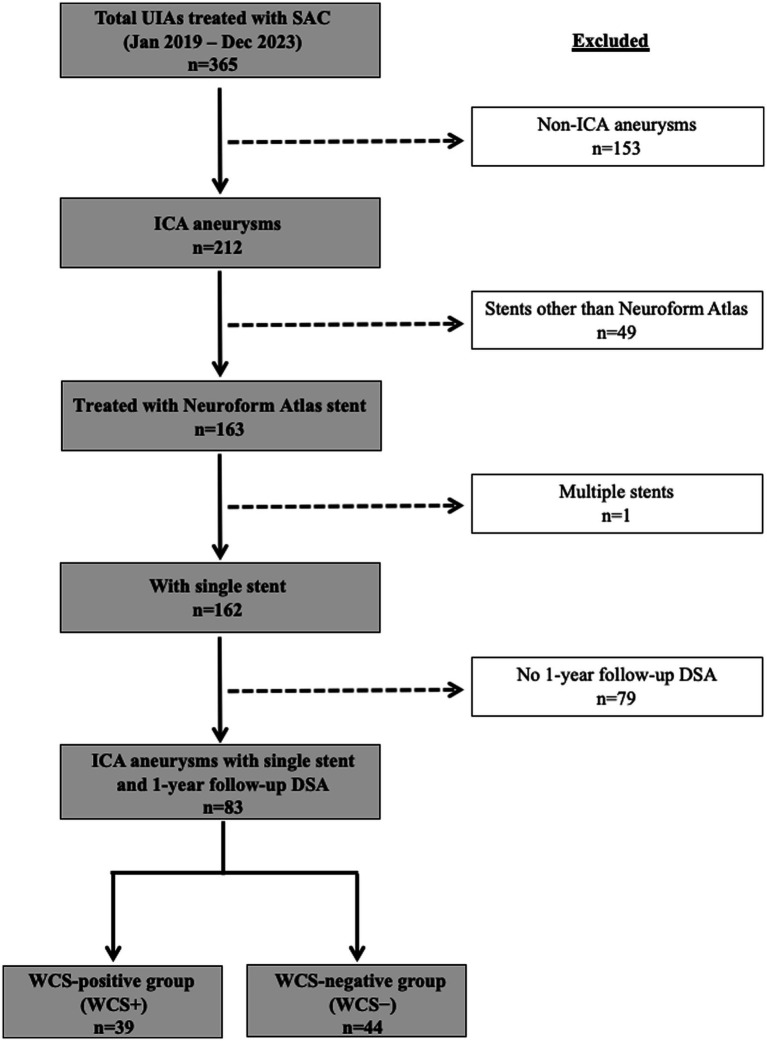 Figure 1
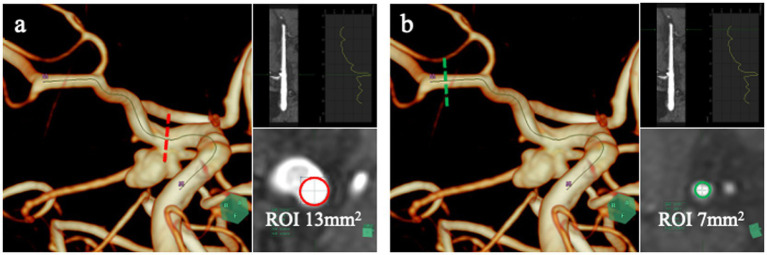 Figure 2
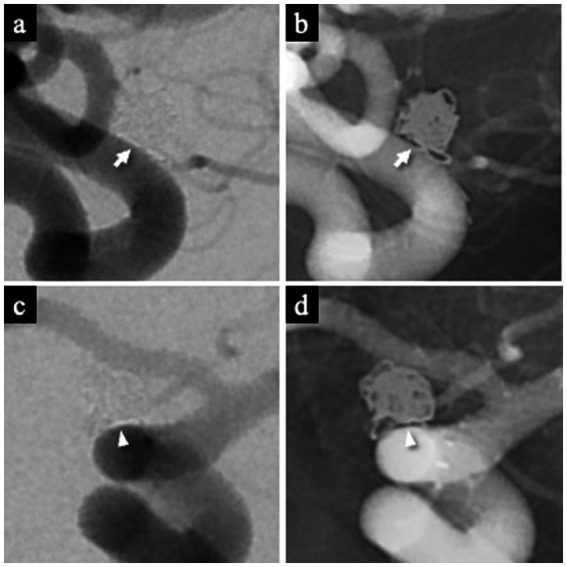 Figure 3
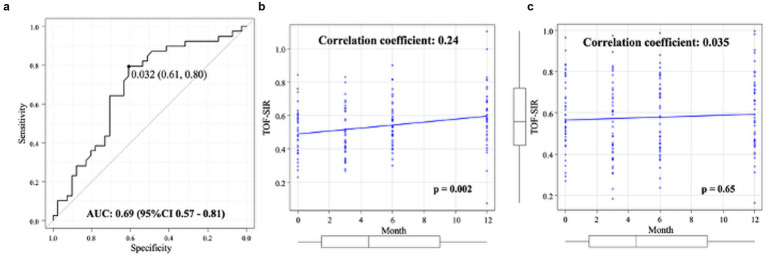 Figure 4
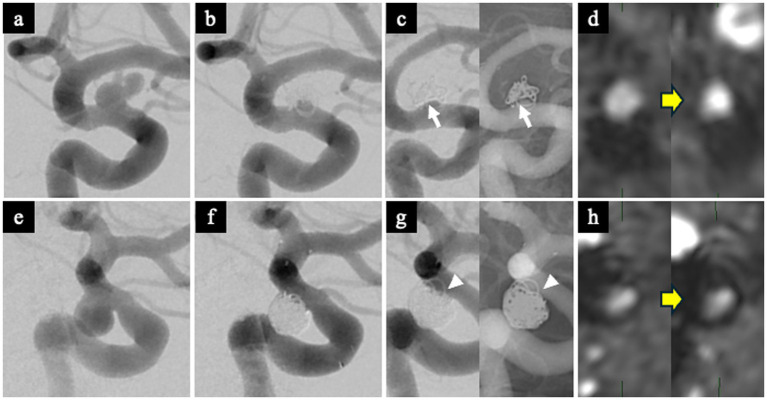 Figure 5
Peer Reviews
No public reviews on file for this paper yet. If you reviewed it on a platform where reviews are public (OpenReview, ICLR, NeurIPS, ICML), you can paste yours below so the community can read it here.
Videos
No videos yet. Explain this paper in a talk, walkthrough, or lecture? Add one.
Taxonomy
TopicsIntracranial Aneurysms: Treatment and Complications · Advanced MRI Techniques and Applications · Cerebrovascular and Carotid Artery Diseases