Prevalence and prognostic value of baseline and post-treatment renal insufficiency in colorectal cancer patients: a large retrospective cohort study of 10,581 patients in Shanghai, China (2019–2023)
Juan Li, Chen Guang Bai, Baoshuai Liu, Shouyu Pan, Lianjie Liu, Jianjun Jiang, Jian Lu, Guangwen Cao, Wei Zhang, Xian Hua Gao

TL;DR
This study shows that kidney problems are common in colorectal cancer patients and significantly affect survival, highlighting the need for early screening and preventive care.
Contribution
The study provides new insights into the prevalence and survival impact of baseline and post-treatment renal insufficiency in a large CRC cohort.
Findings
Baseline renal insufficiency affected 32.4% of CRC patients, with hematuria being the most common indicator.
Post-treatment renal insufficiency occurred in 20.3% of patients and was linked to reduced survival outcomes.
Age ≥ 65 and cardiovascular disease were risk factors for baseline RI, while surgery and chemoradiotherapy predicted PTRI.
Abstract
Baseline renal insufficiency (RI) and post-treatment renal insufficiency (PTRI) are prevalent comorbidities in patients with colorectal cancer (CRC). However, the prevalence, risk factors, and prognostic significance of these conditions remain controversial. This is a retrospective cohort study, which included all CRC patients treated at Shanghai Changhai Hospital (2019–2023). Multivariate logistic and Cox survival analyses were used to explore risk factors and prognostic value of baseline RI and PTRI. Among 10,581 CRC patients, the prevalence rates of RI-related parameters were: baseline RI (32.4%), hematuria (31.2%), elevated serum cystatin C (CysC) (17.4%), proteinuria (12.3%), elevated serum uric acid (8.7%), elevated serum creatinine (4.3%), elevated blood urea nitrogen (BUN) (3.5%), reduced estimated glomerular filtration rate (eGFR) (2.2%), chronic kidney disease (CKD)…
Genes, proteins, chemicals, diseases, species, mutations and cell lines named across the full text — each resolved to its canonical identifier and authoritative record.
Click any figure to enlarge with its caption.
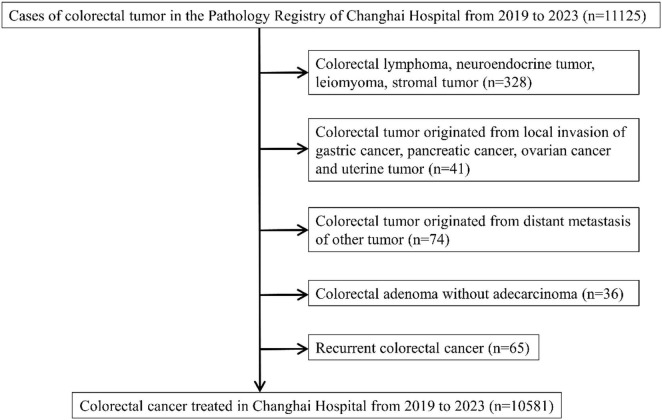 Figure 1
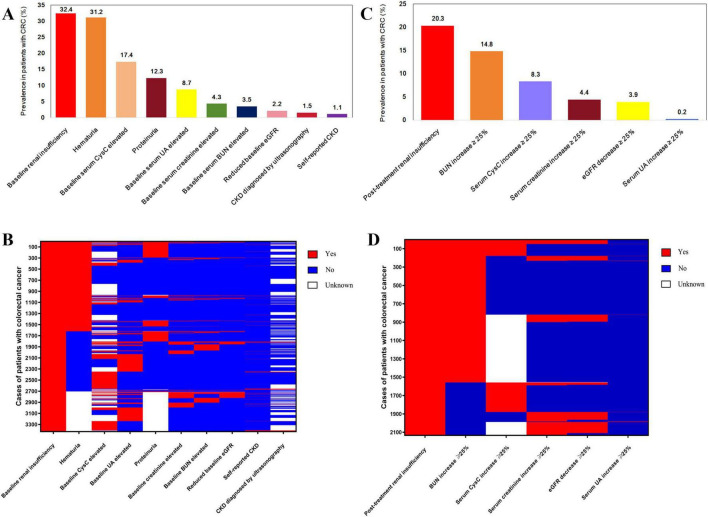 Figure 2
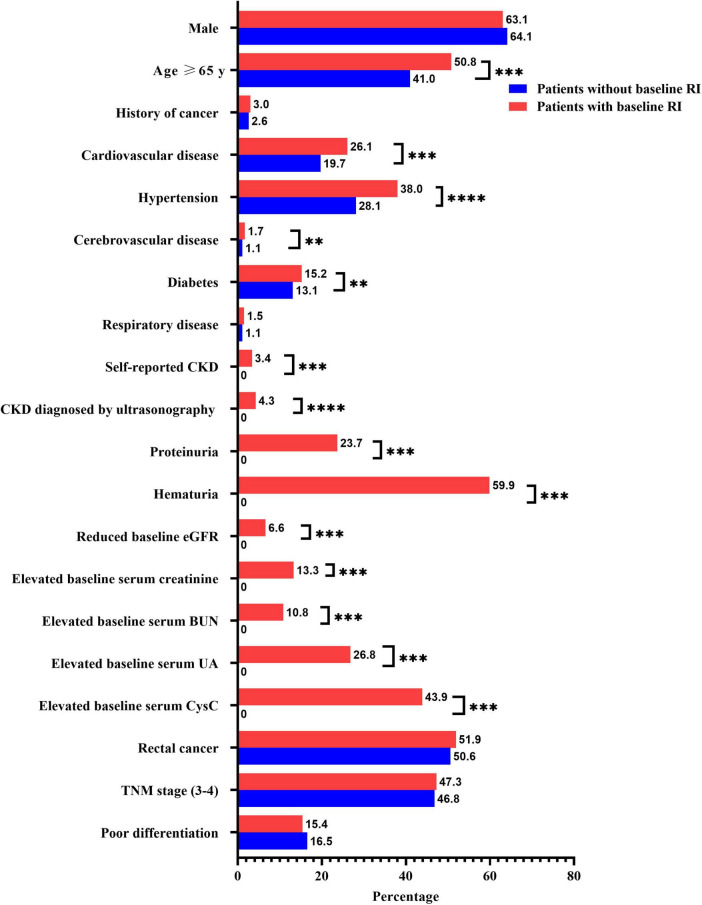 Figure 3
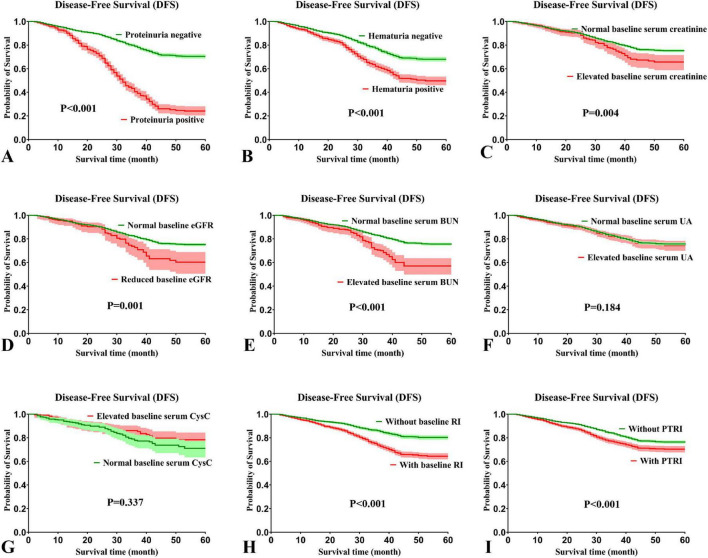 Figure 4
Peer Reviews
No public reviews on file for this paper yet. If you reviewed it on a platform where reviews are public (OpenReview, ICLR, NeurIPS, ICML), you can paste yours below so the community can read it here.
Videos
No videos yet. Explain this paper in a talk, walkthrough, or lecture? Add one.
Taxonomy
TopicsChronic Kidney Disease and Diabetes · Acute Kidney Injury Research · Chemotherapy-induced organ toxicity mitigation