A novel homozygous splice-site variant in the FOCAD gene causing infantile liver cirrhosis and neutropenia: expanding disease phenotype and successful surgical treatment
Ekaterina Nuzhnaya, Elena Zaklyazminskaya, Viktoriia Zabnenkova, Darya Akimova, Evgeny Tatarsky, Lana Dzik, Andrey Surkov, Natalia Zhurkova, Andrey Filin, Aleksej Metelin, Anna Arakelyan, Viktoriya Savina, Arshak Babayan, Mikhail Skoblov, Natalia Semenova

TL;DR
A new genetic variant in the FOCAD gene causes infantile liver cirrhosis and neutropenia, with successful treatment through liver transplantation.
Contribution
Identification of a novel homozygous splice-site variant in FOCAD and demonstration of successful liver transplantation as a treatment.
Findings
A novel homozygous FOCAD splice-site variant causes progressive liver cirrhosis and neutropenia in a 3-year-old patient.
RNA and protein analysis confirmed the variant leads to an in-frame deletion and impaired protein stability.
Living-donor liver transplantation resulted in a favorable clinical outcome for the patient.
Abstract
Progressive liver cirrhosis in pediatric patients characterized by clinical and genetic variability. Infantile cirrhosis caused by biallelic variants in the FOCAD gene is an extremely rare multi-system disorder leading to the progressive liver dysfunction. A small number of patients with limited survival were described so far, and any new clinical observation can provide a new insight for complete phenotypic spectrum and perspectives on available treatment to meet patient’s needs. We performed clinical, instrumental, histological and laboratory evaluation of the family with patient (male, 3 y.o.) with progressive liver cirrhosis and apparently healthy parents. Genetic study was performed using whole-exome sequencing. Validation of the rare variant found on WES and cascade familial screening were performed by capillary Sanger sequencing. Functional validation included RNA analysis from…
Genes, proteins, chemicals, diseases, species, mutations and cell lines named across the full text — each resolved to its canonical identifier and authoritative record.
Click any figure to enlarge with its caption.
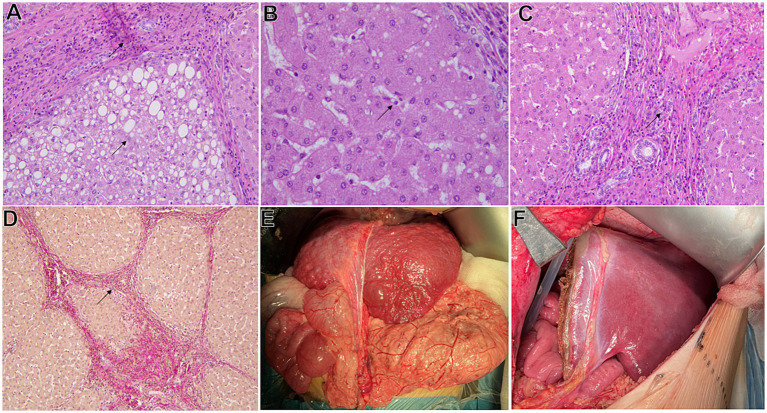 Figure 1
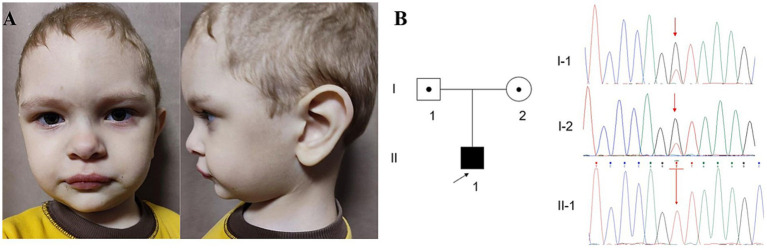 Figure 2
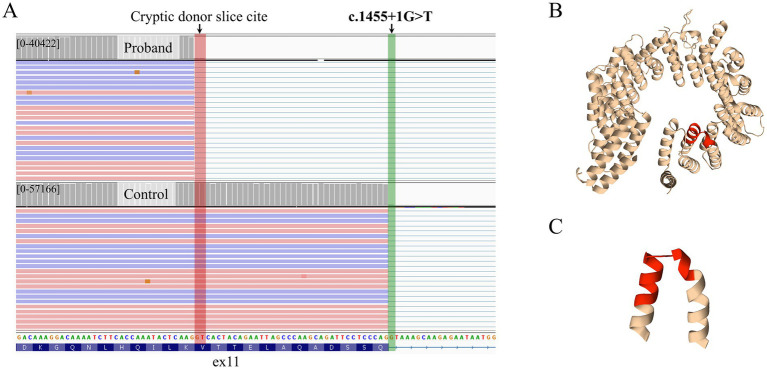 Figure 3
 Figure 4
Peer Reviews
No public reviews on file for this paper yet. If you reviewed it on a platform where reviews are public (OpenReview, ICLR, NeurIPS, ICML), you can paste yours below so the community can read it here.
Videos
No videos yet. Explain this paper in a talk, walkthrough, or lecture? Add one.
Taxonomy
TopicsGenomics and Rare Diseases · Biochemical and Molecular Research · Metabolism and Genetic Disorders