Anthropogenic Disruption Versus Natural Restoration: Enterobacter cloacae‐Driven Barnacle Larval Settlement and Its Mitigation via Natural Bacteriophages
Atif Khan, Akash Saha, Hiren M. Joshi

TL;DR
Human pollution introduces antibiotic-resistant bacteria into coastal waters, which promote barnacle growth, but natural viruses can help control this issue.
Contribution
Discovery of a pollution-linked, antibiotic-resistant bacterium promoting biofouling and its mitigation using natural bacteriophages.
Findings
An antibiotic and biocide-resistant Enterobacter cloacae strain from a power plant promotes barnacle larval settlement by over 70%.
Bacteriophages isolated from the same water sample reduced larval settlement by 80% by eliminating E. cloacae biofilms.
The E. cloacae strain likely originated from terrestrial sources and thrives in marine environments due to anthropogenic factors.
Abstract
Coastal regions support approximately 60% of the global population and face escalating anthropogenic pollution, which disrupts the dynamics of marine and coastal ecosystems. The discharge of over 80% of sewage without adequate treatment introduces human pathogenic microorganisms into coastal waters, posing significant risks to ecological integrity and public health. This challenge is exacerbated by cross‐resistance between antibiotics and biocides, whereby biocide use for biofilm control in coastal industries may inadvertently select for resistant pathogens of terrestrial origin. While microbial biofilms are known to promote macrofouling by facilitating invertebrate larval settlement, a major operational challenge for marine industries, the role of anthropogenic microbial contamination in influencing macrofouling dynamics remains poorly understood. Here, we provide evidence linking…
Genes, proteins, chemicals, diseases, species, mutations and cell lines named across the full text — each resolved to its canonical identifier and authoritative record.
Click any figure to enlarge with its caption.
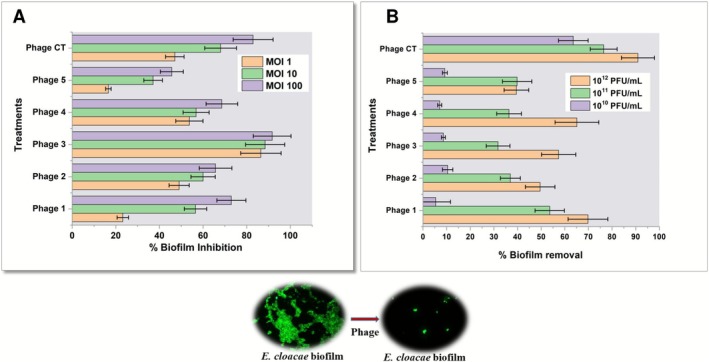 Figure 1
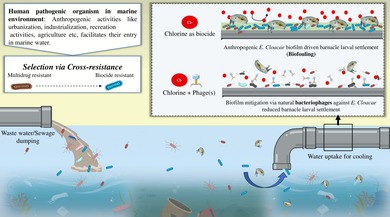 Figure 2
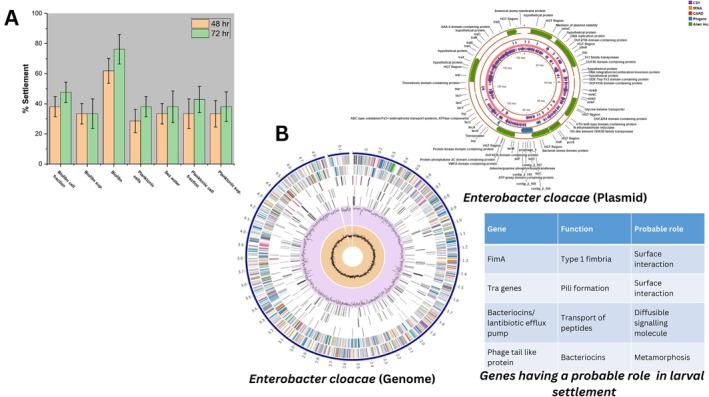 Figure 3
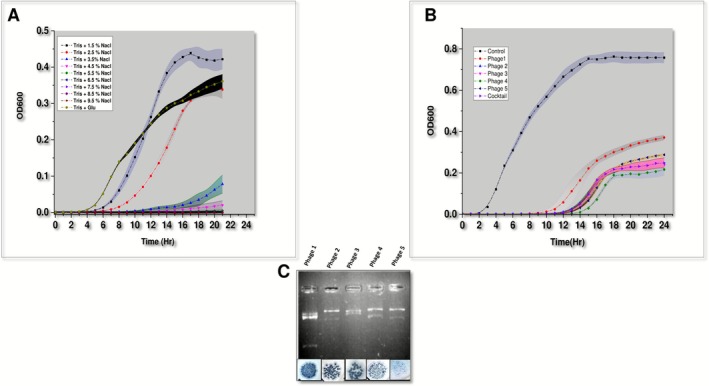 Figure 4
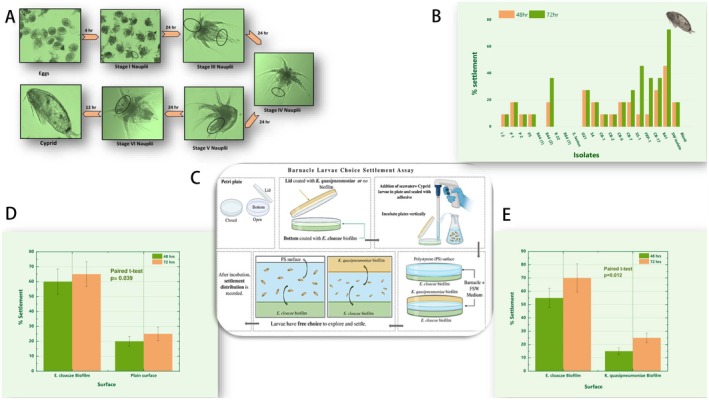 Figure 5
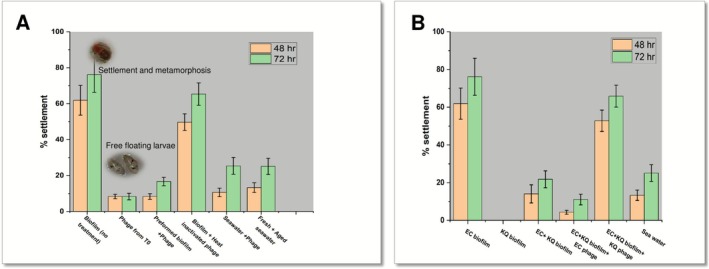 Figure 6
Peer Reviews
No public reviews on file for this paper yet. If you reviewed it on a platform where reviews are public (OpenReview, ICLR, NeurIPS, ICML), you can paste yours below so the community can read it here.
Videos
No videos yet. Explain this paper in a talk, walkthrough, or lecture? Add one.
Taxonomy
TopicsMarine Biology and Environmental Chemistry · Bacteriophages and microbial interactions · Marine Ecology and Invasive Species