Discovery, Isolation, and Bactericidal Activity of a Cyclotide from Spigelia anthelmia L. (Loganiaceae)
Toluwanimi E. Akinleye, Latifat O. Sidiq, Alfred Attah, Roland Hellinger, Lisa Pabi, Nermina Malanovic, Omonike O. Ogbole, Christian W. Gruber

TL;DR
A new cyclotide called Spat1 was discovered in Spigelia anthelmia and shown to kill certain bacteria by disrupting their membranes.
Contribution
Spat1 expands the known range of cyclotide-producing plants and reveals unique antimicrobial properties.
Findings
Spat1 is a 30-residue bracelet-type cyclotide with strong bactericidal activity against Bacillus subtilis.
Spat1 shows no activity against Staphylococcus aureus or Escherichia coli.
Structural modeling suggests Spat1 has a typical cyclotide β-sheet and a 310-helix in its loops.
Abstract
Cyclotides are plant-derived macrocyclic peptides stabilized by a cystine-knot motif, found in a limited number of angiosperm plants. This study reports the discovery of the cyclotide, Spat1, from Spigelia anthelmia (Loganiaceae), expanding the phylogenetic range of known cyclotide-producing plants. Spat1, a 30-residue bracelet-type cyclotide, was isolated, purified, and sequenced de novo. It demonstrated strong bactericidal activity against the Gram-positive Bacillus subtilis (LC99.9 = 20 μM) via rapid membrane disruption but showed no activity against Staphylococcus aureus or Gram-negative Escherichia coli (LC99.9 > 400 μM). The selective lack of activity against S. aureus is unusual for antimicrobial peptides. The data suggest that Spat1’s activity is independent of lipoteichoic acid (LTA) in B. subtilis, suggesting that its mechanism involves interactions with cytoplasmic membrane…
Genes, proteins, chemicals, diseases, species, mutations and cell lines named across the full text — each resolved to its canonical identifier and authoritative record.
Click any figure to enlarge with its caption.
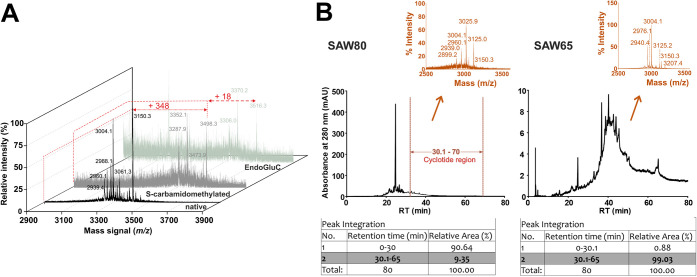 Figure 1
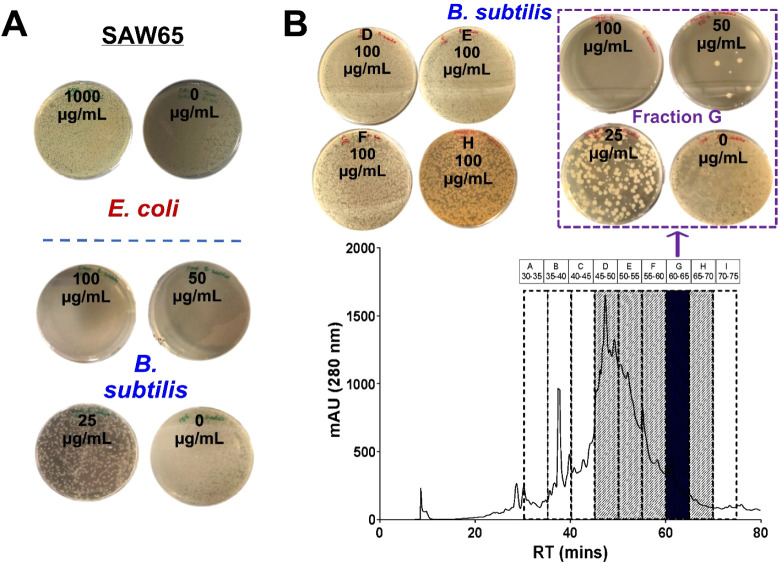 Figure 2
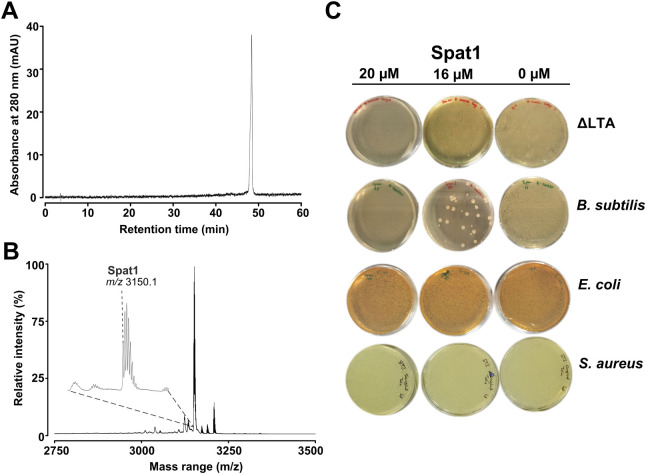 Figure 3
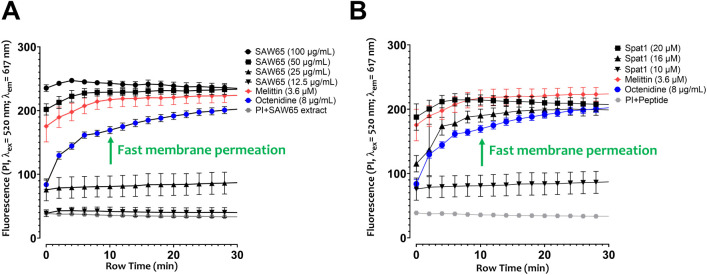 Figure 4
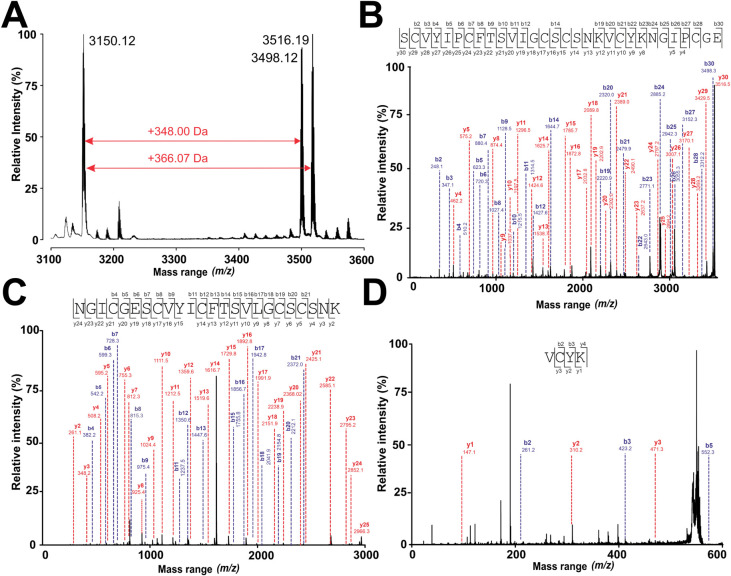 Figure 5
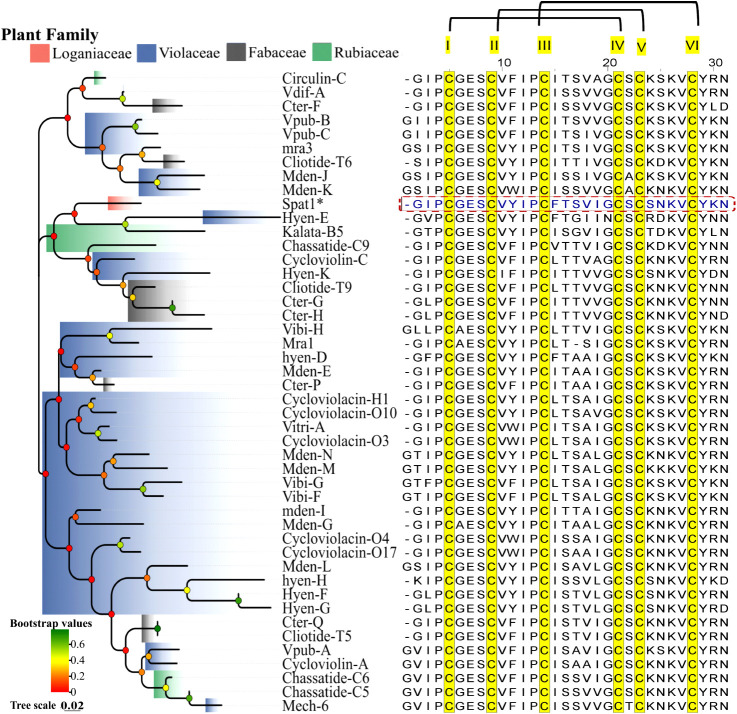 Figure 6
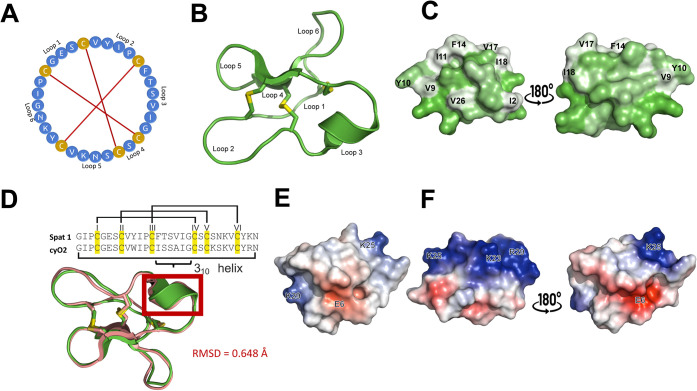 Figure 7
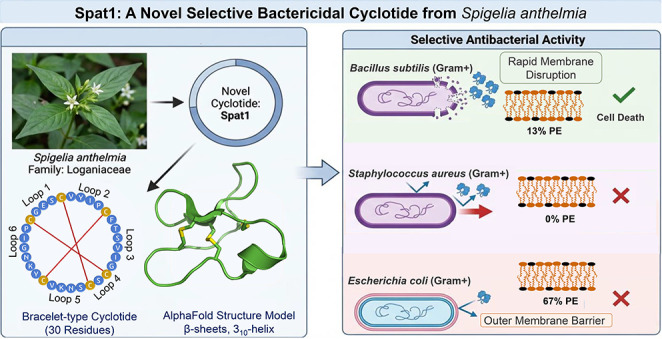 Figure 8
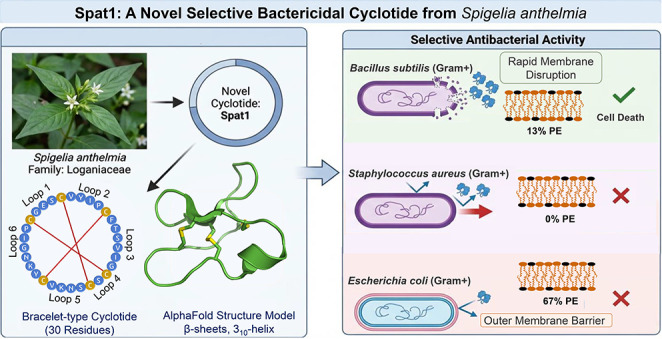 Figure 9
 Figure 10
Peer Reviews
No public reviews on file for this paper yet. If you reviewed it on a platform where reviews are public (OpenReview, ICLR, NeurIPS, ICML), you can paste yours below so the community can read it here.
Videos
No videos yet. Explain this paper in a talk, walkthrough, or lecture? Add one.
Taxonomy
TopicsBiochemical and Structural Characterization · Antimicrobial Peptides and Activities · Phytoplasmas and Hemiptera pathogens