Caffeic Acid-Driven Green Synthesis of Rhenium Nanoparticles Embedded in Self-Templating Double-Shelled ZnMn2O4 Hollow Microspheres for Ultrasensitive Epinephrine Detection in Biofluids
Rajalakshmi Sakthivel, Bo-Yuan Chen, Subbiramaniyan Kubendhiran, Lu-Yin Lin, Sayee Kannan Ramaraj, Yu-Chien Lin, Xinke Liu, Cihun-Siyong Gong, Ren-Jei Chung

TL;DR
A new electrochemical sensor using rhenium nanoparticles in a ZnMn2O4 structure detects epinephrine in biofluids with high sensitivity and accuracy.
Contribution
A novel green synthesis method creates Re@ZnMn2O4 for ultrasensitive epinephrine detection in biofluids.
Findings
The sensor has a broad detection range (0.5–1951.3 μM) and low detection limit (0.21 μM).
It shows excellent reproducibility, stability, and resistance to interferents.
Accurate epinephrine quantification was achieved in human serum and urine.
Abstract
In the present work, we report an electrochemical sensor based on rhenium (Re) nanoparticles embedded within a double-shelled ZnMn2O4 hollow microsphere (Re@ZnMn2O4) for ultrasensitive detection of epinephrine (EP) in biofluids. The Re@ZnMn2O4 material was synthesized via a coprecipitation and annealing route, followed by a green, caffeic acid (CA)-assisted chemical reduction. Structural and morphological analyses, including spectrophotometry, confirmed the high purity, crystallinity, and integrity of the material. Electrochemical performance was evaluated using voltammetry and impedance spectroscopy. The Re@ZnMn2O4-modified electrode exhibited superior electrochemical activity attributed to its high conductivity, large surface area, abundant active sites, and efficient charge transfer enabled by the hollow architecture. EP oxidation followed a diffusion-controlled 2e–/2H+ transfer…
Genes, proteins, chemicals, diseases, species, mutations and cell lines named across the full text — each resolved to its canonical identifier and authoritative record.
Click any figure to enlarge with its caption.
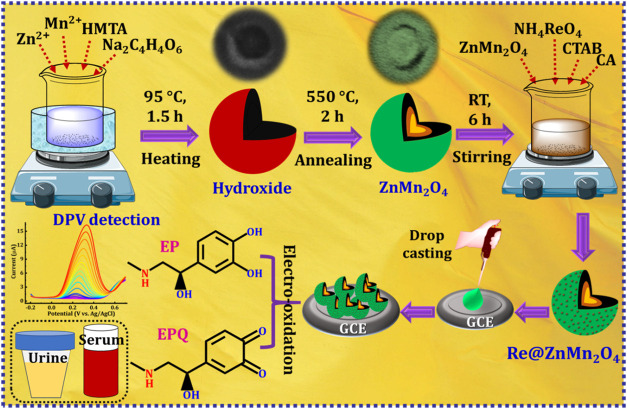 Figure 1
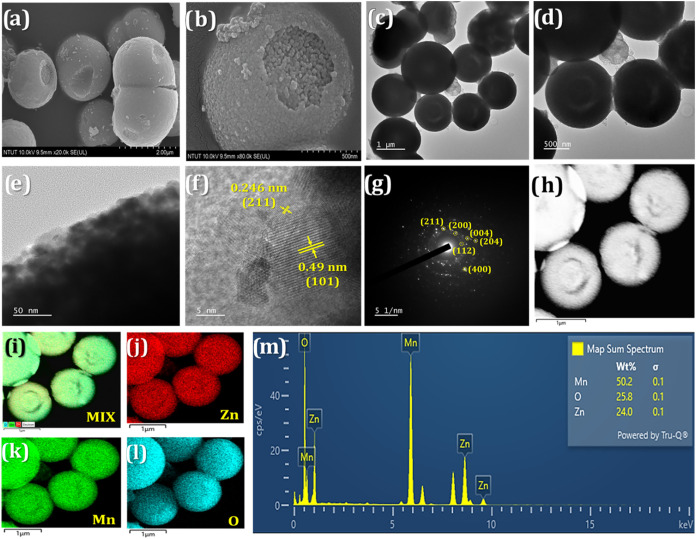 Figure 2
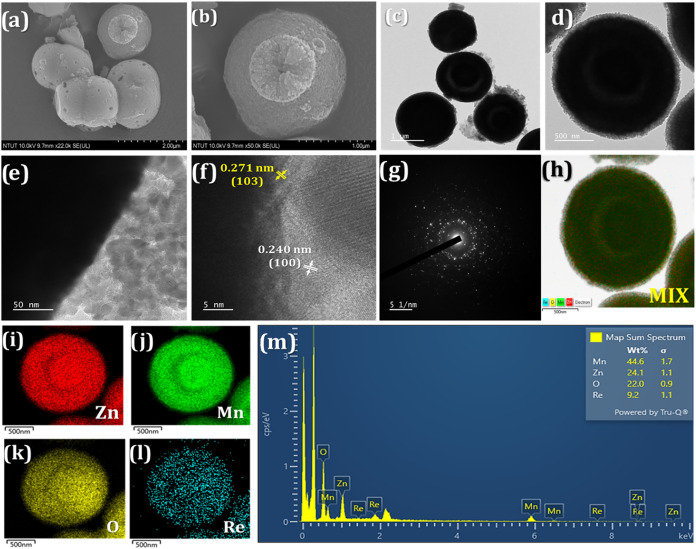 Figure 3
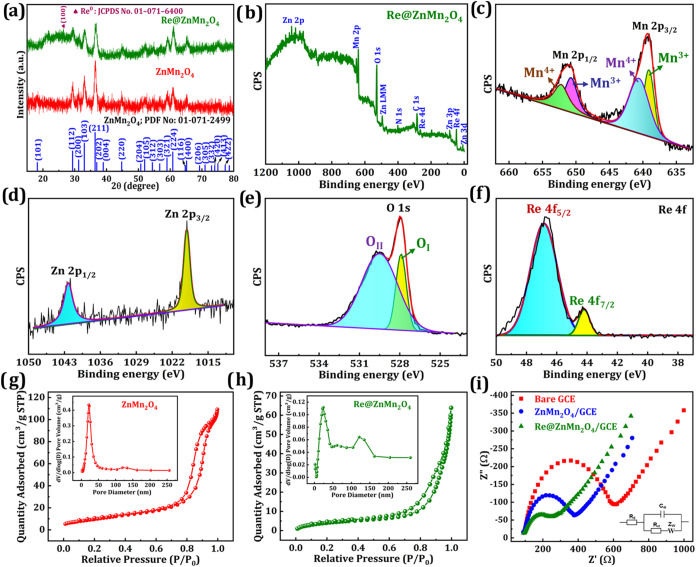 Figure 4
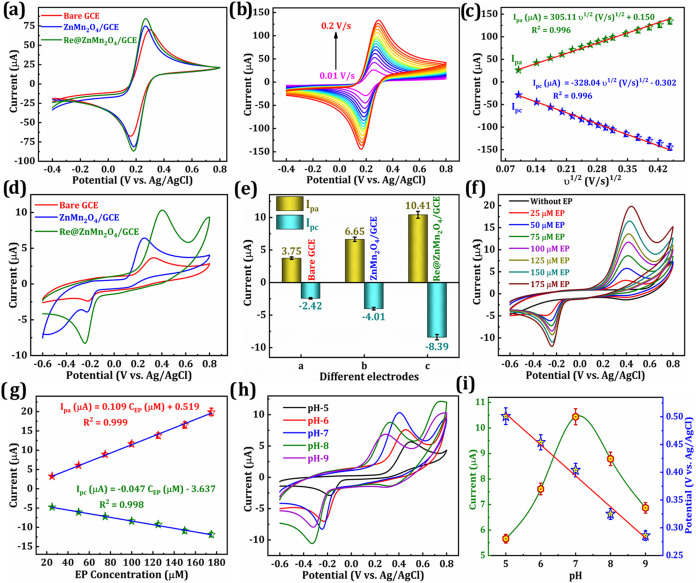 Figure 5
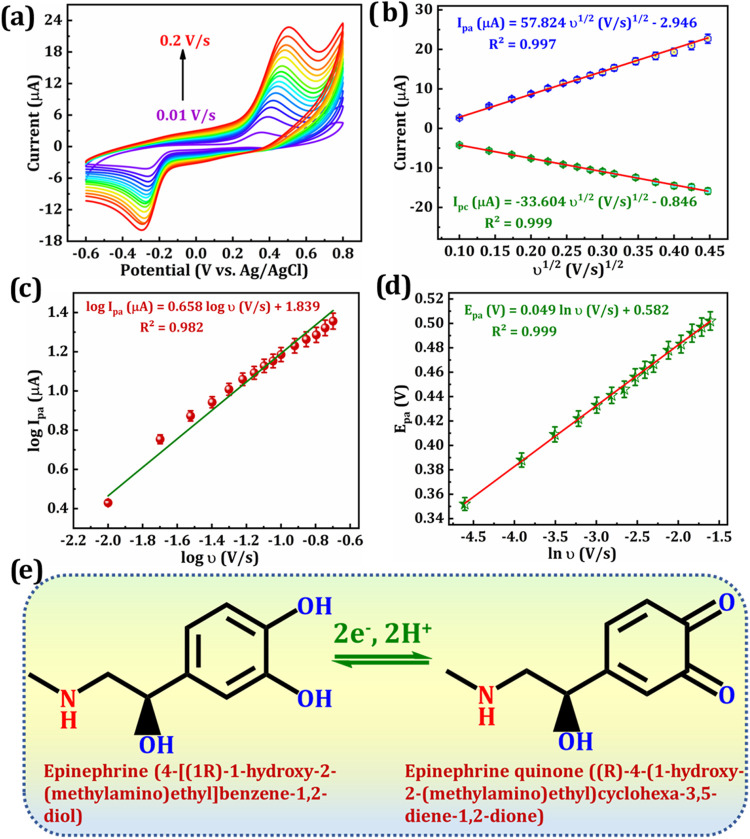 Figure 6
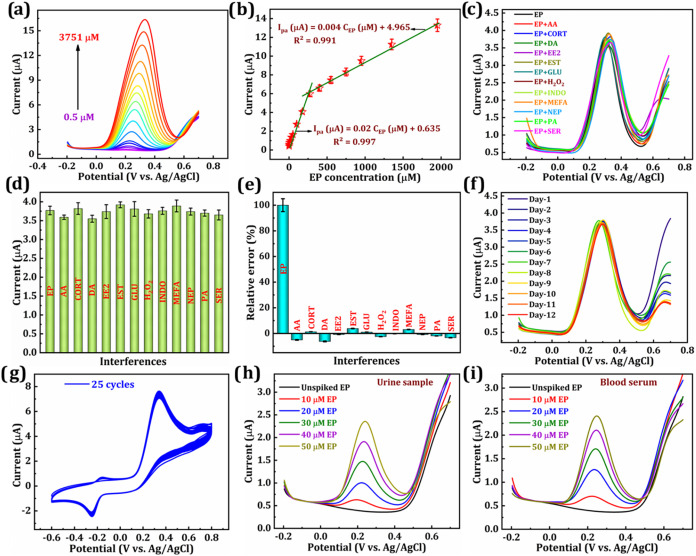 Figure 7
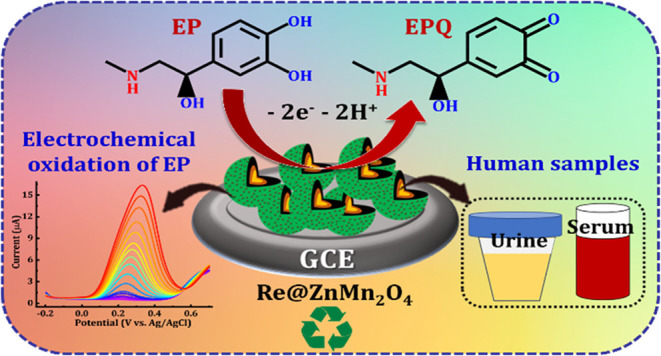 Figure 8
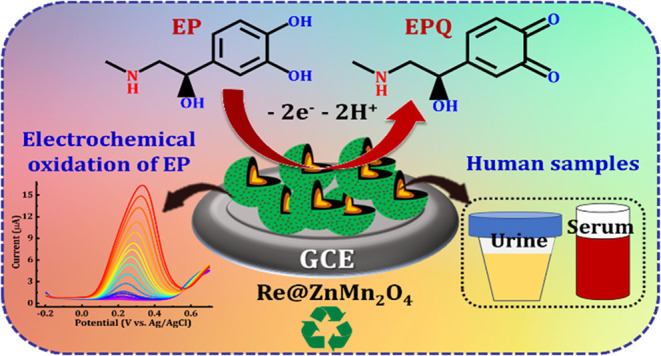 Figure 9
 Figure 10
 Figure 11
 Figure 12
 Figure 13
 Figure 14
 Figure 15
 Figure 16
 Figure 17
 Figure 18
 Figure 19
 Figure 20
 Figure 21
 Figure 22
 Figure 23
 Figure 24
 Figure 25
 Figure 26
 Figure 27
 Figure 28
 Figure 29
 Figure 30
 Figure 31
 Figure 32
 Figure 33
Peer Reviews
No public reviews on file for this paper yet. If you reviewed it on a platform where reviews are public (OpenReview, ICLR, NeurIPS, ICML), you can paste yours below so the community can read it here.
Videos
No videos yet. Explain this paper in a talk, walkthrough, or lecture? Add one.
Taxonomy
TopicsElectrochemical sensors and biosensors · Gas Sensing Nanomaterials and Sensors · Biosensors and Analytical Detection