Synthesis of 5,5,6-Fused Tricyclic Lactones: Stereocontrol of Three Consecutive Stereocenters
Anass Ziari, Ivana Císařová, Eliška Matoušová

TL;DR
This paper describes a new method to create complex tricyclic lactones with precise stereochemistry using a series of chemical reactions.
Contribution
The novel contribution is a diastereoselective synthesis of tricyclic γ-lactones with three consecutive stereocenters using palladium-catalyzed reactions.
Findings
A palladium-catalyzed tandem Heck/Suzuki reaction was used to synthesize strained tricyclic γ-lactones.
The method enables stereocontrolled synthesis from simple, biomass-derived starting materials.
The approach provides access to complex molecular scaffolds relevant in synthetic and medicinal chemistry.
Abstract
We report a new, highly diastereoselective method for the synthesis of strained 5,5,6-fused tricyclic γ-lactones via a palladium-catalyzed tandem Heck/Suzuki cross-coupling reaction, followed by epoxidation and lactone-forming epoxide opening. Using this sequence, we prepared tricyclic γ-lactones with three consecutive stereocenters from simple, readily available starting materials, including one derived from enantiomerically pure biomass-based levoglucosenone. Our method provides a stereocontrolled approach to complex scaffolds of potential relevance in synthetic and medicinal chemistry.
Genes, proteins, chemicals, diseases, species, mutations and cell lines named across the full text — each resolved to its canonical identifier and authoritative record.
Click any figure to enlarge with its caption.
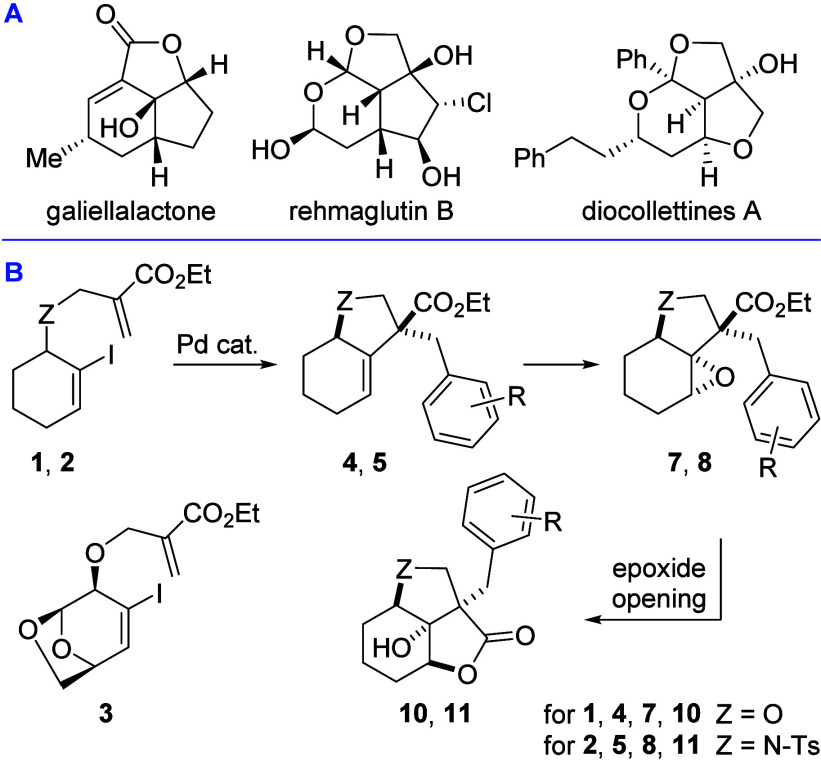 Figure 1
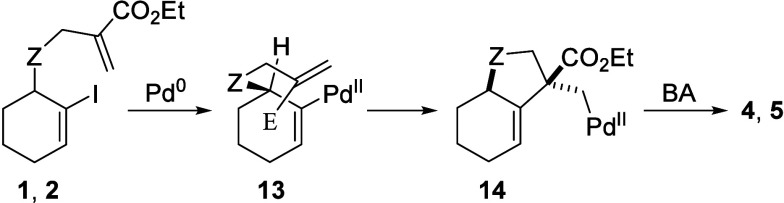 Figure 2
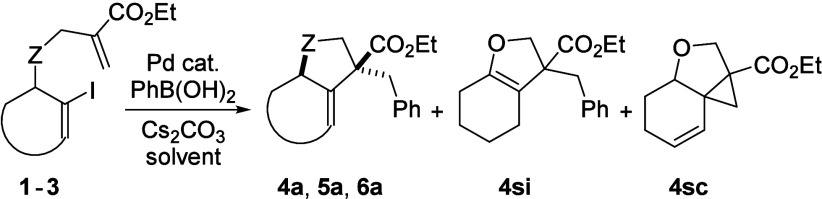 Figure 3
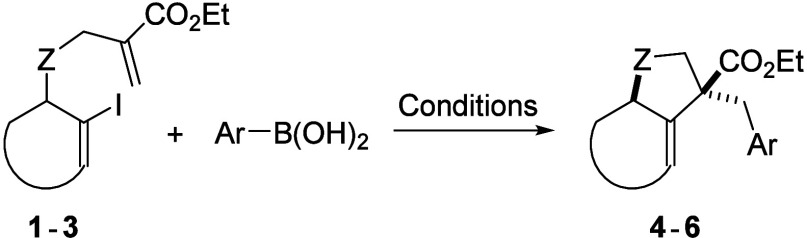 Figure 4
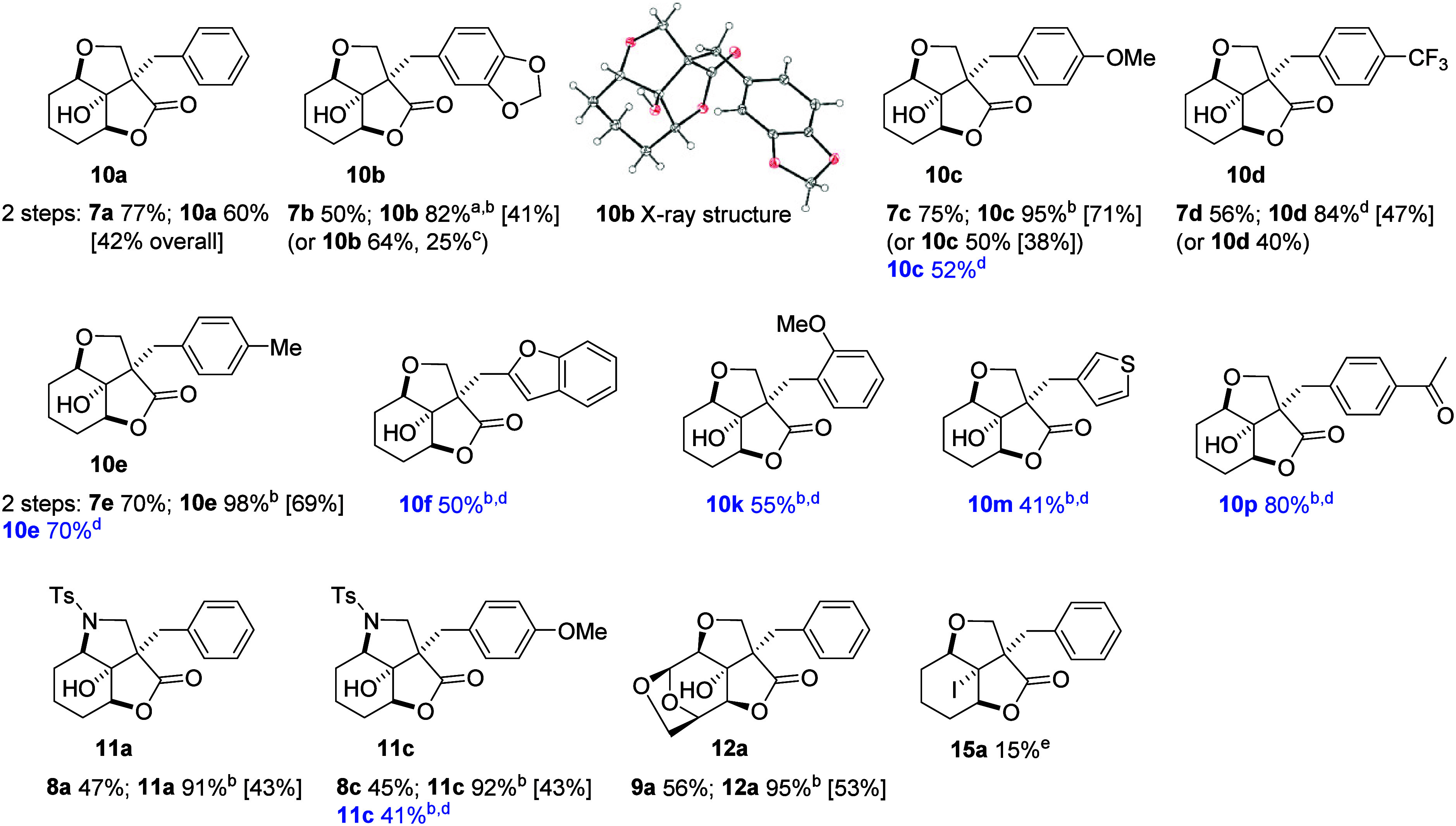 Figure 5
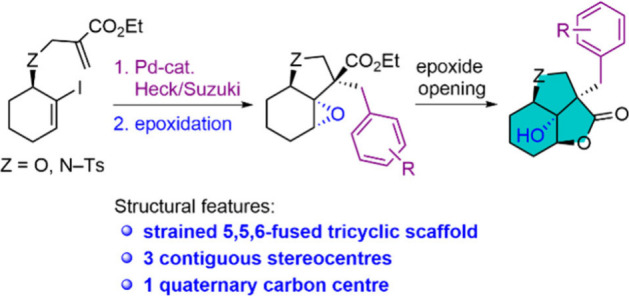 Figure 6
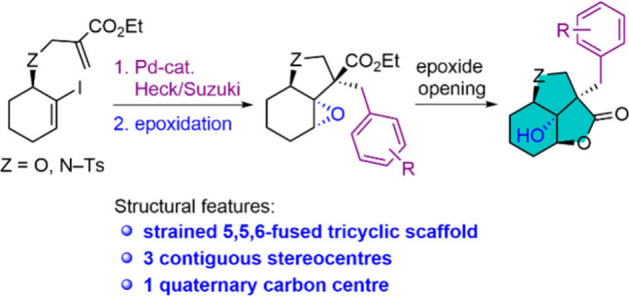 Figure 7
Peer Reviews
No public reviews on file for this paper yet. If you reviewed it on a platform where reviews are public (OpenReview, ICLR, NeurIPS, ICML), you can paste yours below so the community can read it here.
Videos
No videos yet. Explain this paper in a talk, walkthrough, or lecture? Add one.
Taxonomy
TopicsSynthetic Organic Chemistry Methods · Carbohydrate Chemistry and Synthesis · Catalytic Cross-Coupling Reactions