Identifying Pathoadaptation in Pseudomonas aeruginosa Using Glycopolymer Sensor Arrays
Callum Johnson, Kathryn G. Leslie, Sara Franco Ortega, James W. B. Moir, John M. Girkin, Helle Krogh Johansen, Ville-Petri Friman, Clare S. Mahon

TL;DR
A new glycopolymer sensor array can detect phenotypic changes in Pseudomonas aeruginosa, helping identify pathoadaptation during infections more efficiently.
Contribution
A novel glycopolymer-based sensor array is introduced for direct identification of phenotypic changes in P. aeruginosa.
Findings
The sensor array distinguishes phenotypic variations from single-gene defects in P. aeruginosa.
It can differentiate P. aeruginosa isolates from other bacteria in polymicrobial infections.
The platform offers potential for rapid diagnostics based on phenotypic profiles.
Abstract
In-host bacterial evolution presents a major barrier to effective infection management, driving phenotypic adaptations such as antibiotic resistance and altered virulence. Pseudomonas aeruginosa, a key opportunistic pathogen, frequently undergoes rapid evolutionary changes during chronic lung infections, complicating diagnosis and treatment. Current strain typing via whole genome sequencing or selective culturing is costly and time-intensive, and the complex relationship between genetic variations and the resulting phenotype makes clinically relevant pathotypes difficult to identify. Here, we report a cross-reactive, glycopolymer-based fluorescent sensor array capable of directly identifying phenotypic changes related to in-host evolution in P. aeruginosa. The sensor array can accurately distinguish phenotypic variations arising from single-gene defects and discriminate clinical…
Genes, proteins, chemicals, diseases, species, mutations and cell lines named across the full text — each resolved to its canonical identifier and authoritative record.
Click any figure to enlarge with its caption.
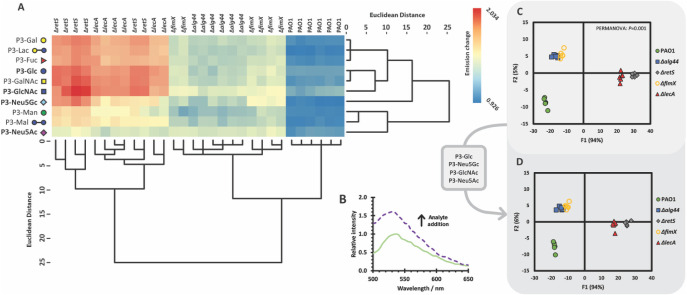 Figure 1
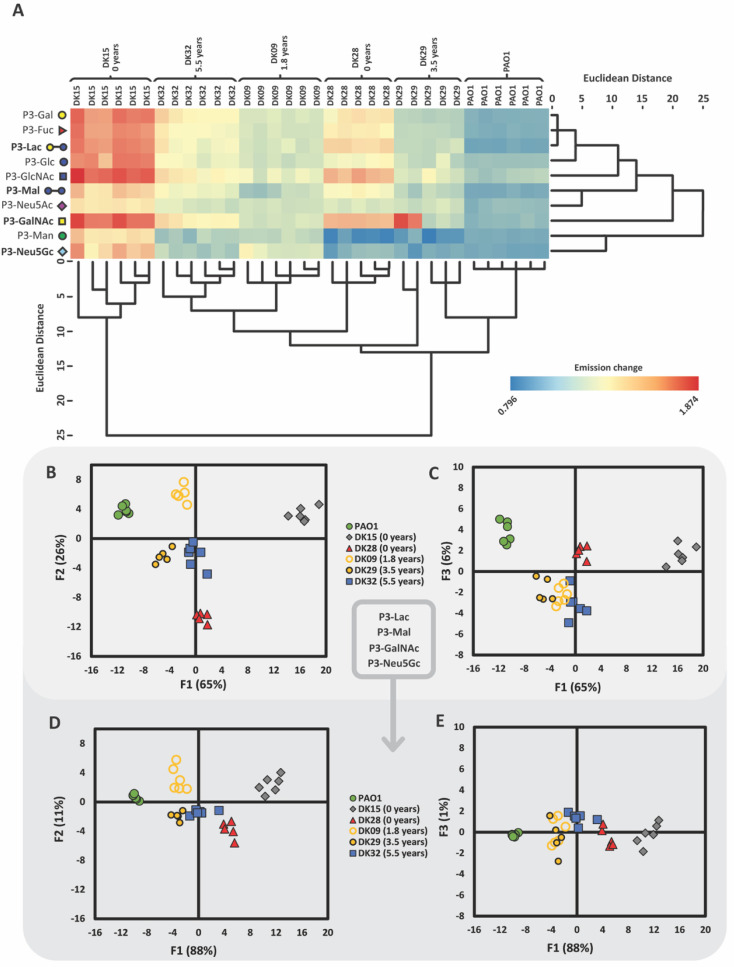 Figure 2
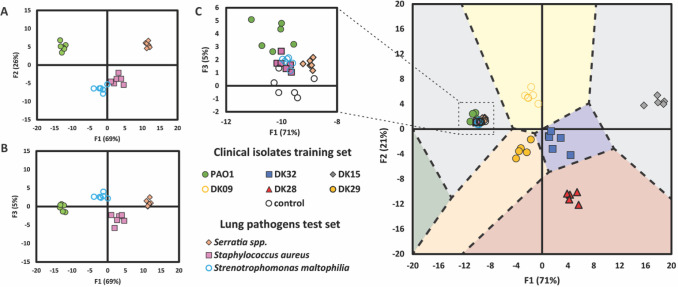 Figure 3
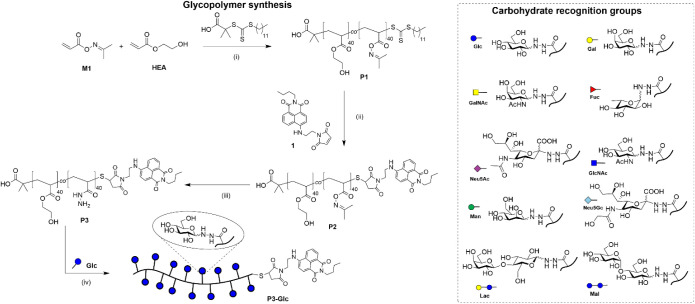 Figure 4
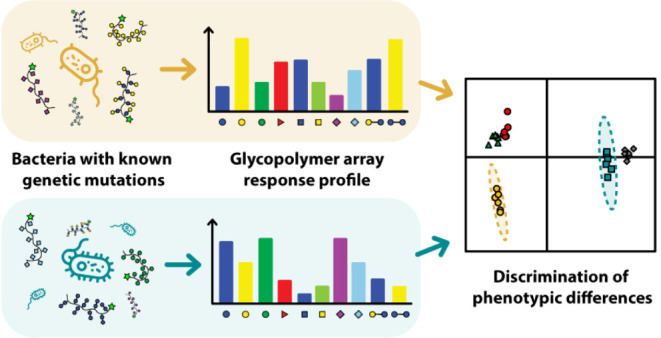 Figure 5
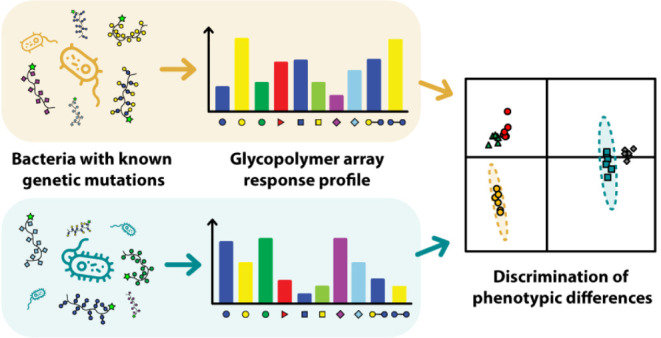 Figure 6
Peer Reviews
No public reviews on file for this paper yet. If you reviewed it on a platform where reviews are public (OpenReview, ICLR, NeurIPS, ICML), you can paste yours below so the community can read it here.
Videos
No videos yet. Explain this paper in a talk, walkthrough, or lecture? Add one.
Taxonomy
TopicsBacterial biofilms and quorum sensing · Cystic Fibrosis Research Advances · Bacterial Identification and Susceptibility Testing