A Machine Learning-Guided Study of Structure–Reactivity Relationships in Diels–Alder Cycloadditions
Amir Mahdian, Kaveh Farshadfar, Kari Laasonen

TL;DR
This study uses machine learning and DFT to understand how steric and electronic effects influence Diels–Alder reactions.
Contribution
Introduces a new predictive model combining ML and DFT to analyze structure-reactivity relationships in Diels–Alder reactions.
Findings
Steric effects at internal diene carbons significantly increase activation barriers due to conformational strain.
The minimum energy gap between LUMO and HOMO orbitals is a strong predictor of activation energy.
Steric interactions can cause deviations from the expected reactivity trends based on electronic effects.
Abstract
The Diels–Alder cycloaddition is a cornerstone transformation in organic synthesis and has been extensively studied in both experimental and theoretical contexts. In this work, we present a complementary computational approach that combines density functional theory (DFT) and machine learning to further elucidate the role of steric and electronic effects in determining the reactivity and activation barriers. A diverse dataset of 1000 uncatalyzed hydrocarbon Diels–Alder reactions was used to train predictive models that relate activation energies to chemically meaningful molecular descriptors. SHAP analysis of the machine learning models highlights the dominant influence of steric effects, particularly those associated with substituent volume at the internal diene carbons, which can impose conformational strain and lead to significantly elevated barriers. In contrast, substituents at the…
Genes, proteins, chemicals, diseases, species, mutations and cell lines named across the full text — each resolved to its canonical identifier and authoritative record.
Click any figure to enlarge with its caption.
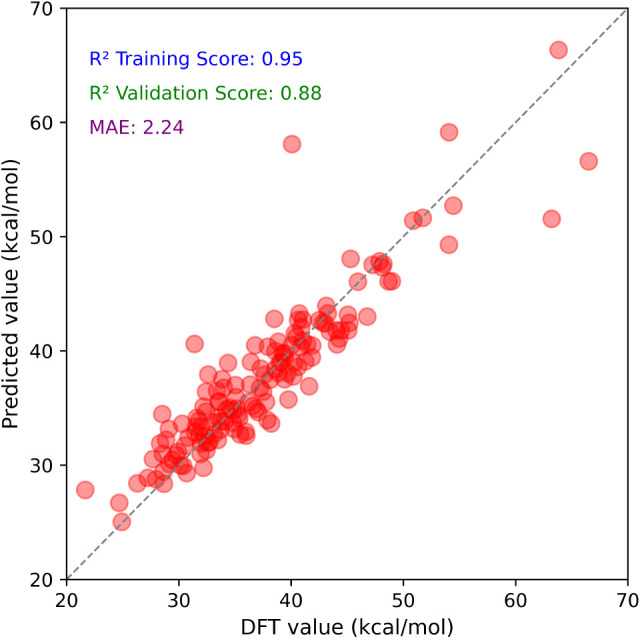 Figure 1
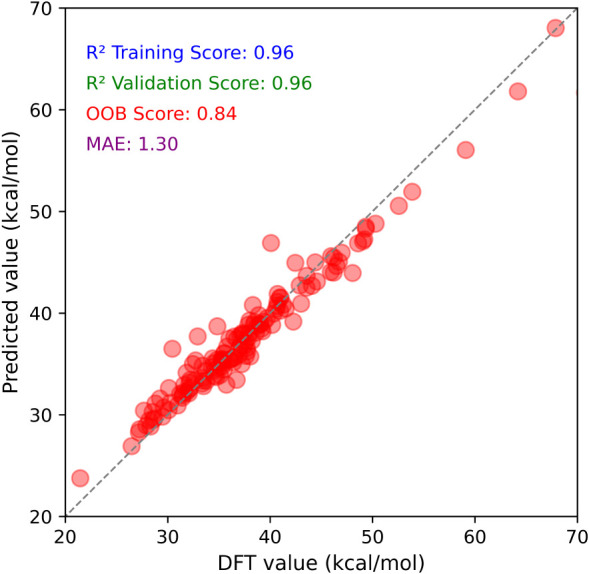 Figure 2
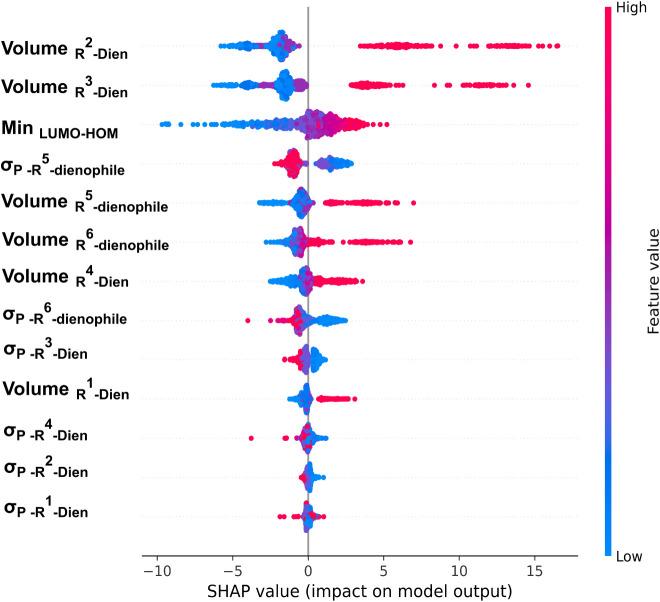 Figure 3
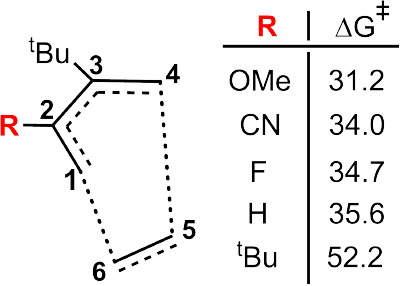 Figure 4
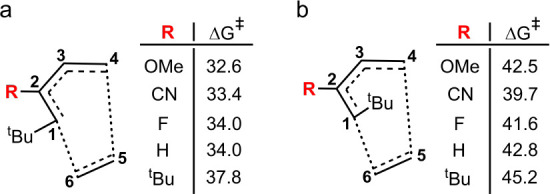 Figure 5
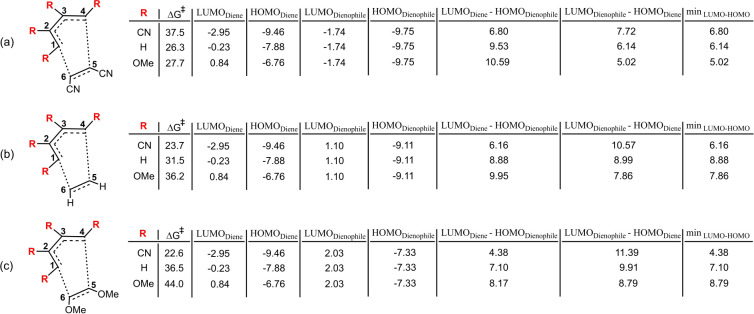 Figure 6
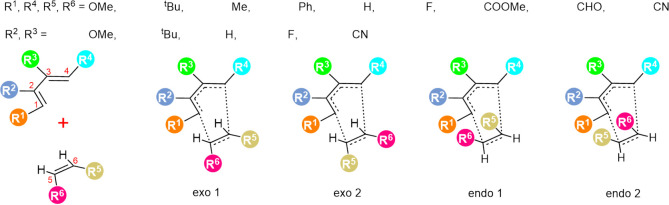 Figure 7
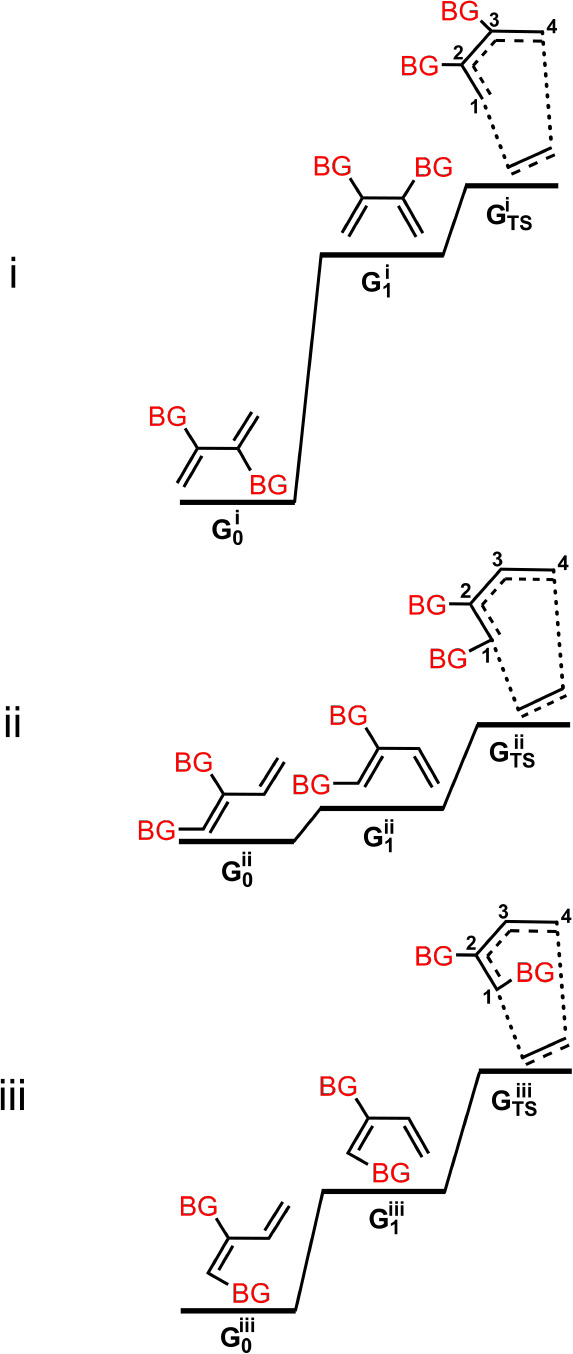 Figure 8
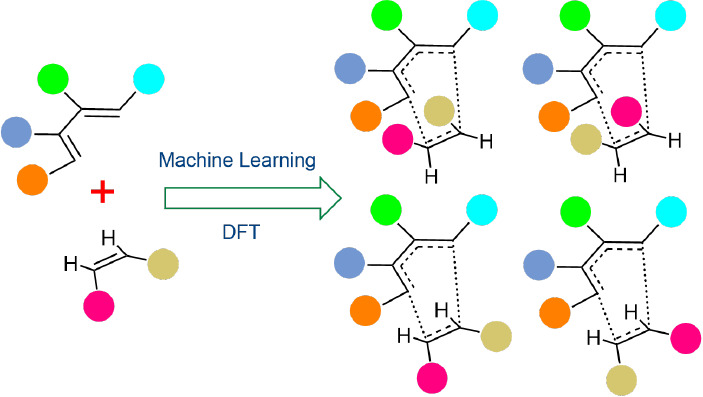 Figure 9
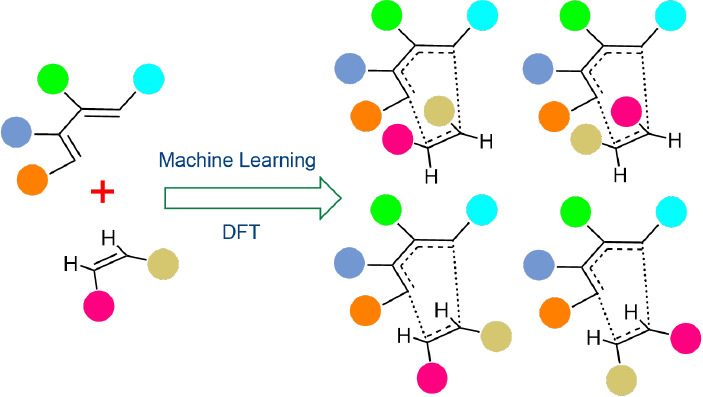 Figure 10
 Figure 11
 Figure 12
 Figure 13
 Figure 14
 Figure 15
 Figure 16
 Figure 17
 Figure 18
 Figure 19
 Figure 20
 Figure 21
 Figure 22
 Figure 23
Peer Reviews
No public reviews on file for this paper yet. If you reviewed it on a platform where reviews are public (OpenReview, ICLR, NeurIPS, ICML), you can paste yours below so the community can read it here.
Videos
No videos yet. Explain this paper in a talk, walkthrough, or lecture? Add one.
Taxonomy
TopicsMachine Learning in Materials Science · Organic Chemistry Cycloaddition Reactions · Cyclization and Aryne Chemistry