ENGAGE: Analyzing the value of virtual reality in a patient-centric immersive learning program in myasthenia gravis for healthcare professionals
Ina Weisshardt, Cornelia Reyes Acosta, Trishna Chauhan, Kaloyan Haralampiev, Andrijana Mušura Gabor, Alexis Rodriguez, Allison Foss, Ashwin Pinto, Channa Hewamadduma, John Vissing, Nicholas J. Silvestri, Sophie Lehnerer, Marc De Backer, Natasha Monin, Sophie Barry, Ivo Vlaev

TL;DR
A virtual reality program helped healthcare professionals better understand and empathize with patients with myasthenia gravis, improving communication and shared decision-making.
Contribution
A patient-centric VR intervention was developed and evaluated for its impact on healthcare professionals' empathy and knowledge in myasthenia gravis care.
Findings
Healthcare professionals reported increased empathy and understanding of MG patients' lives after the VR experience.
Quantitative analysis showed significant improvements in attitudes and shared decision-making post-intervention.
The VR program was highly rated for relevance and ease of use by participants.
Abstract
Myasthenia gravis (MG) is a chronic autoimmune neuromuscular disease characterized by muscle weakness that can significantly impact patients’ lives. Recent patient-led research highlighted a disconnect between healthcare professionals (HCPs) and patients, emphasizing the need for effective and empathetic patient–HCP dialogue and shared decision-making (SDM). The power of virtual reality (VR) to increase empathy and provide impactful learning experiences has been established. This outcome evaluation assessed the ability of VR to improve HCPs’ knowledge, attitudes and empathy in MG, aiming to strengthen patient–HCP communication and facilitate SDM. The ENGAGE educational pilot program comprised a needs assessment, a VR-based intervention and an outcome evaluation. Content for the VR intervention was developed using a patient-centric approach integrating patient and HCP voices. The VR…
Genes, proteins, chemicals, diseases, species, mutations and cell lines named across the full text — each resolved to its canonical identifier and authoritative record.
Click any figure to enlarge with its caption.
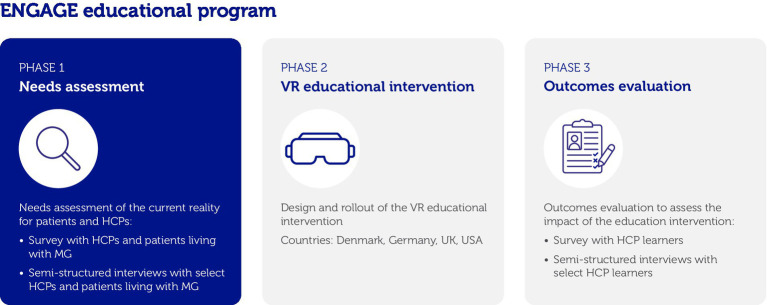 Figure 1
 Figure 2
 Figure 3
 Figure 4
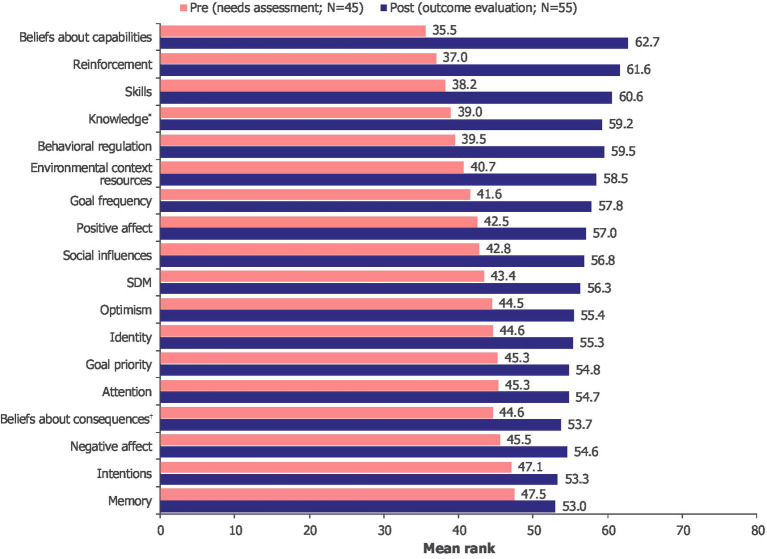 Figure 5
Peer Reviews
No public reviews on file for this paper yet. If you reviewed it on a platform where reviews are public (OpenReview, ICLR, NeurIPS, ICML), you can paste yours below so the community can read it here.
Videos
No videos yet. Explain this paper in a talk, walkthrough, or lecture? Add one.
Taxonomy
TopicsMyasthenia Gravis and Thymoma · Intensive Care Unit Cognitive Disorders · Pediatric Pain Management Techniques