Spinal Cord Tau and Protein Copathologies Associated With Chronic Traumatic Encephalopathy
Hidetomo Tanaka, Lauren E. Black, Shelley L. Forrest, Krisztina Danics, Nusrat Sadia, Mozhgan Khodadadi, Charles Tator, Douglas H. Smith, Maria Carmela Tartaglia, William Stewart, Gabor G. Kovacs

TL;DR
The study finds that spinal cord tau and other protein pathologies are common in individuals with chronic traumatic encephalopathy, suggesting a broader condition called encephalomyelopathy.
Contribution
The study provides new evidence that spinal cord pathologies are prevalent in CTE-NC cases, expanding the understanding of trauma-related neurodegeneration.
Findings
All CTE-NC cases with RHI showed spinal cord p-tau pathology, with higher prevalence of p-TDP-43, Aβ, and α-synuclein compared to controls.
Spinal p-tau pathology was associated with microglial activation and motor symptoms in older individuals with RHI.
CTE-NC cases with RHI aged 65 or older frequently exhibited multiple co-occurring protein pathologies in the spinal cord.
Abstract
Are phosphorylated tau (p-tau) and other misfolded protein pathologies present in the spinal cord of individuals with repetitive head impact (RHI) exposure or chronic traumatic encephalopathy neuropathologic change (CTE-NC)? In this case-control study, p-tau pathology in the spinal cord was observed in all CTE-NC cases with RHI, and older cases frequently exhibited phosphorylated TAR DNA-binding protein 43 (64%), amyloid-β (93%), and α-synuclein (50%) pathology; all these pathologies were more prevalent than in controls. Severity of p-tau pathology was associated with clinical symptoms and microglial activation in the spinal cord. These findings suggest that the concept of CTE-NC may need to be expanded to encompass chronic trauma–induced encephalomyelopathy. Exposure to repetitive head impacts (RHI) is associated with increased risk of a range of neurodegenerative diseases,…
Genes, proteins, chemicals, diseases, species, mutations and cell lines named across the full text — each resolved to its canonical identifier and authoritative record.
Click any figure to enlarge with its caption.
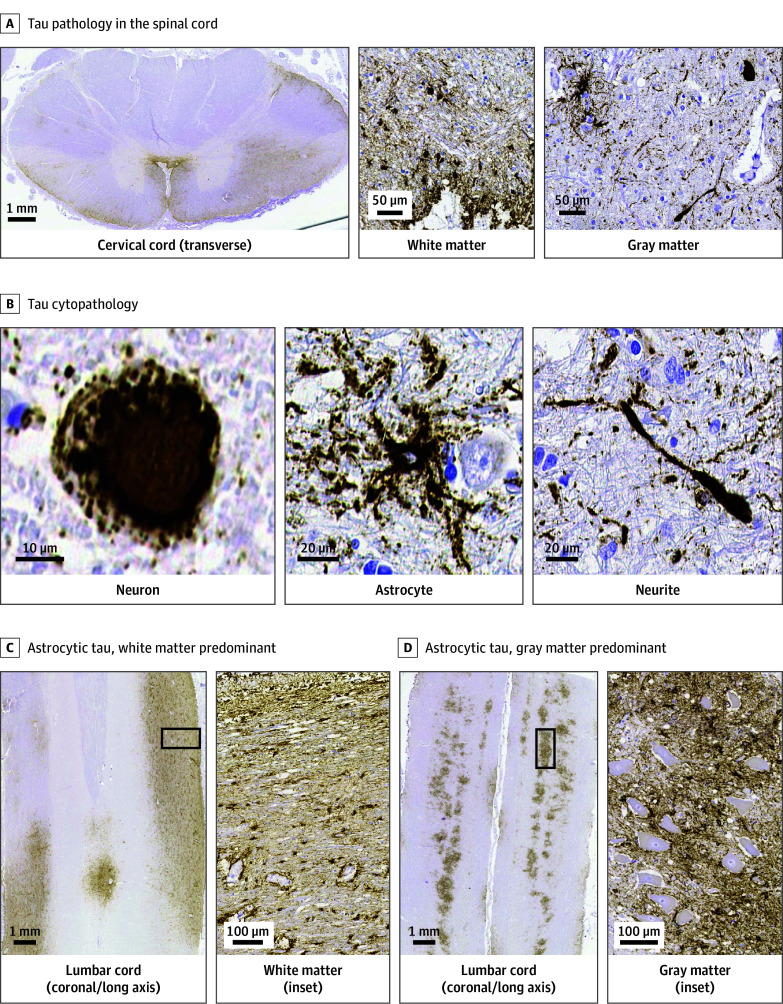 Figure 1
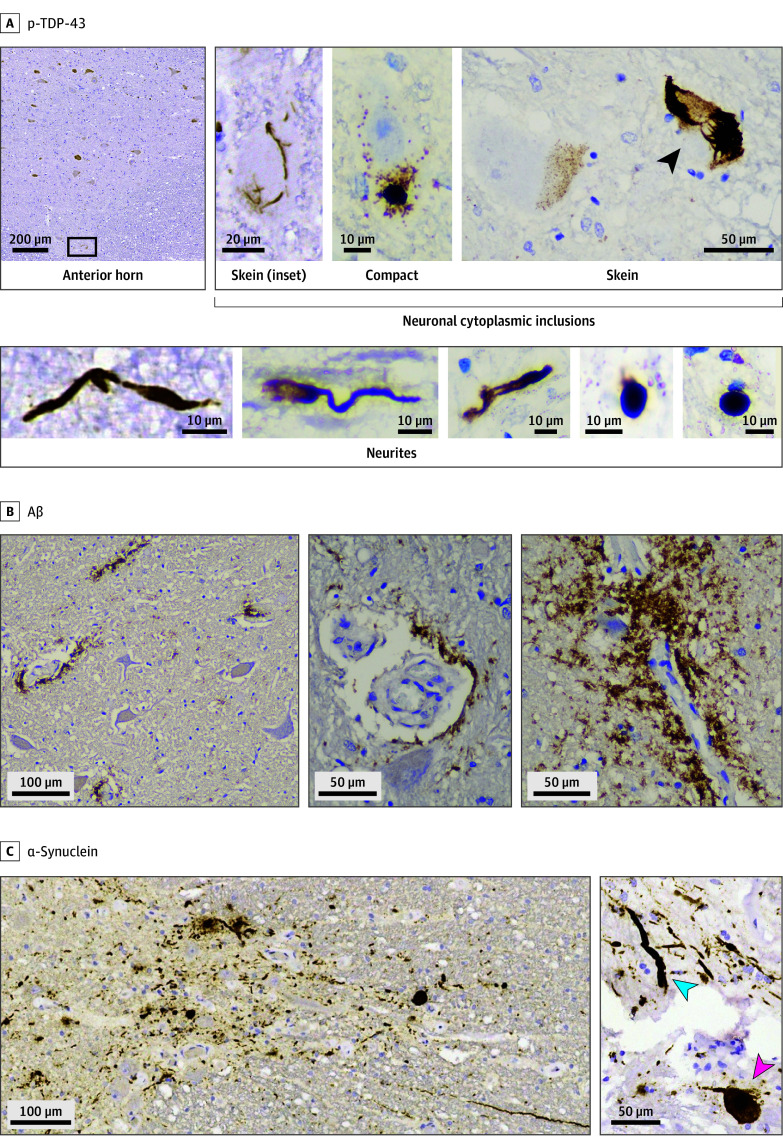 Figure 2
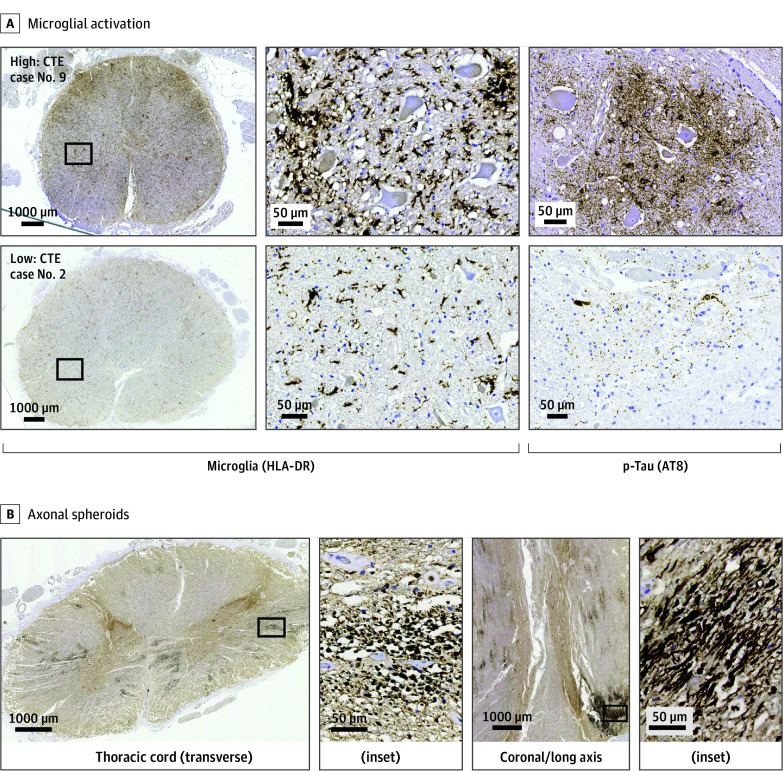 Figure 3
Peer Reviews
No public reviews on file for this paper yet. If you reviewed it on a platform where reviews are public (OpenReview, ICLR, NeurIPS, ICML), you can paste yours below so the community can read it here.
Videos
No videos yet. Explain this paper in a talk, walkthrough, or lecture? Add one.
Taxonomy
TopicsTraumatic Brain Injury Research · Traumatic Brain Injury and Neurovascular Disturbances · Automotive and Human Injury Biomechanics