Variation in inbreeding depression within and among Caenorhabditis species
Matthew V Rockman, Max R Bernstein, Derin Çağlar, M Victoria Cattani, Audrey S Chang, Taniya Kaur, Luke M Noble, Annalise B Paaby

TL;DR
The study explores how inbreeding affects fitness in different species of Caenorhabditis worms, finding that inbreeding depression varies widely and may not always prevent the evolution of self-fertilization.
Contribution
The paper demonstrates that inbreeding depression varies significantly among and within species of obligately outcrossing Caenorhabditis nematodes.
Findings
Inbreeding depression is universal but highly variable among species and populations of Caenorhabditis.
Inbreeding depression affects multiple life stages, including mating, embryo production, and larval growth.
Some species, like Caenorhabditis becei, show modest inbreeding depression and could serve as laboratory models.
Abstract
Outbreeding populations harbor large numbers of recessive deleterious alleles that reduce the fitness of inbred individuals, and this inbreeding depression potentially shapes the evolution of mating systems, acting as a counterweight to the inherent selective advantage of self-fertilization. The population biological factors that influence inbreeding depression are numerous and often difficult to disentangle. We investigated the utility of obligately outcrossing Caenorhabditis nematodes as models for inbreeding depression. By systematically inbreeding lines from 10 populations and tracking line extinction, we found that inbreeding depression is universal but highly variable among species and populations. Inbreeding depression was detected across the life cycle, from mating to embryo production to embryonic viability and larval growth, and reciprocal crosses implicated female-biased…
Genes, proteins, chemicals, diseases, species, mutations and cell lines named across the full text — each resolved to its canonical identifier and authoritative record.
Click any figure to enlarge with its caption.
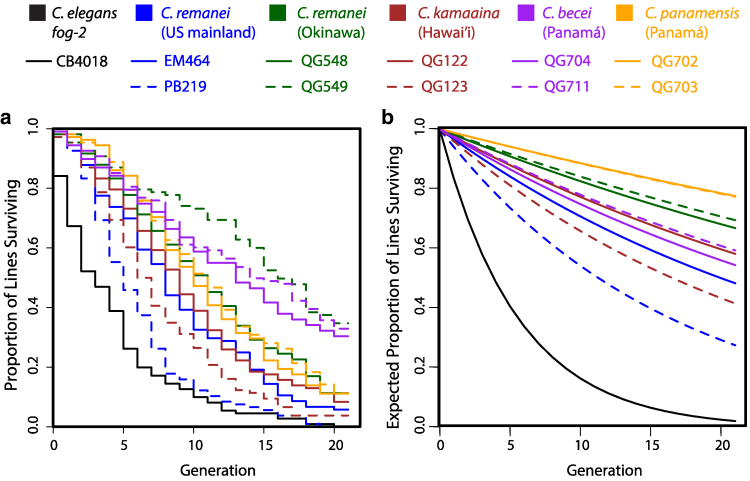 Figure 1
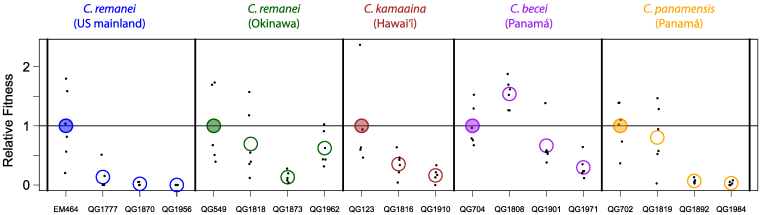 Figure 2
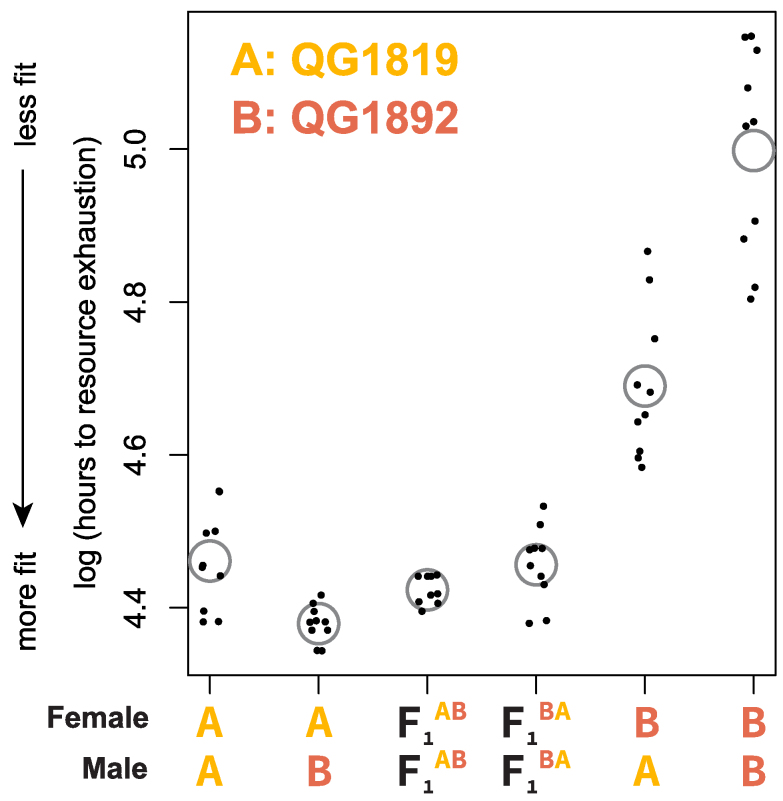 Figure 3
Peer Reviews
No public reviews on file for this paper yet. If you reviewed it on a platform where reviews are public (OpenReview, ICLR, NeurIPS, ICML), you can paste yours below so the community can read it here.
Videos
No videos yet. Explain this paper in a talk, walkthrough, or lecture? Add one.
Taxonomy
TopicsEvolution and Genetic Dynamics · Plant and animal studies · Nematode management and characterization studies