Comparative analyses of the organelle genomes in Jacaratia spinosa (Caricaceae)
Liping Zuo, Zhicong Lin, Huiru Chen, Jianling Pan, Sihui Zhu, Ray Ming

TL;DR
This study provides the complete mitochondrial and chloroplast genomes of Jacaratia spinosa, revealing insights into its genomic structure and evolution within the Caricaceae family.
Contribution
The study presents the first complete organelle genomes for Jacaratia spinosa, including detailed annotations and evolutionary analyses.
Findings
The mitochondrial genome is 461,675 bp with 40 protein-coding genes and notable RNA editing events.
The chloroplast genome is 160,000 bp with 84 protein-coding genes and high conservation.
Phylogenetic analysis shows J. spinosa is closely related to C. papaya and has genes under positive selection.
Abstract
Jacaratia spinosa (Aubl.) A. DC. (J. spinosa) is an important member of the Caricaceae family, valued for its edible properties and potential for protease development. However, organelle genome resources for this species have not been publicly available. To fill this gap, we applied a hybrid sequencing approach combining Illumina short reads and Nanopore long reads, and assembled the complete mitochondrial and chloroplast genomes of J. spinosa using established assembly pipelines, followed by comprehensive annotation and genomic feature analysis. The circular mitochondrial genome spans 461,675 bp, and encodes 40 protein-coding genes (PCGs), 26 tRNA genes, and 3 rRNA genes. The complete chloroplast genome is 160,000 bp in length, comprising 84 PCGs, 37 tRNA genes, and 8 rRNA genes. Both genomes contain numerous repetitive sequences. Codon usage analysis revealed a preference for…
Genes, proteins, chemicals, diseases, species, mutations and cell lines named across the full text — each resolved to its canonical identifier and authoritative record.
Click any figure to enlarge with its caption.
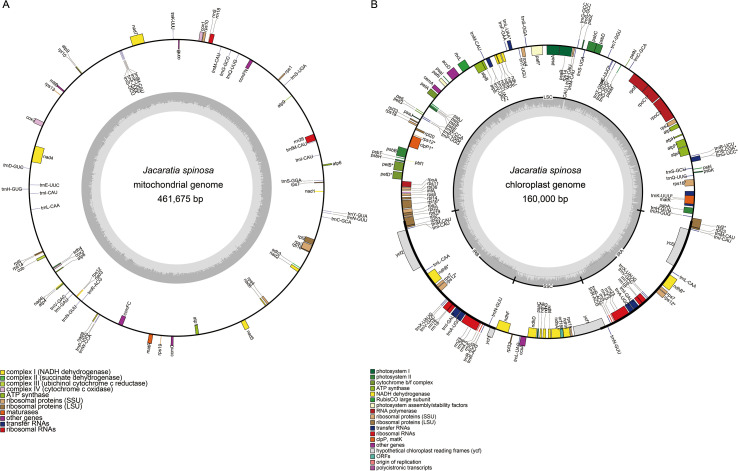 Figure 1
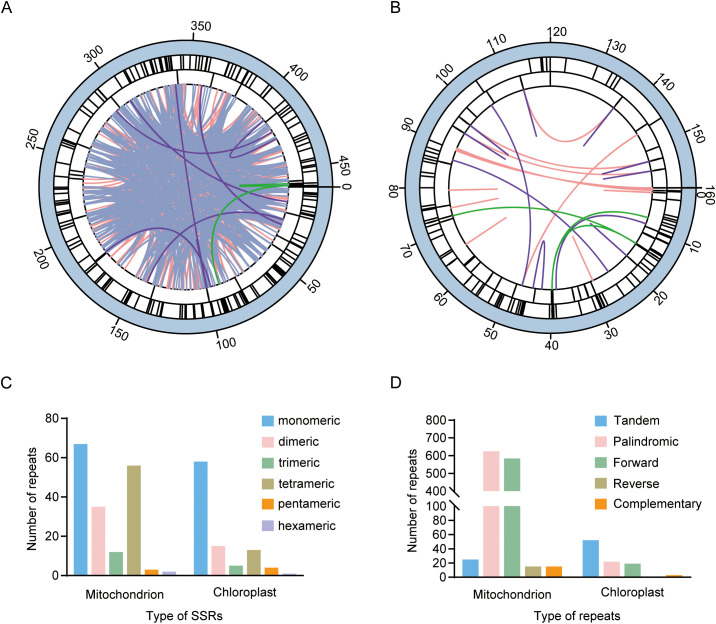 Figure 2
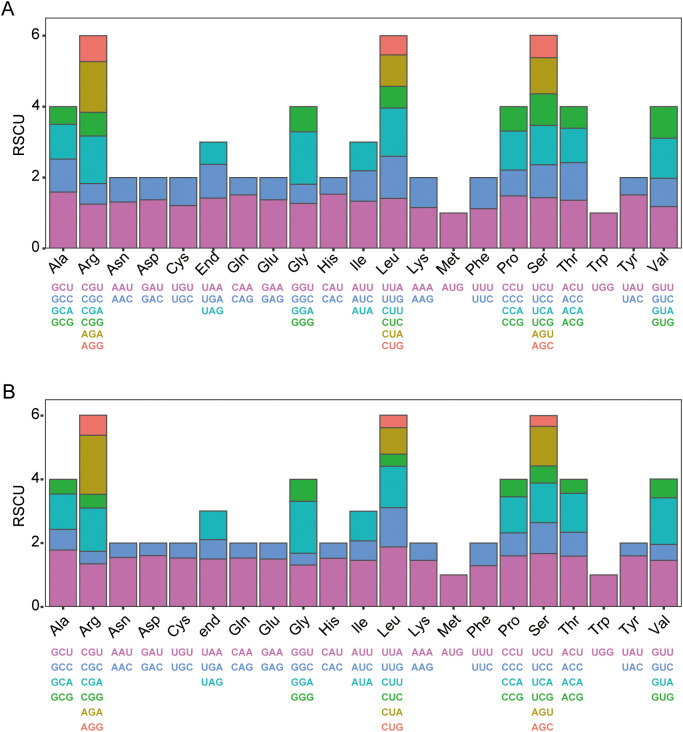 Figure 3
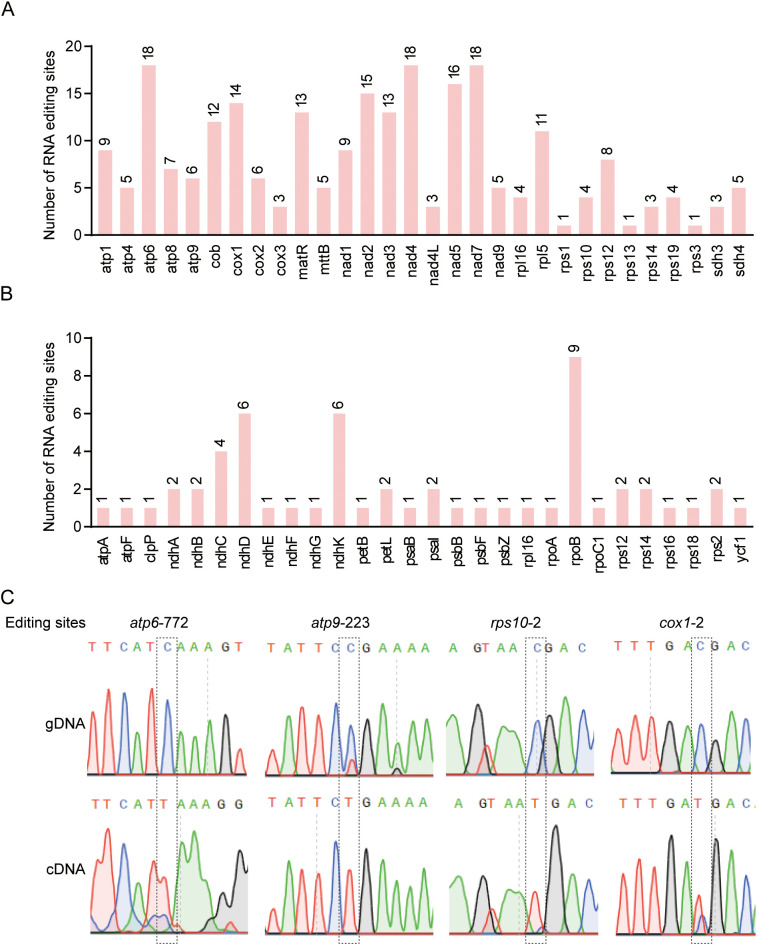 Figure 4
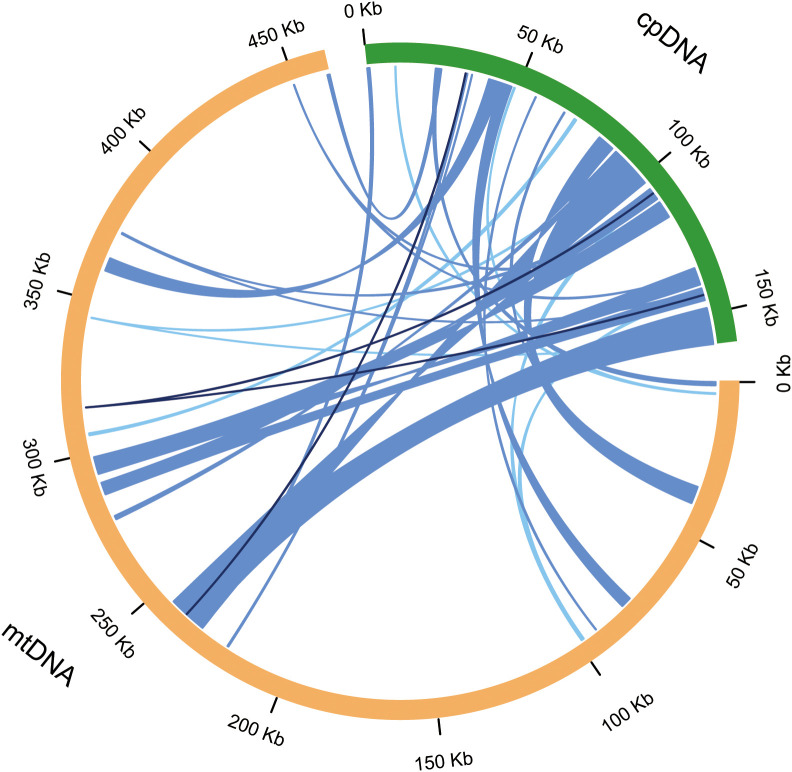 Figure 5
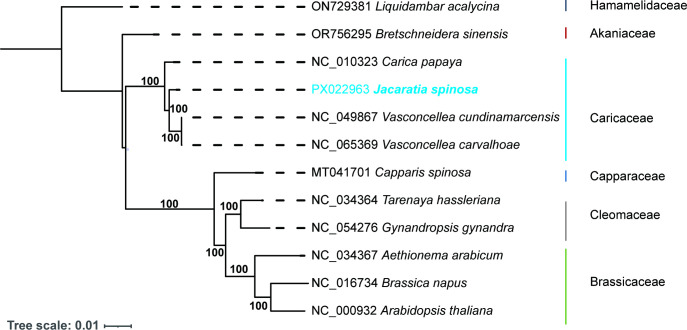 Figure 6
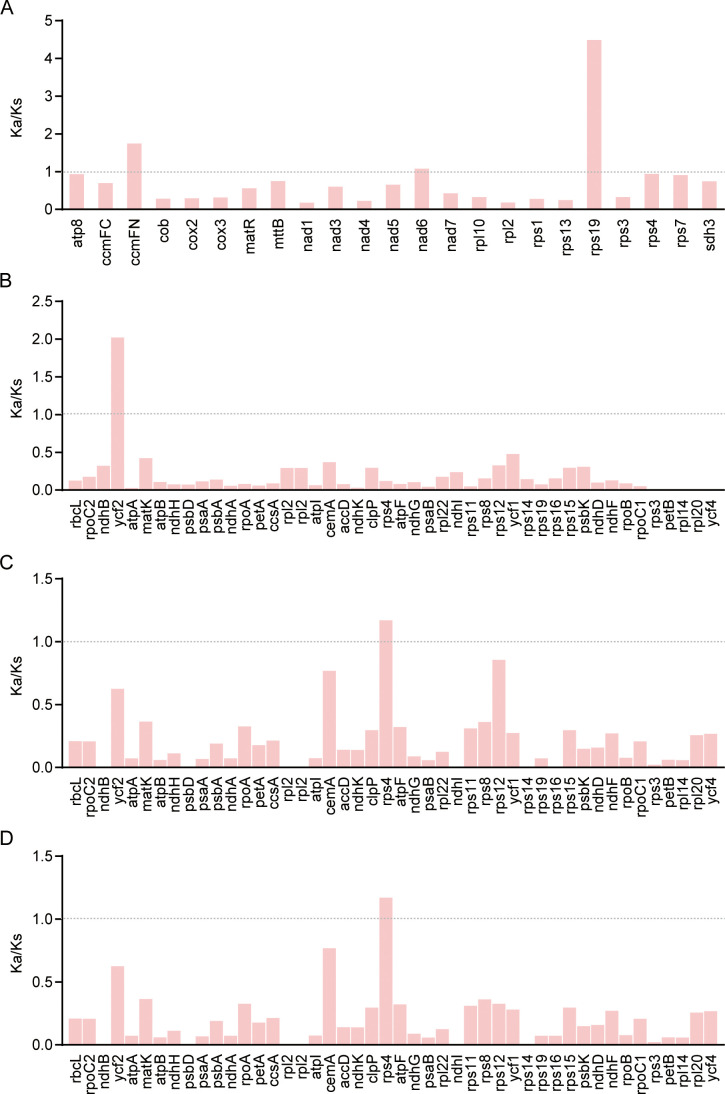 Figure 7
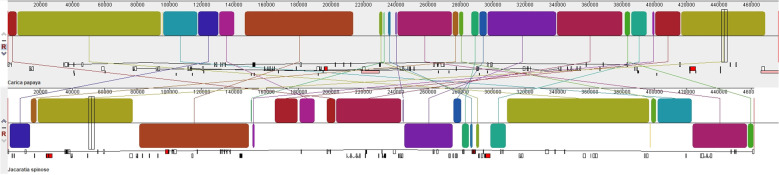 Figure 8
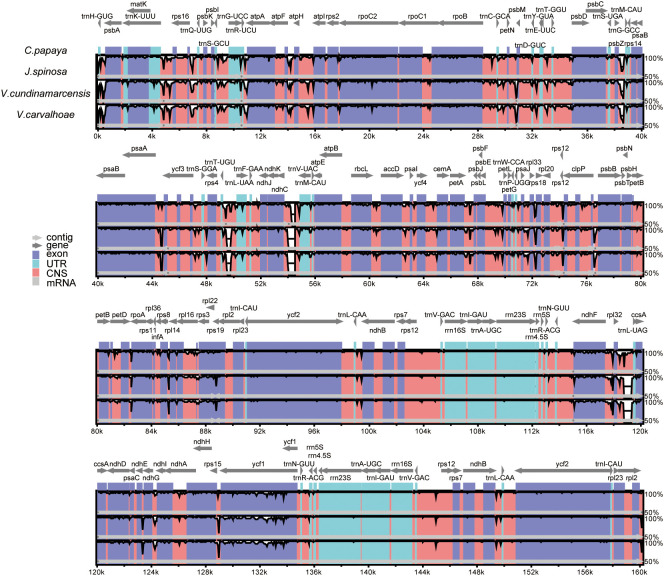 Figure 9
Peer Reviews
No public reviews on file for this paper yet. If you reviewed it on a platform where reviews are public (OpenReview, ICLR, NeurIPS, ICML), you can paste yours below so the community can read it here.
Videos
No videos yet. Explain this paper in a talk, walkthrough, or lecture? Add one.
Taxonomy
TopicsGenomics and Phylogenetic Studies · Photosynthetic Processes and Mechanisms · Genome Rearrangement Algorithms