The efficacy of artificial intelligence - powered scaffolding in individual acquisition efficiency of EFL in tertiary educational context
Yonggang Sun, Yinfang Wu

TL;DR
This study explores how AI-powered tools help university students learn English more efficiently by analyzing cognitive processes and learning outcomes.
Contribution
The study introduces a cross-disciplinary framework combining TAM and CLT to evaluate AI-powered scaffolding in EFL learning.
Findings
Perceived usefulness and ease of use directly predict learning efficiency in EFL.
AI-assisted conversation frequency indirectly affects learning through cognitive processing depth.
Cognitive ability enhances the relationship between AI tool usage and cognitive processing depth.
Abstract
This study investigates the cognitive mechanisms and educational efficacy of AI-powered scaffolding in the acquisition of English as a Foreign Language (EFL) in tertiary education.Integrating the Technology Acceptance Model (TAM) and Cognitive Load Theory (CLT), the cross-disciplinary framework explores multidimensional pathways affecting the acquisition efficiency of EFL, focusing on learning efficiency of individual acquisition of EFL (LEF) of university students at all levels, and highlighting the mediating role of Cognitive Processing Depth (CPD) and moderating effects of Cognitive Ability (COA). Quantitative data analysis from university students using AI-assisted conversational tools of AI -powered scaffolding were specifically conducted via structural equation modeling (SEM) and necessary condition analysis (NCA). Results indicate perceived usefulness (PU) and ease of use…
Click any figure to enlarge with its caption.
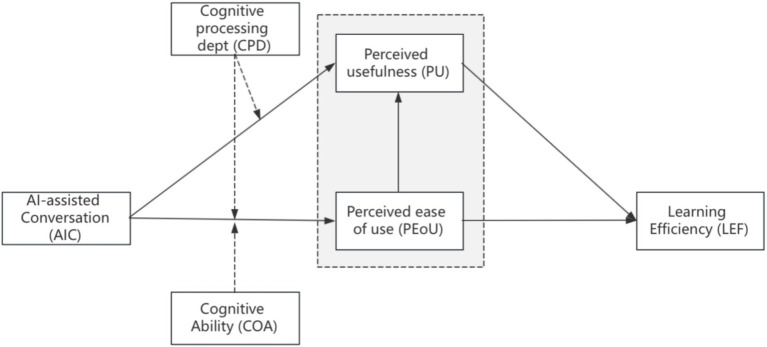 Figure 1
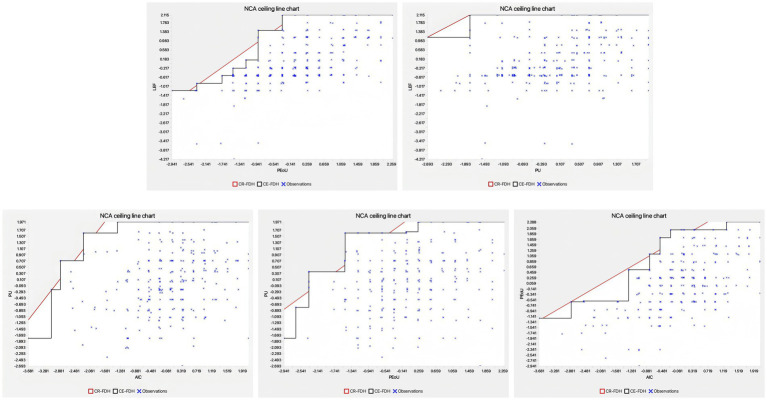 Figure 2
Peer Reviews
No public reviews on file for this paper yet. If you reviewed it on a platform where reviews are public (OpenReview, ICLR, NeurIPS, ICML), you can paste yours below so the community can read it here.
Videos
No videos yet. Explain this paper in a talk, walkthrough, or lecture? Add one.
Taxonomy
TopicsAI in Service Interactions · Technology-Enhanced Education Studies · Educational Games and Gamification