Synergistic Combination of Additive One‐ and Two‐Photon Polymerization Printing Methods to Fabricate 3D Microstructured Perfusable Angiogenesis–on–a–Chip Systems
Daria Sokoliuk, Rizlene Bouhaya, Peter Haeger, Kathrin Godthardt, Daniel Fetting, Lenard Spiecker, Heinrich Spiecker, Alexander Rockenbach, Holger Rothe, Klaus Liefeith, Doris Heinrich

TL;DR
This paper introduces a new 3D printing method to create microfluidic chips that support blood vessel growth, offering a promising tool for drug testing and tissue research.
Contribution
The paper presents a novel two-step fabrication method combining one- and two-photon polymerization for creating perfusable angiogenesis-on-a-chip systems.
Findings
The developed chip successfully induces endothelial cell sprouting in response to angiogenic factors.
The fabrication method allows for leak-free bonding and enables EC migration into an extracellular matrix.
The platform is versatile and can be customized for various biological applications.
Abstract
Tissue engineering, and in particular the development of organ‐on‐a‐chip (OOC) models, holds significant promise for advancing personalized medicine and reducing the use of animal models. The integration of microfluidics and advanced biomaterials in OOC systems provides controlled microenvironments and fosters the creation of physiologically relevant tissue models. A critical aspect of OOC models is the fabrication of perfusable chips to create vascular networks that are essential for sustaining long‐term 3D cultures. Here we show a two‐step fabrication approach that combines one‐ and two‐photon polymerization (2PP) to create a microfluidic chip capable of supporting endothelial cell (EC) angiogenesis. The chip features a 2PP‐printed sealing contour to ensure leak‐free bonding of chip parts, and an array of channel‐separating‐pillars that enable EC migration from the parent vessel into…
Click any figure to enlarge with its caption.
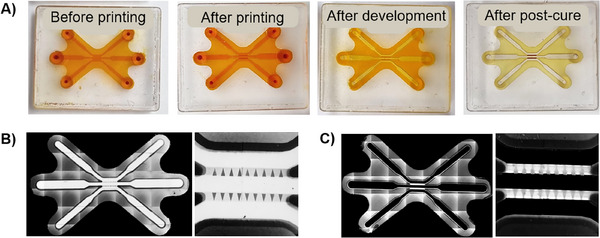 Figure 1
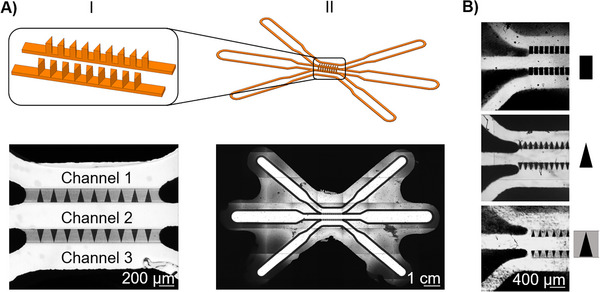 Figure 2
 Figure 3
 Figure 4
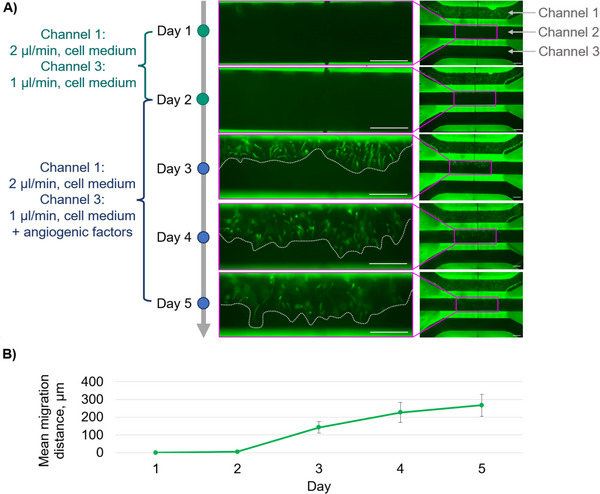 Figure 5
 Figure 6
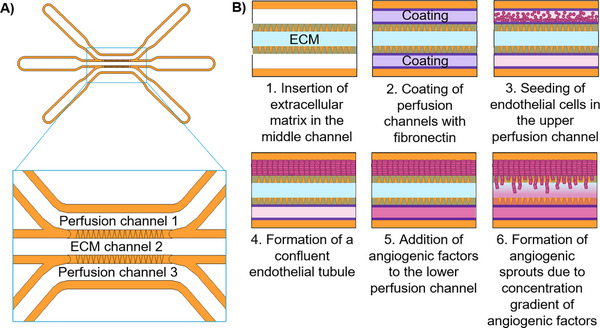 Figure 7
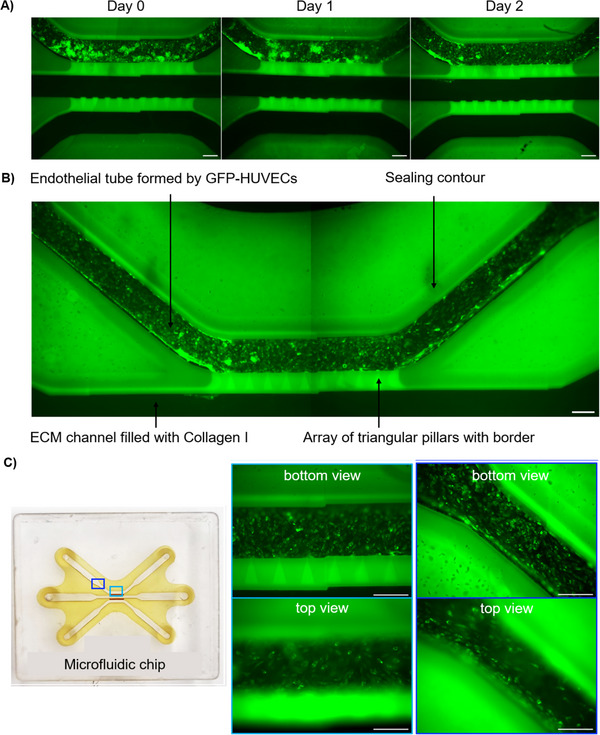 Figure 8
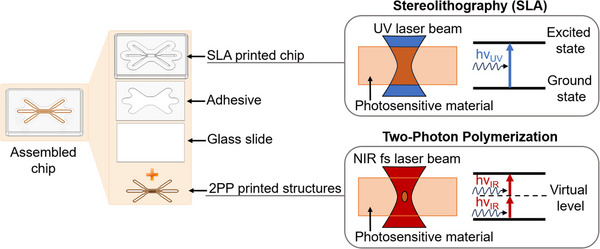 Figure 9
 Figure 10
Peer Reviews
No public reviews on file for this paper yet. If you reviewed it on a platform where reviews are public (OpenReview, ICLR, NeurIPS, ICML), you can paste yours below so the community can read it here.
Videos
No videos yet. Explain this paper in a talk, walkthrough, or lecture? Add one.
Taxonomy
Topics3D Printing in Biomedical Research · Nonlinear Optical Materials Studies · Cellular Mechanics and Interactions