Main controls on phoD-harboring bacterial community abundance, composition, and activity from oil-contaminated soils at the Changqing oilfield, Northwest China
Dandan Li, Xianyuan Du, Xingchun Li, Xinyu Zhang, Jin Zheng, Qin Chu, Weiwen Qiu, Hanyu Zhang, Qingwei Wang

TL;DR
Oil pollution in soil reduces the abundance and diversity of bacteria that help regulate phosphorus, which is important for biodegradation of petroleum.
Contribution
This study reveals how oil contamination alters phoD-harboring bacterial communities and their phosphorus-related activity in oilfield soils.
Findings
Oil contamination decreases phoD gene abundance and diversity but increases certain bacterial classes like Actinomycetia.
Soil water, nutrients, and nutrient ratios strongly influence phoD-harboring bacterial community responses to oil.
ALP activity is linked to changes in bacterial composition, with Betaproteobacteria and Rubrobacteria showing opposing effects.
Abstract
Soil phosphorus (p) availability limits the native microbial activity, which then inhibits the petroleum hydrocarbon biodegradation. Microbial communities harbouring the alkaline phosphatase (ALP) phoD gene (phoD-harboring bacteria community, hereafter) play the key roles in the regulation of P availability in soils. Nevertheless, the consequences of oil contamination on ALP activity and phoD-harboring bacterial community dynamics are poorly understood. It is necessary to assess phoD-harboring bacterial abundance, community diversity, and ALP activity in response to oil contamination. This information would be useful for formulating plans for future bioremediation processes. In this study, we sampled the contaminated and uncontaminated soils in the area surrounding crude oil pumping wells at the Changqing oilfield. The Real-time Quantitative PCR (qPCR) was used to detect the abundance…
Genes, proteins, chemicals, diseases, species, mutations and cell lines named across the full text — each resolved to its canonical identifier and authoritative record.
Click any figure to enlarge with its caption.
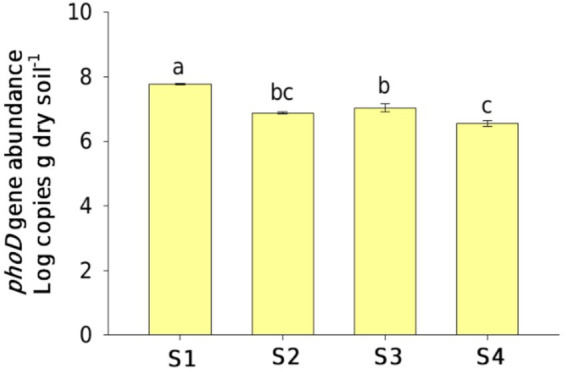 Figure 1
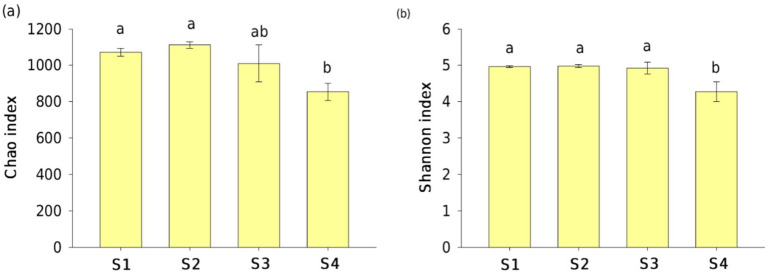 Figure 2
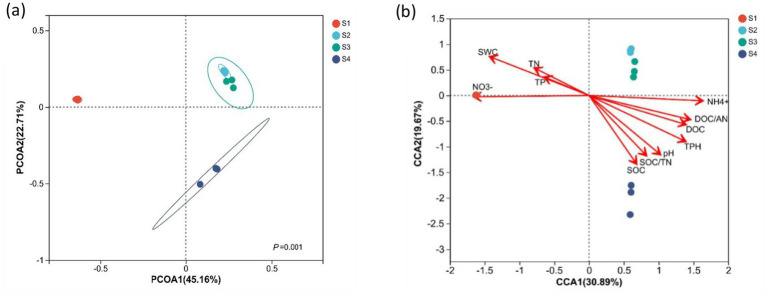 Figure 3
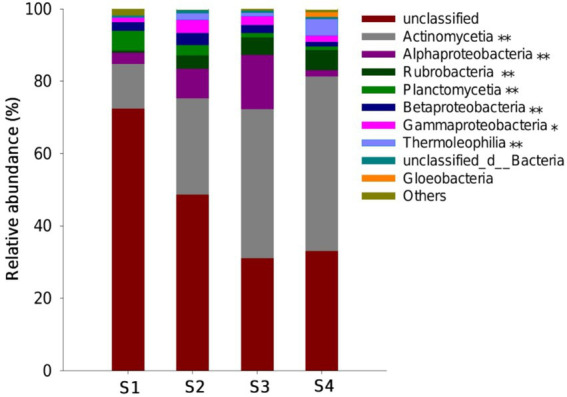 Figure 4
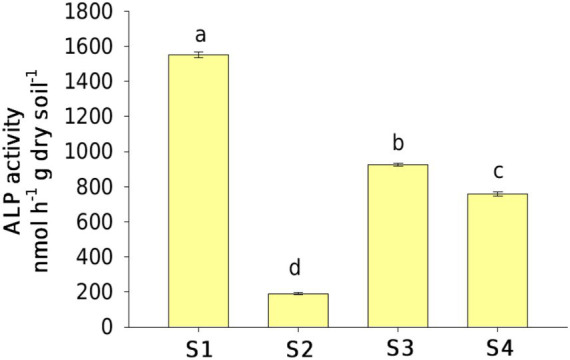 Figure 5
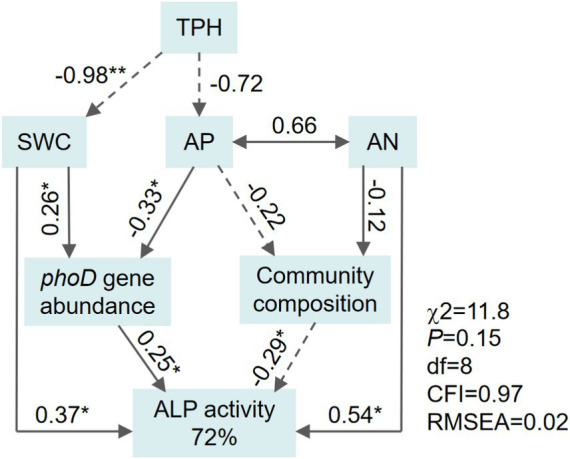 Figure 6
Peer Reviews
No public reviews on file for this paper yet. If you reviewed it on a platform where reviews are public (OpenReview, ICLR, NeurIPS, ICML), you can paste yours below so the community can read it here.
Videos
No videos yet. Explain this paper in a talk, walkthrough, or lecture? Add one.
Taxonomy
TopicsMicrobial bioremediation and biosurfactants · Pesticide and Herbicide Environmental Studies · CO2 Sequestration and Geologic Interactions