Chemical disinfection of Encephalitozoon cuniculi: toward evidence-based infection control guidelines
Jianhua Gao, Xianzhi Meng, Zhangshuai He, Yunlin Tang, Jie Chen, Xuemei He, Hua Cao, Shuyan Long, Guoqing Pan

TL;DR
This study evaluates how well different disinfectants kill Encephalitozoon cuniculi spores, providing data to improve infection control guidelines.
Contribution
The study introduces a multi-modal approach to assess disinfectant efficacy against E. cuniculi spores, emphasizing functional infectivity over structural damage.
Findings
Chlorine-based agents and hydrogen peroxide effectively inactivate E. cuniculi spores within 60 minutes.
Quaternary ammonium compounds require extended contact time to prevent in vivo infection.
Structural damage does not always correlate with loss of infectivity in E. cuniculi spores.
Abstract
Encephalitozoon cuniculi is an opportunistic pathogen with significant zoonotic potential, particularly for immunocompromised individuals. However, evidence-based disinfection protocols against its environmentally resistant spores are lacking, leading to potential reliance on suboptimal agents. This study aimed to establish a rigorous, data-driven hierarchy for the efficacy of common chemical disinfectants against E. cuniculi spores by integrating assessments of structural integrity, cellular infectivity, and in vivo dissemination. We employed a multi-modal approach. Spores were treated with rapid-acting (75% ethanol, 1% hydrogen peroxide, chlorine-based agent) and long-acting (nano-silver, quaternary ammonium compounds—QACs) disinfectants. Sporicidal effects were evaluated via flow cytometry using ethidium bromide (EB) staining. Functional infectivity was quantified in Vero cells…
Genes, proteins, chemicals, diseases, species, mutations and cell lines named across the full text — each resolved to its canonical identifier and authoritative record.
Click any figure to enlarge with its caption.
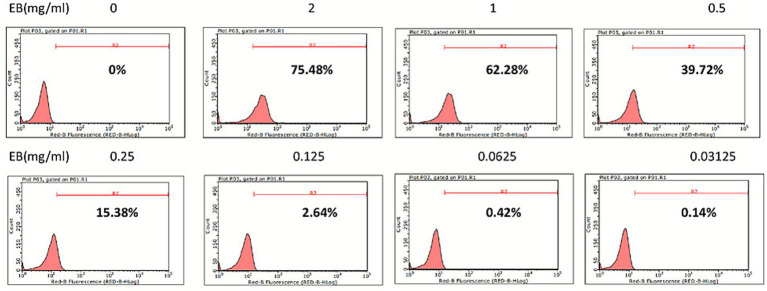 Figure 1
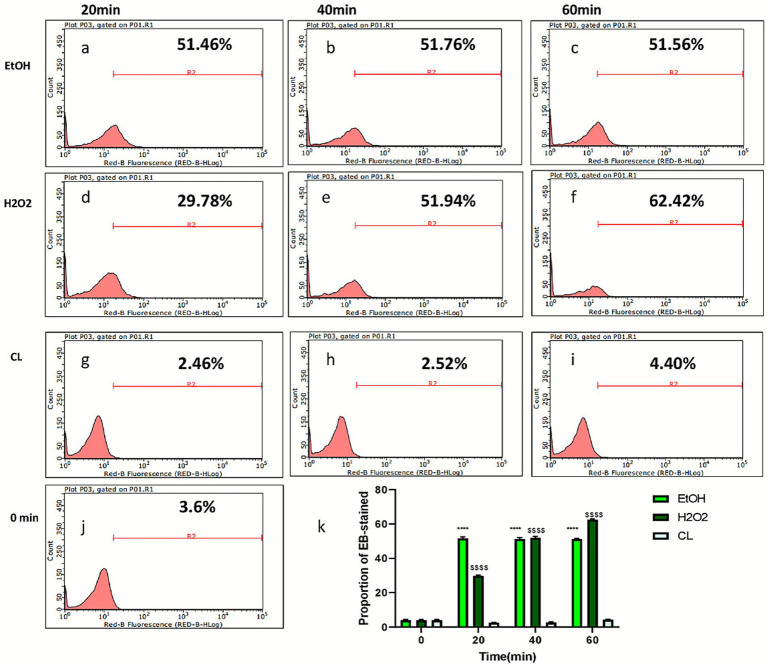 Figure 2
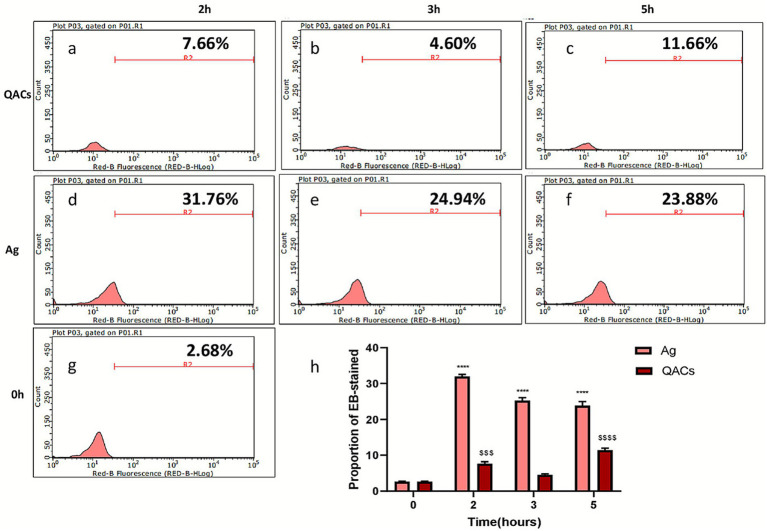 Figure 3
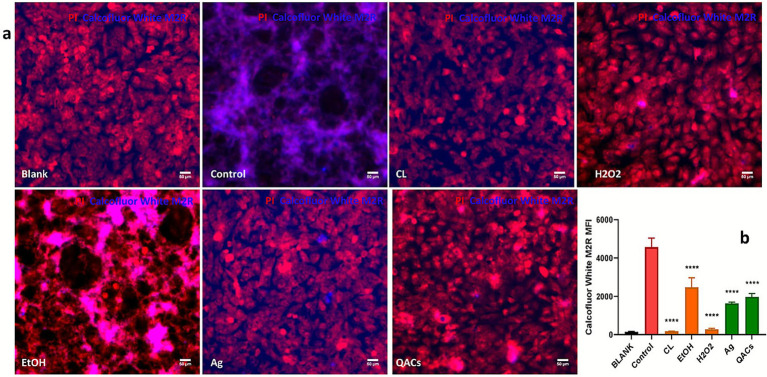 Figure 4
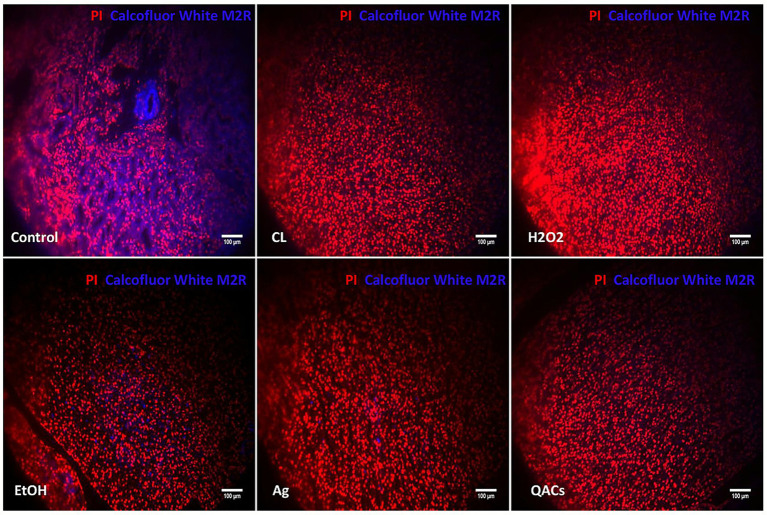 Figure 5
Peer Reviews
No public reviews on file for this paper yet. If you reviewed it on a platform where reviews are public (OpenReview, ICLR, NeurIPS, ICML), you can paste yours below so the community can read it here.
Videos
No videos yet. Explain this paper in a talk, walkthrough, or lecture? Add one.
Taxonomy
TopicsParasitic Infections and Diagnostics · Legionella and Acanthamoeba research · Amoebic Infections and Treatments