Long term risk of recurrence of ptosis repair: implications for surgical counseling and follow-up
Dana Cohen, Maria Laura Passaro, Elena Grachova, Alessia Riccardo, Adriana Iuliano, Vittoria Lanni, Francesco Matarazzo, Antonella D’Aponte, Ciro Costagliola, Diego Strianese

TL;DR
This study finds that ptosis surgery outcomes depend more on the cause of ptosis than on preoperative measurements or surgical techniques.
Contribution
Identifies etiology as the primary predictor of ptosis recurrence after surgery, influencing counseling and follow-up strategies.
Findings
Aponeurotic ptosis had significantly lower recurrence rates compared to non-aponeurotic ptosis.
Etiology, not preoperative metrics or surgical technique, was the main determinant of long-term outcomes.
Non-aponeurotic ptosis was an independent predictor of recurrence in multivariable analysis.
Abstract
To evaluate recurrence rates after surgical correction of ptosis in adults, with emphasis on differences between aponeurotic and non-aponeurotic etiologies, and to identify predictors of recurrence. This retrospective, single-center cohort study included a series of patients undergoing ptosis surgery at single tertiary referral Oculoplastic Unit at University of Naples Federico II (2014–2024). Data collected included demographics, ptosis subtype, surgical technique, preoperative marginal reflex distance (MRD), levator function, systemic comorbidities, and latency to treatment. The primary outcome was recurrence of ptosis. Kaplan–Meier estimates and Cox proportional hazards models were used to evaluate recurrence-free survival and predictors of recurrence. Fisher’s exact test assessed associations with comorbidities. A total of 122 patients (152 eyes) were included (mean age 59.7 ±…
Genes, proteins, chemicals, diseases, species, mutations and cell lines named across the full text — each resolved to its canonical identifier and authoritative record.
Click any figure to enlarge with its caption.
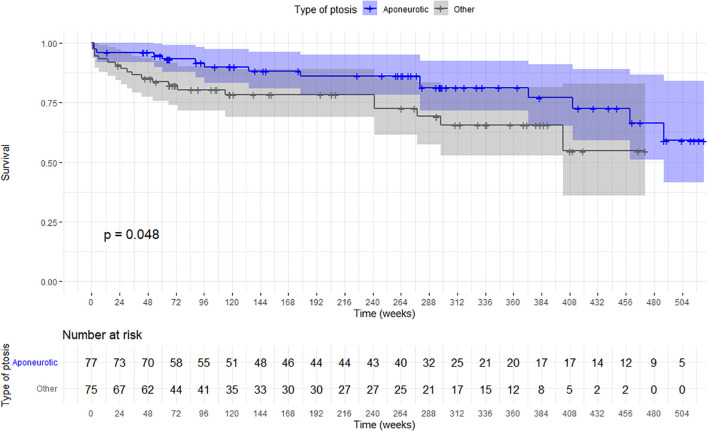 Figure 1
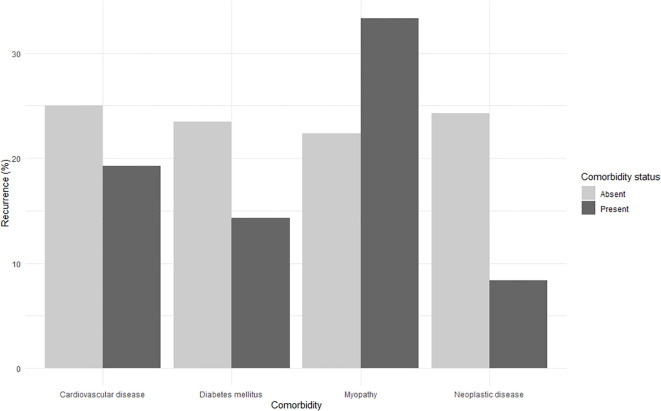 Figure 2
Peer Reviews
No public reviews on file for this paper yet. If you reviewed it on a platform where reviews are public (OpenReview, ICLR, NeurIPS, ICML), you can paste yours below so the community can read it here.
Videos
No videos yet. Explain this paper in a talk, walkthrough, or lecture? Add one.
Taxonomy
TopicsFacial Rejuvenation and Surgery Techniques · Dermatologic Treatments and Research · Botulinum Toxin and Related Neurological Disorders