Atomic-scale redox-potential-mediated engineering of 0D/2D Cu–Cu2O/MOx(OH)y heterojunctions for efficient nitrate electroreduction to ammonia
Tuo Zhang, Tianzhi Hao, Xiangyang Hou, Yuhui Yin, Guowen Hu, Genping Meng, Shihao Sun, Hua Li, Baodui Wang

TL;DR
A new method uses redox potentials to create efficient electrocatalysts for converting nitrate to ammonia with high performance.
Contribution
A redox-potential-mediated strategy for atomic-scale fabrication of 0D/2D Cu–Cu2O/MOx(OH)y heterojunctions is introduced.
Findings
The Cu–Cu2O/Ni(OH)2 heterojunction achieves a high ammonia yield rate of 12,974.5 µg cm−2 h−1.
The catalyst shows a Faradaic efficiency of 98.15% in nitrate electroreduction.
Mechanistic studies reveal synergistic interfacial effects between Cu–Cu2O and Ni(OH)2.
Abstract
The precise construction of zero-dimensional/two-dimensional (0D/2D) heterojunctions is often hindered by interfacial lattice mismatches and uncontrolled phase transitions, limiting their efficacy in electrocatalysis. Herein, we report a widely applicable redox-potential-mediated strategy for the atomically defined fabrication of 0D/2D Cu–Cu2O/MOx(OH)y heterojunctions (M = Ni, Fe, Mn, Co, Cr). This approach leverages the inherent differences in standard reduction potentials between Cu and transition metals to drive selective oxidation and ultrasound-assisted hydrolysis of pre-synthesized CuM alloy nanoparticles. This process results in situ phase separation, forming epitaxially embedded Cu–Cu2O nanoparticles within ultrathin MOx(OH)y nanosheets. As a proof of concept, the Cu–Cu2O/Ni(OH)2 heterojunction exhibits exceptional performance in the electrocatalytic nitrate reduction reaction…
Genes, proteins, chemicals, diseases, species, mutations and cell lines named across the full text — each resolved to its canonical identifier and authoritative record.
Click any figure to enlarge with its caption.
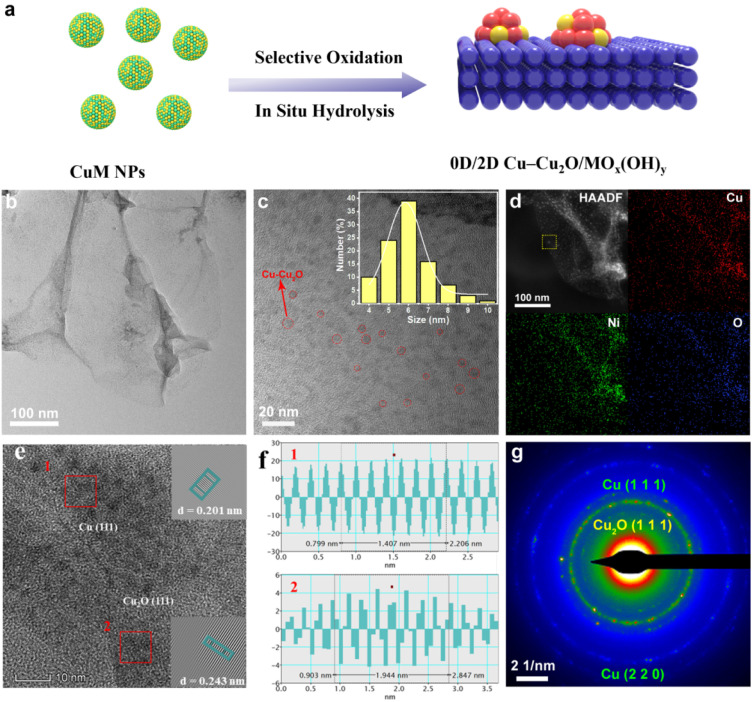 Figure 1
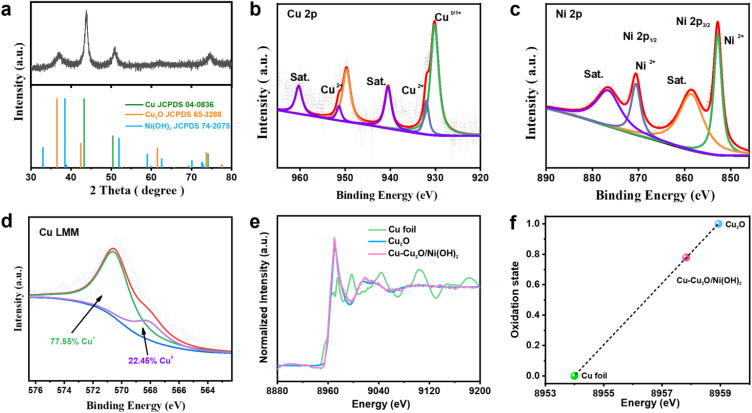 Figure 2
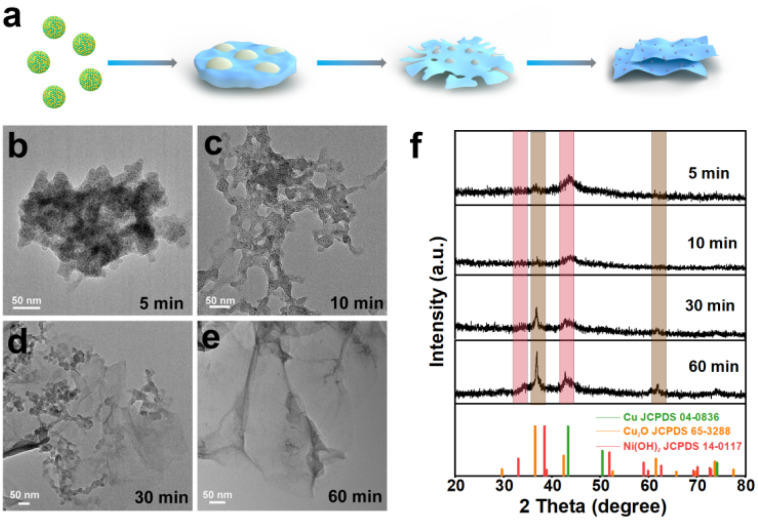 Figure 3
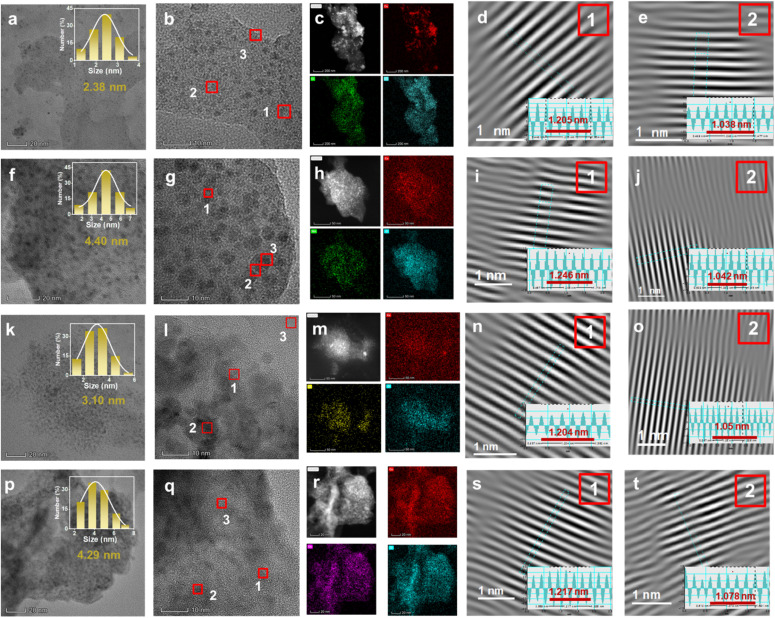 Figure 4
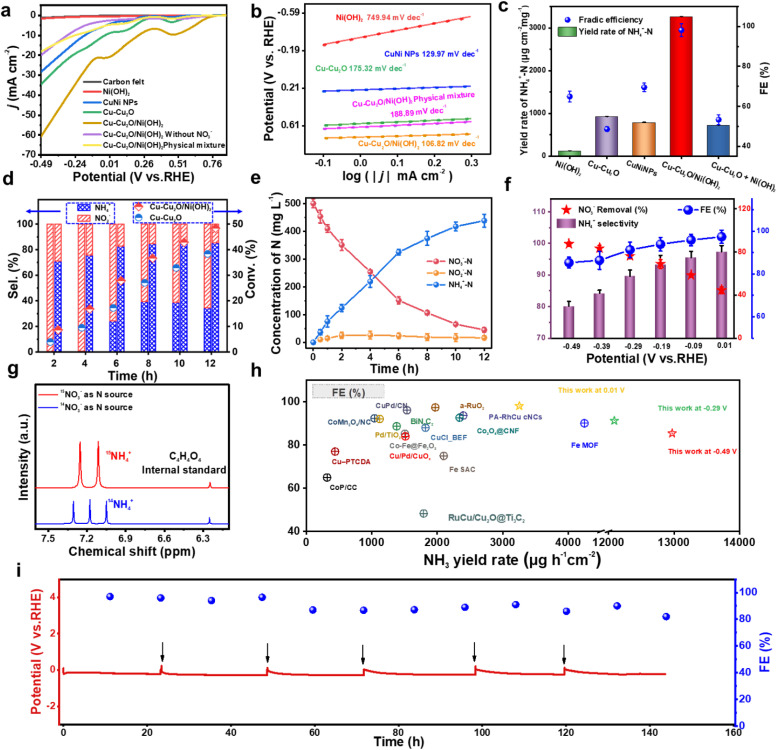 Figure 5
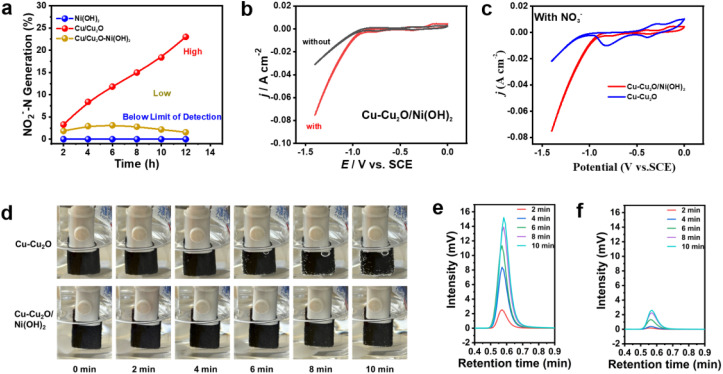 Figure 6
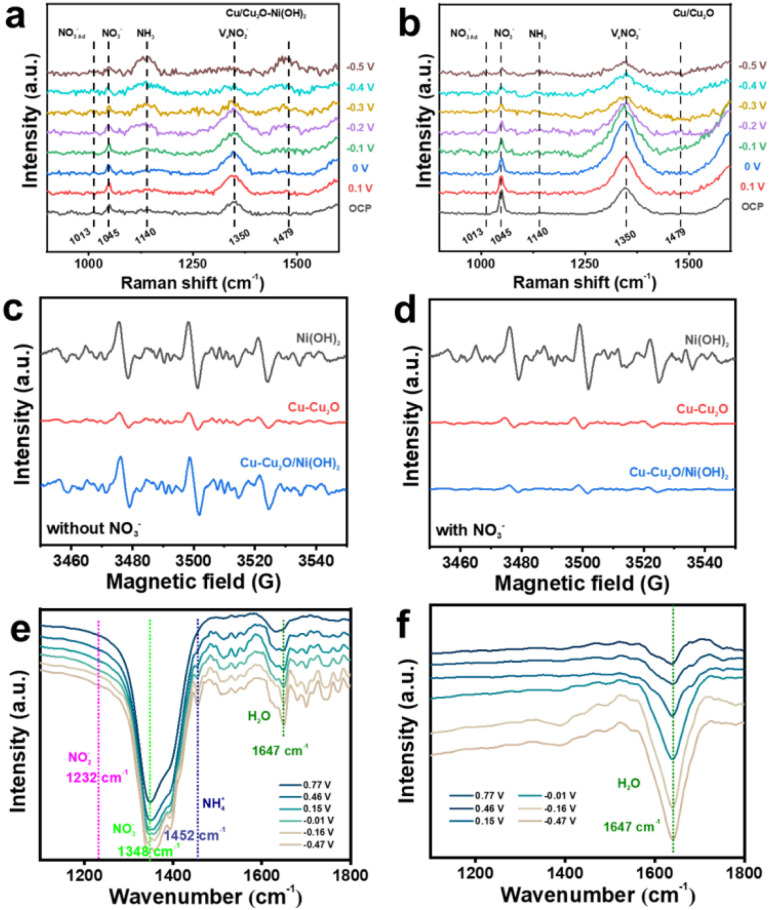 Figure 7
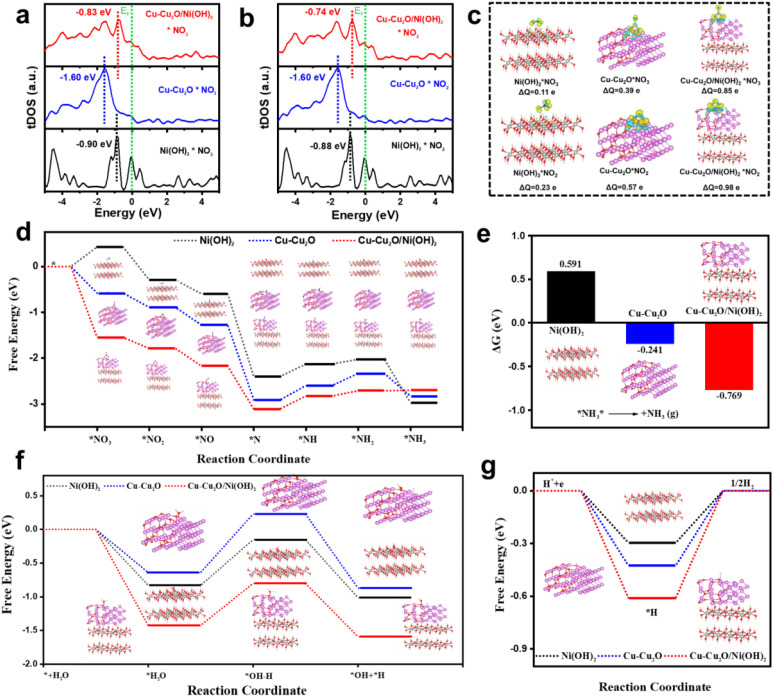 Figure 8
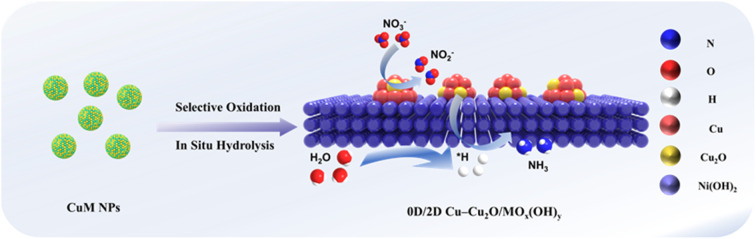 Figure 9
Peer Reviews
No public reviews on file for this paper yet. If you reviewed it on a platform where reviews are public (OpenReview, ICLR, NeurIPS, ICML), you can paste yours below so the community can read it here.
Videos
No videos yet. Explain this paper in a talk, walkthrough, or lecture? Add one.
Taxonomy
TopicsAmmonia Synthesis and Nitrogen Reduction · CO2 Reduction Techniques and Catalysts · Electrocatalysts for Energy Conversion