Digital Exclusion Among People Experiencing Homelessness and Residents of Urban Communities in Brazil: Cross-Sectional Study
Ariela Fehr Tártaro, Dulce Gomes, Thaís Zamboni Berra, Reginaldo Bazon Vaz Tavares, Yan Mathias Alves, Letícia Perticarrara Ferezin, Antônio Carlos Vieira Ramos, Nathalia Zini, Maria Eduarda Pagano Pelodan, Marcela Antunes Paschoal Popolin, Ricardo Alexandre Arcêncio

TL;DR
This study shows how digital exclusion during the pandemic disproportionately affected homeless people and low-income urban residents in Brazil, especially Black and Brown men with no schooling.
Contribution
The paper introduces an intersectional multilevel analysis to reveal how overlapping disadvantages in schooling, income, and gender drive digital exclusion in Brazil.
Findings
39.2% of participants sought online COVID-19 information, with significant disparities across gender, schooling, and income levels.
Black or Brown men with no schooling or low income had the lowest predicted probability (14%) of seeking online health information.
The intersectional analysis showed a 97% reduction in between-strata variance when accounting for schooling, income, and gender.
Abstract
The COVID-19 pandemic amplified digital divides in Brazil, restricting vulnerable groups’ online access to health information and preventive guidance, with limited intersectional analyses of these inequities. This study aimed to investigate inequalities in digital exclusion and access to online COVID-19 information among people experiencing homelessness and residents of urban communities in Brazil by using an intersectional multilevel analysis. A cross-sectional study (2021-2023) involving 2652 participants (n=1353, 51% experiencing homelessness and n=1299, 49% from urban communities across 26 state capitals) was conducted using the adapted COVID-19 Social Thermometer questionnaire administered via face-to-face interviews. Multilevel analysis of individual heterogeneity and discriminatory accuracy examined 115 intersectional strata (gender, race and ethnicity, schooling, income, and…
Genes, proteins, chemicals, diseases, species, mutations and cell lines named across the full text — each resolved to its canonical identifier and authoritative record.
Click any figure to enlarge with its caption.
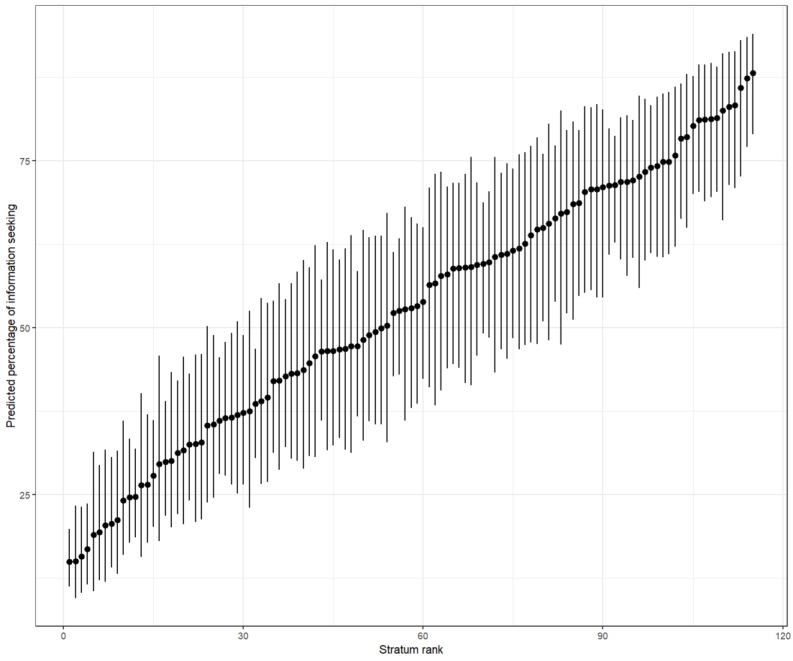 Figure 1
 Figure 2
 Figure 3
 Figure 4
Peer Reviews
No public reviews on file for this paper yet. If you reviewed it on a platform where reviews are public (OpenReview, ICLR, NeurIPS, ICML), you can paste yours below so the community can read it here.
Videos
No videos yet. Explain this paper in a talk, walkthrough, or lecture? Add one.
Taxonomy
TopicsHomelessness and Social Issues · Library Science and Administration · Food Security and Health in Diverse Populations