Distinct subcortical neuroanatomic profiles of treatment-resistant schizophrenia: structural magnetic resonance imaging study
Ibrahim Sungur, Simay Selek, Kaan Keskin, Asli Ceren Hinc, Furkan Yazici, Elif Ozge Aktas, Yigit Erdogan, Omer Kitis, Ali Saffet Gonul

TL;DR
This study finds that different brain structures are linked to treatment response in schizophrenia, showing that brain anatomy varies between treatment-resistant and treatment-responsive patients.
Contribution
The study identifies distinct subcortical neuroanatomic profiles associated with treatment response subgroups in schizophrenia.
Findings
Treatment-resistant patients showed reduced nucleus accumbens and enlarged lateral ventricles.
FLR patients had larger pallidal volumes and more focal hippocampal subfield reductions.
Hippocampal and amygdala volumes were smaller in all schizophrenia subgroups compared to controls.
Abstract
Understanding the neuroanatomical correlates of treatment response in schizophrenia is crucial for improving clinical stratification and clarifying underlying pathophysiological mechanisms. To examine subcortical volumetric differences across clinically defined schizophrenia treatment-response subgroups. T1-weighted structural magnetic resonance imaging data were analysed from 109 participants, including 79 individuals with schizophrenia and 30 healthy controls. Patients were categorised into three distinct treatment response groups: ultra-treatment-resistant (UTR; n = 22), clozapine-responsive (n = 28) and first-line antipsychotic responsive (FLR; n = 29). Group differences were examined across 33 regions of interest, including subcortical, ventricular and hippocampal subfield regions. The UTR group had higher antipsychotic dosages and exhibited greater symptom severity than other…
Genes, proteins, chemicals, diseases, species, mutations and cell lines named across the full text — each resolved to its canonical identifier and authoritative record.
Click any figure to enlarge with its caption.
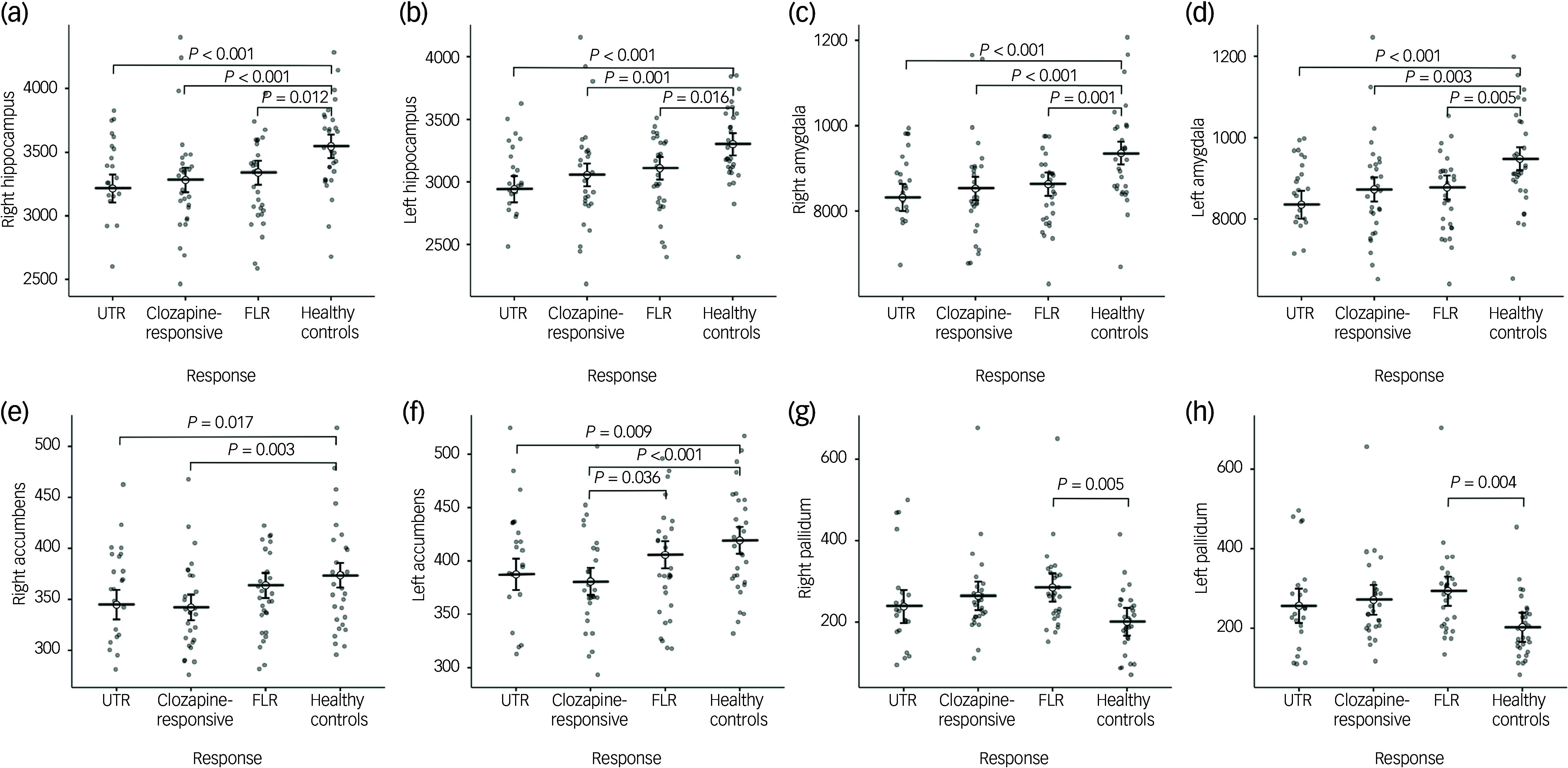 Figure 1
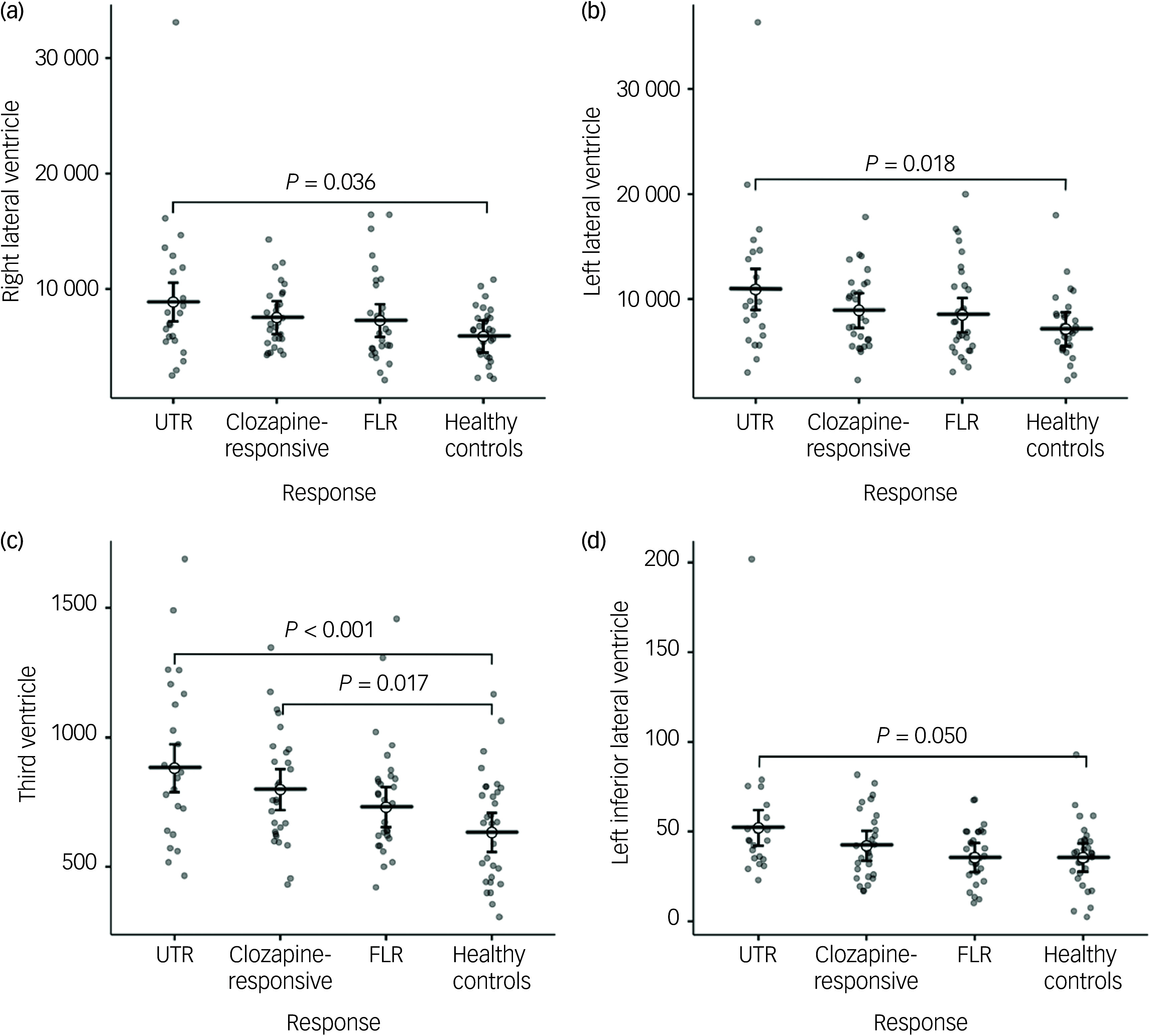 Figure 2
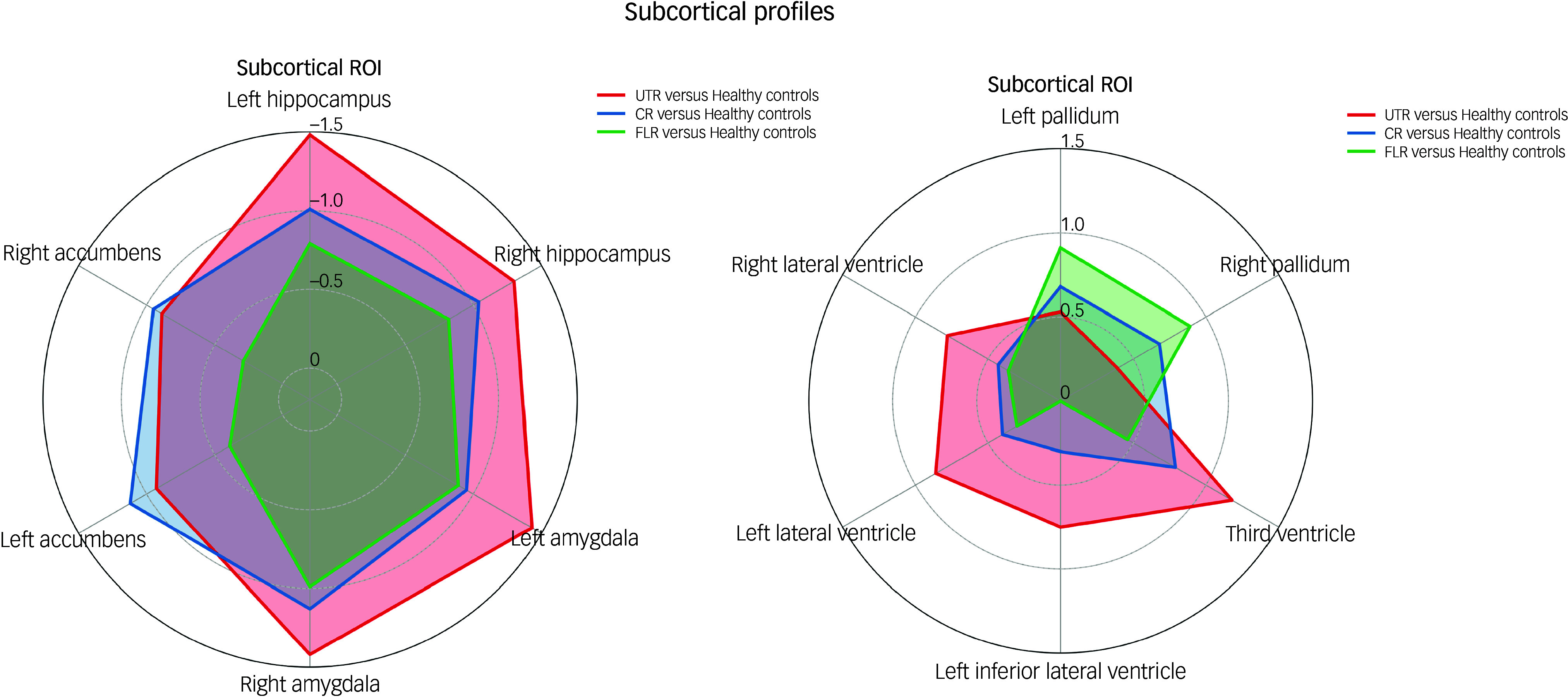 Figure 3
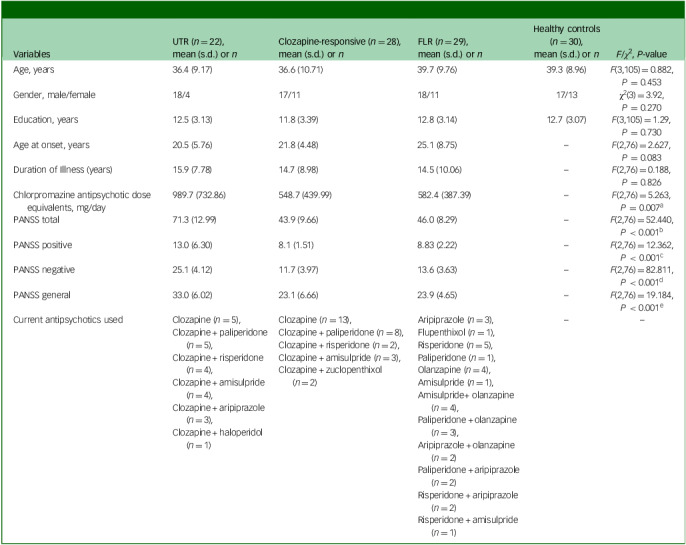 Figure 4
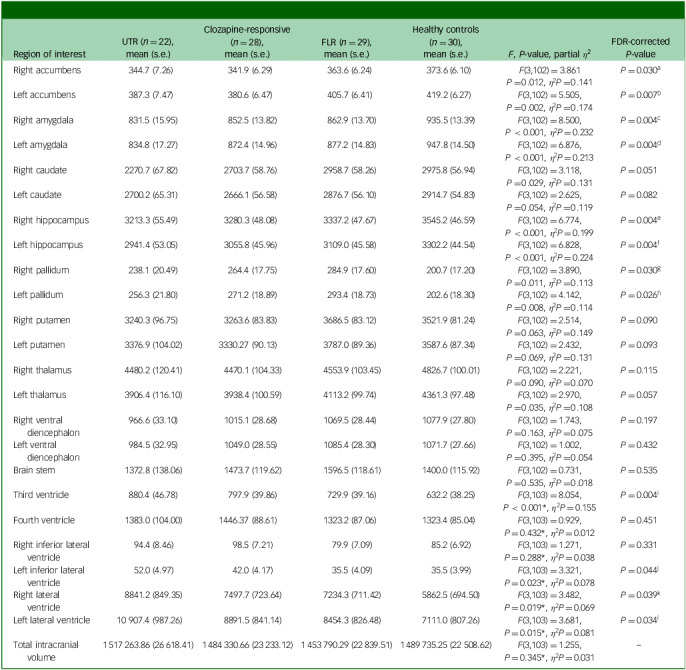 Figure 5
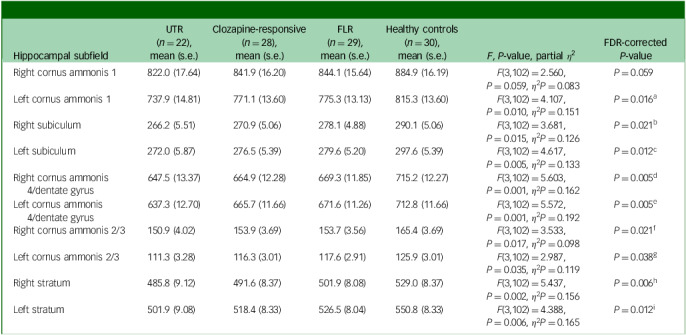 Figure 6
Peer Reviews
No public reviews on file for this paper yet. If you reviewed it on a platform where reviews are public (OpenReview, ICLR, NeurIPS, ICML), you can paste yours below so the community can read it here.
Videos
No videos yet. Explain this paper in a talk, walkthrough, or lecture? Add one.
Taxonomy
TopicsSchizophrenia research and treatment · Functional Brain Connectivity Studies · Advanced Neuroimaging Techniques and Applications