Modeling Pressure‐Dependent Wave and Vessel Compliance in the Brain Following Middle Cerebral Artery Occlusion
Erin Zhao, Jared Barber, Shomita S. Mathew‐Steiner, Savita Khanna, Chandan K. Sen, Julia Arciero

TL;DR
This study uses mathematical modeling to show how changes in pressure and vessel compliance affect brain perfusion after a stroke caused by MCA occlusion.
Contribution
The study introduces a model that incorporates vessel compliance and pulsatility to better understand cerebrovascular responses to stroke.
Findings
Increased distensibility reduces pressure oscillations, while decreased distensibility increases them.
Occlusion significantly alters flow changes when incoming pressure varies.
Elevated arterial pressure boundary conditions are linked to lower ischemia and improved autoregulation.
Abstract
This study demonstrates the impact of alterations in pressure, vascular compliance, arterial pulsatility, and autoregulation on tissue perfusion following middle cerebral artery (MCA) occlusion using mathematical modeling. Our previous mathematical model of the cerebral circulation is expanded to include vessel compliance and pulsatility of blood flow. An experimentally‐obtained pressure waveform is used as an incoming boundary condition to simulate the effects of vascular compliance and pulsatility of flow on perfusion following MCA occlusion. The waveform is adjusted to model the effects of elevated mean arterial pressure. Increased distensibility reduces the amplitude of oscillations in the time‐dependent pressure solutions, whereas decreased distensibility produces more variation in these pressures. Occlusion significantly alters the magnitude of flow changes when incoming…
Genes, proteins, chemicals, diseases, species, mutations and cell lines named across the full text — each resolved to its canonical identifier and authoritative record.
Click any figure to enlarge with its caption.
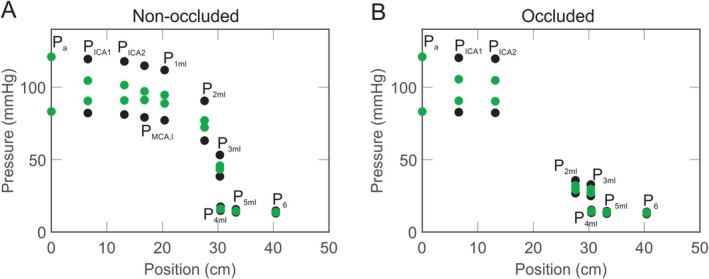 Figure 1
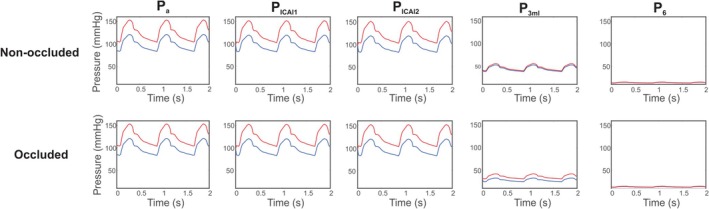 Figure 2
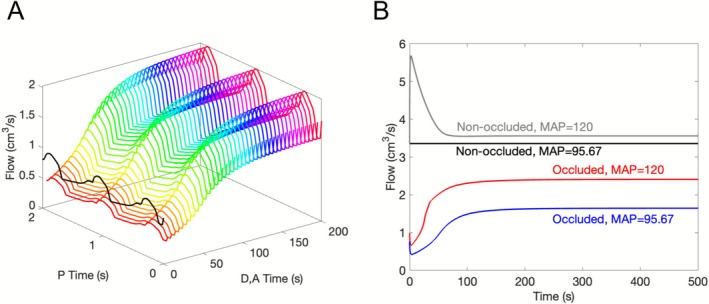 Figure 3
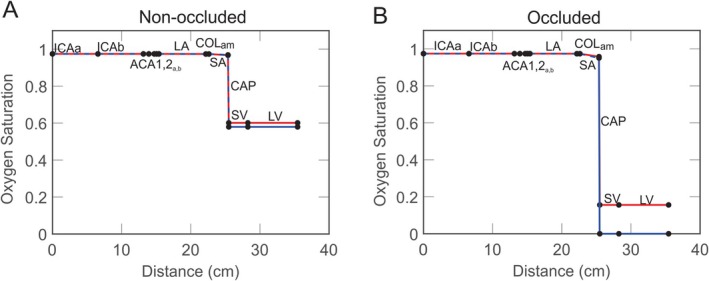 Figure 4
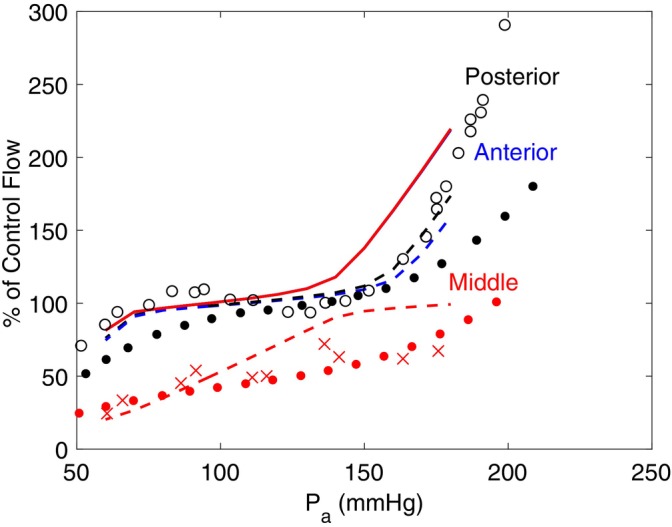 Figure 5
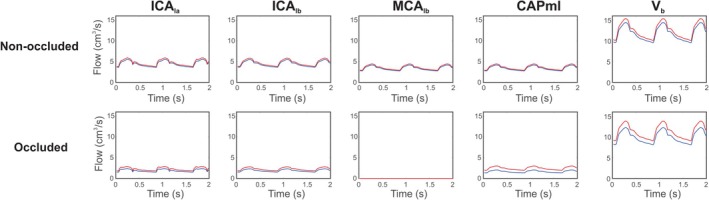 Figure 6
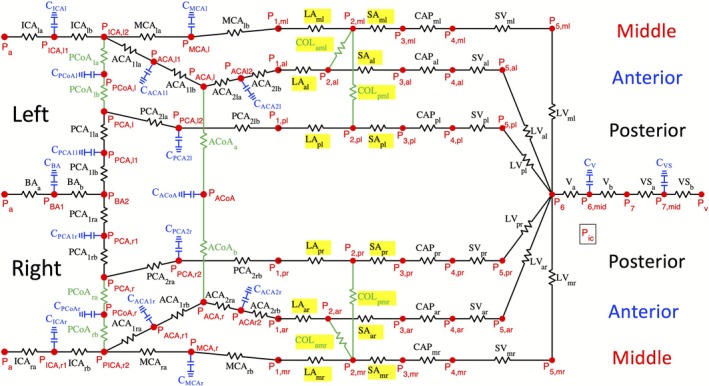 Figure 7
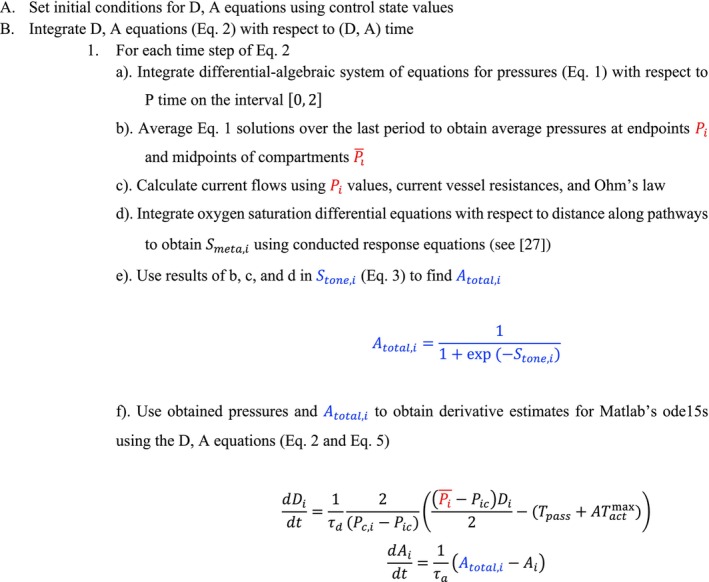 Figure 8
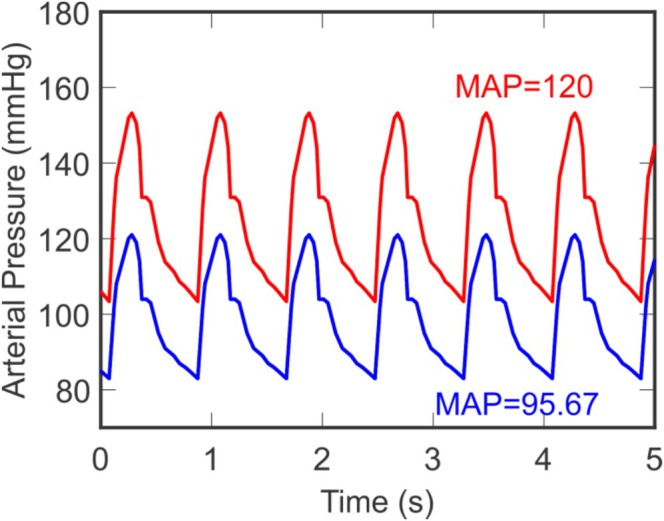 Figure 9
Peer Reviews
No public reviews on file for this paper yet. If you reviewed it on a platform where reviews are public (OpenReview, ICLR, NeurIPS, ICML), you can paste yours below so the community can read it here.
Videos
No videos yet. Explain this paper in a talk, walkthrough, or lecture? Add one.
Taxonomy
TopicsTraumatic Brain Injury and Neurovascular Disturbances · Cerebrovascular and Carotid Artery Diseases · Intracranial Aneurysms: Treatment and Complications