Younger adult women who had a stroke or at high stroke risk: Exploration of their experiences and needs
Sarah Ibrahim, Emine Kocabas, Lindsey Zhang, Angela Verven, Syeda Hashmi, Sharon Ng, Troy Francis, Aleksandra Stanimirovic, Judith Coulson, Jasper R. Senff, Jonathan Rosand, Sanjula D. Singh, Valeria E. Rac, Aleksandra Pikula

TL;DR
This study explores the experiences and needs of younger adult women who have had a stroke or are at high risk, focusing on lifestyle habits and societal challenges.
Contribution
The study introduces a new understanding of the intersectional factors affecting younger women's stroke recovery and brain health.
Findings
Six themes emerged, including lifestyle habits and societal expectations impacting recovery.
Findings suggest the need for holistic, long-term interventions involving family and social support.
Implications highlight the importance of women-centered care and psychological safety in healthcare.
Abstract
Worldwide, women, particularly younger and middle-aged (≤65 years), are disproportionately affected by stroke. Although the adoption of healthy lifestyle habits is integral for stroke risk factor modification, little is known about younger adult women who had a stroke or are at high risk of stroke—their lifestyle-related knowledge, behaviors, associated and influencing facilitators, and barriers to support brain health, which this study aimed to address. A qualitative interpretivist design was employed that was part of a larger quality improvement mixed-methods study. Data was collected through virtual, semi-structured focus groups. Inductive thematic analysis was performed and analyzed using the intersectionality framework. A total of 11 women comprised the study sample who were of high stroke risk or had a stroke (mean age 53 years, 54.5 % stroke). A total of six themes emerged from…
Genes, proteins, chemicals, diseases, species, mutations and cell lines named across the full text — each resolved to its canonical identifier and authoritative record.
Click any figure to enlarge with its caption.
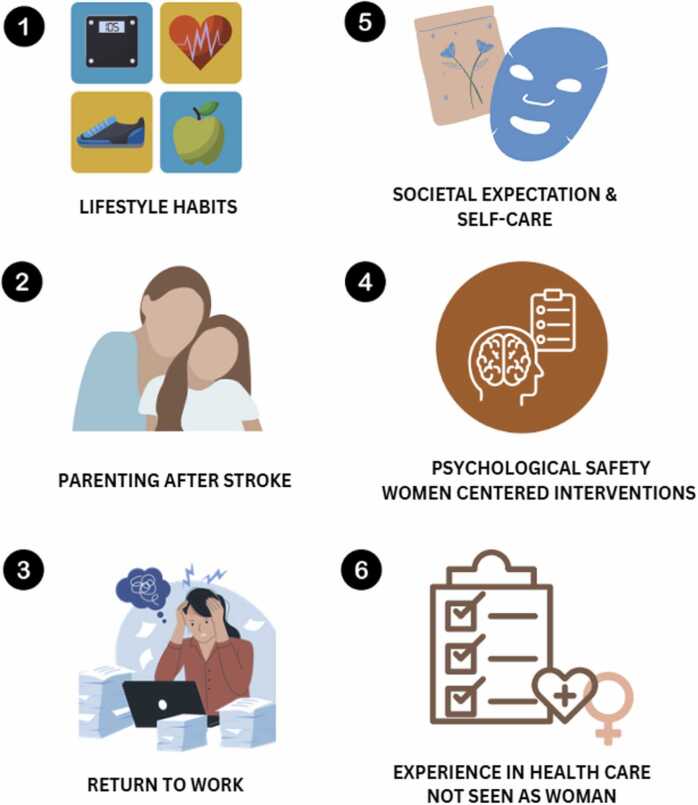 Figure 1
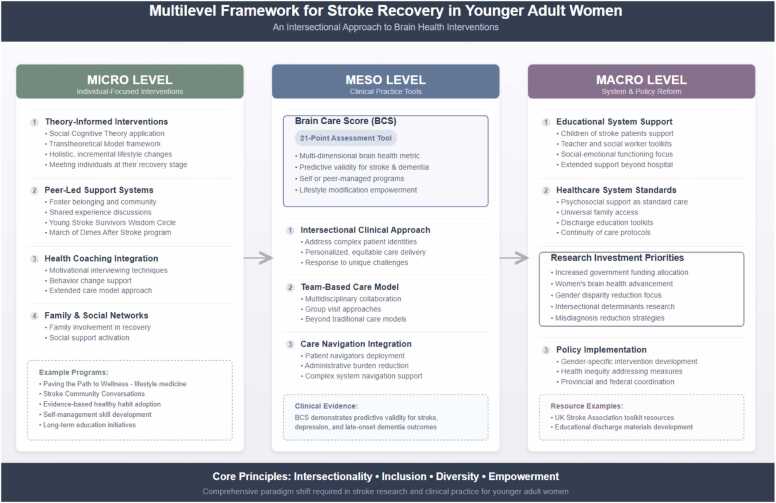 Figure 2
Peer Reviews
No public reviews on file for this paper yet. If you reviewed it on a platform where reviews are public (OpenReview, ICLR, NeurIPS, ICML), you can paste yours below so the community can read it here.
Videos
No videos yet. Explain this paper in a talk, walkthrough, or lecture? Add one.
Taxonomy
TopicsStroke Rehabilitation and Recovery · Acute Ischemic Stroke Management · Blood Coagulation and Thrombosis Mechanisms