Exploring the interconnections between baseline symptoms in ultra-high risk youth who did and did not transition to psychosis over three years: A network analysis comparison
Gabriele Lo Buglio, Simon Hartmann, Tommaso Boldrini, Scott R. Clark, Dominic Dwyer, Jessica A. Hartmann, Suzie Lavoie, Ashleigh Lin, Patrick D. McGorry, Josh Nguyen, Andrea Polari, Isabelle Scott, Annalisa Tanzilli, Andrew Thompson, Cassandra M.J. Wannan, Stephen J. Wood

TL;DR
This study compares symptom networks in youth at ultra-high risk for psychosis who later transitioned versus those who did not, finding similar baseline symptom relationships.
Contribution
The study introduces network analysis to explore baseline symptom interconnections in UHR youth, revealing patterns relevant to psychosis transition.
Findings
Transitioned and non-transitioned UHR youth had similar symptom network structures and global connectivity.
Impaired cognitive functioning connected multiple symptoms, suggesting its clinical relevance.
Unusual thought content had minimal interactions with other symptoms despite traditional associations with transition.
Abstract
In the ultra-high risk for psychosis (UHR) field, it is unknown whether understanding symptom relationships, beyond symptom severity alone, may hold prognostic value and inform preventive care. In this study, network analysis was performed to examine the interconnections between baseline symptoms in UHR youth who did and did not transition to psychosis over three years. In a sample selected from the UHR1000+ cohort, positive and basic symptoms were assessed using the Comprehensive Assessment of At-Risk Mental States. Network analyses and network comparison tests were performed. 195 UHR youth transitioned to psychosis within three years and 346 did not. The two groups did not differ in the network structure, global strength (i.e., the overall level of connectivity between symptoms), or centrality of symptoms (i.e., their importance within networks). The transitioned group was…
Genes, proteins, chemicals, diseases, species, mutations and cell lines named across the full text — each resolved to its canonical identifier and authoritative record.
Click any figure to enlarge with its caption.
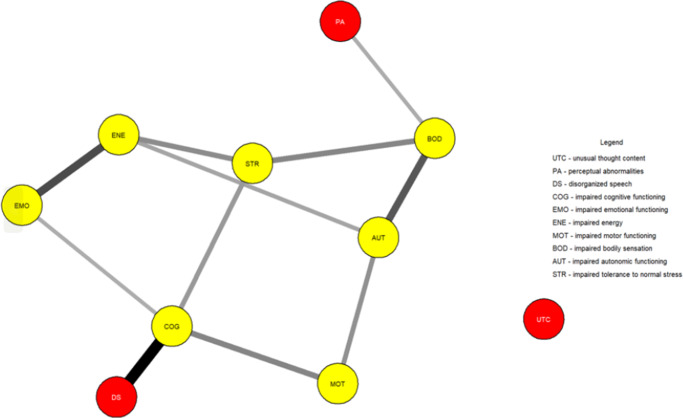 Figure 1
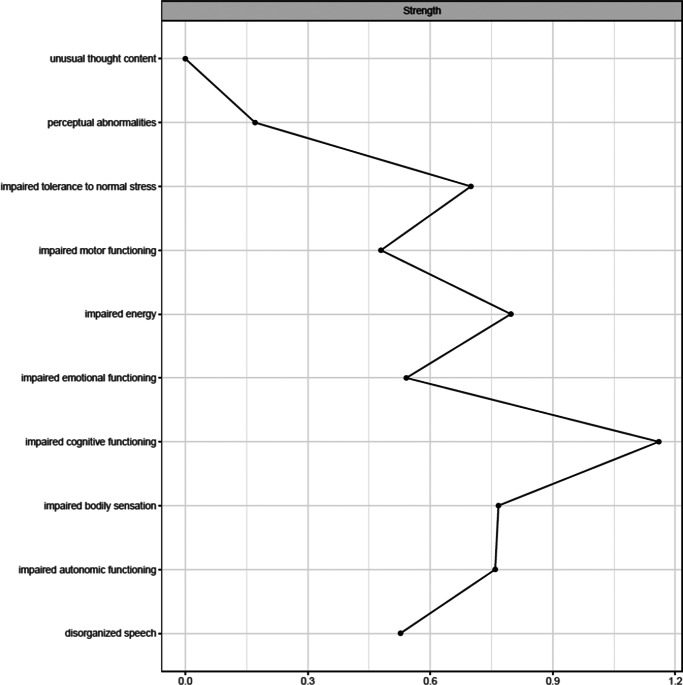 Figure 2
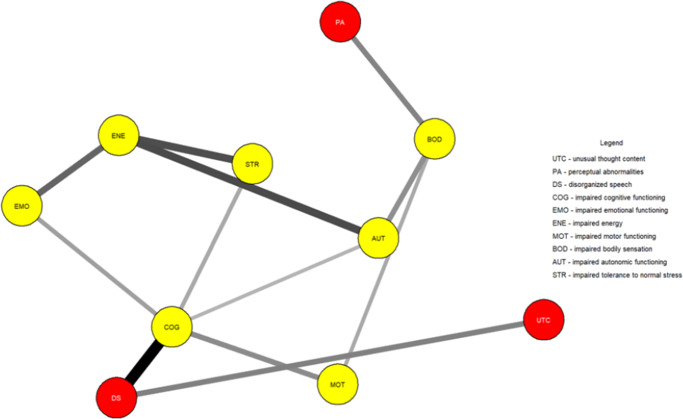 Figure 3
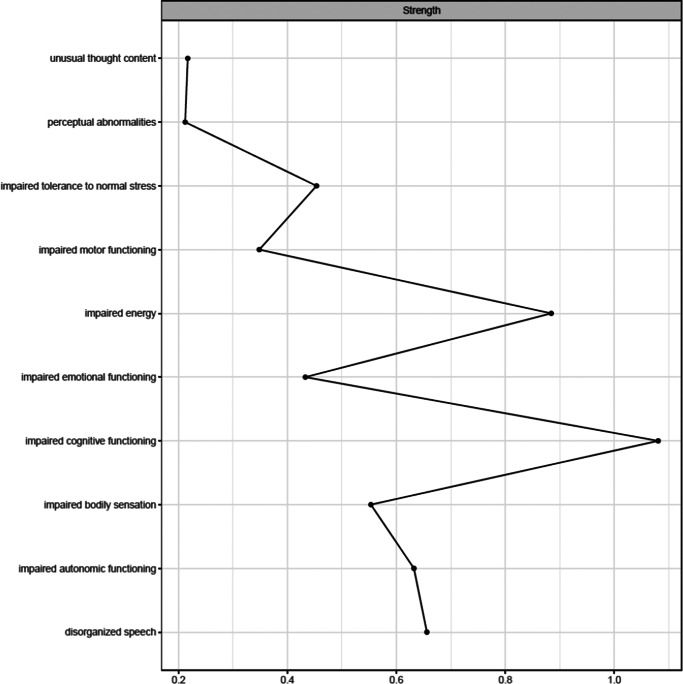 Figure 4
 Figure 5
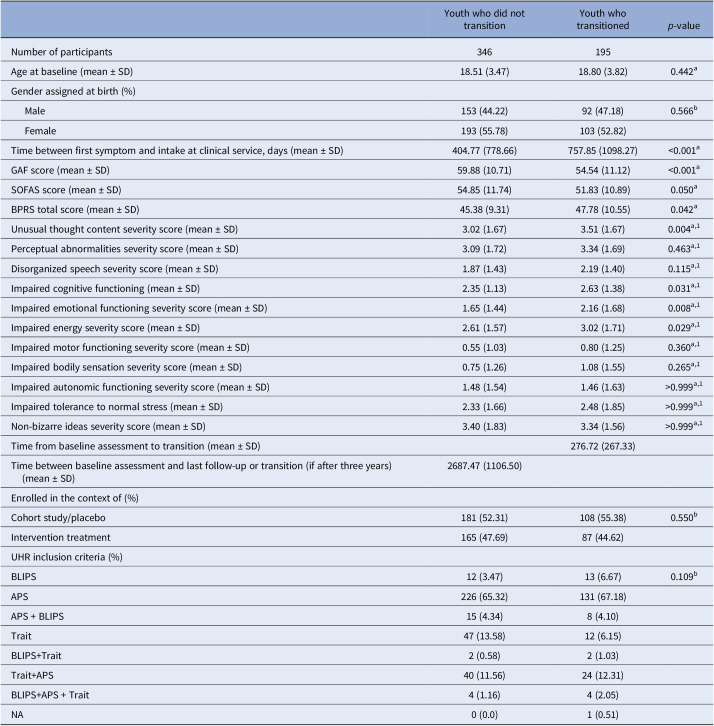 Figure 6
Peer Reviews
No public reviews on file for this paper yet. If you reviewed it on a platform where reviews are public (OpenReview, ICLR, NeurIPS, ICML), you can paste yours below so the community can read it here.
Videos
No videos yet. Explain this paper in a talk, walkthrough, or lecture? Add one.
Taxonomy
TopicsMental Health Research Topics · Schizophrenia research and treatment · Personality Disorders and Psychopathology