RuKY Catalyst‐Packed Permeation Membrane for Quantitative Ammonia and d3‐Ammonia Dehydrogenation to Ultrapure Hydrogen
Christopher J. Koch, Jennifer Naglic, John T. Kelly, Logan Kearney, José D. Arregui‐Mena, Jochen Lauterbach, Lucas M. Angelette, Tyler Guin

TL;DR
A new membrane reactor system efficiently converts ammonia into hydrogen and nitrogen with minimal emissions, making it suitable for clean energy applications.
Contribution
A catalytic membrane reactor achieves near-complete ammonia dehydrogenation with low emissions and no additional separation.
Findings
The reactor achieved <1 ppm ammonia in effluent at 450°C, exceeding the 99.6% conversion target for vehicle fuel.
The rate-limiting step is isotope independent, ensuring consistent reaction kinetics for ammonia and its isotopologues.
The system simplifies and miniaturizes ammonia cracking processes by eliminating the need for post-separation.
Abstract
Ammonia is a promising carbon‐free hydrogen carrier, but incomplete ammonia dehydrogenation (cracking) generates atmospheric emissions of NO x , a potent greenhouse gas. Additionally, incomplete cracking of ammonia leads to regulatory challenges in nuclear and fusion power, where tritiated ammonia (NT3) emissions are strictly controlled. Therefore, we report the use of low‐temperature ammonia dehydrogenation catalysts (3%Ru/1%Y/12%K/Al2O3) in a palladium alloy H2 permeation membrane for quantitative conversion of ammonia into hydrogen and nitrogen at industry‐relevant conditions. This catalytic membrane reactor system achieved an astonishing effluent concentration of <1 ppm at 450°C under a 100% NH3 stream, which is far beyond the 99.6% conversion target required for the adoption of ammonia as a vehicle fuel. The low‐temperature ammonia dehydrogenation catalyst was tested in a packed…
Genes, proteins, chemicals, diseases, species, mutations and cell lines named across the full text — each resolved to its canonical identifier and authoritative record.
Click any figure to enlarge with its caption.
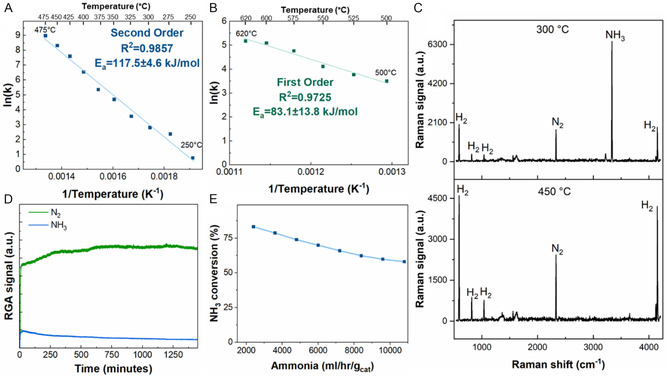 Figure 1
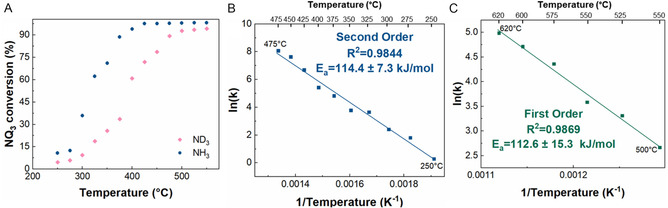 Figure 2
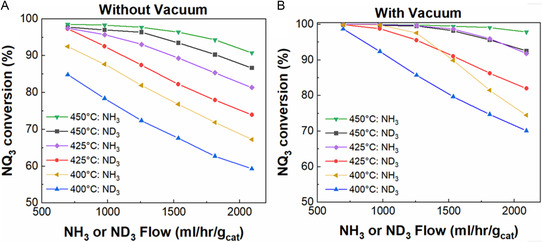 Figure 3
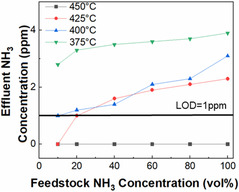 Figure 4
 Figure 5
 Figure 6
 Figure 7
 Figure 8
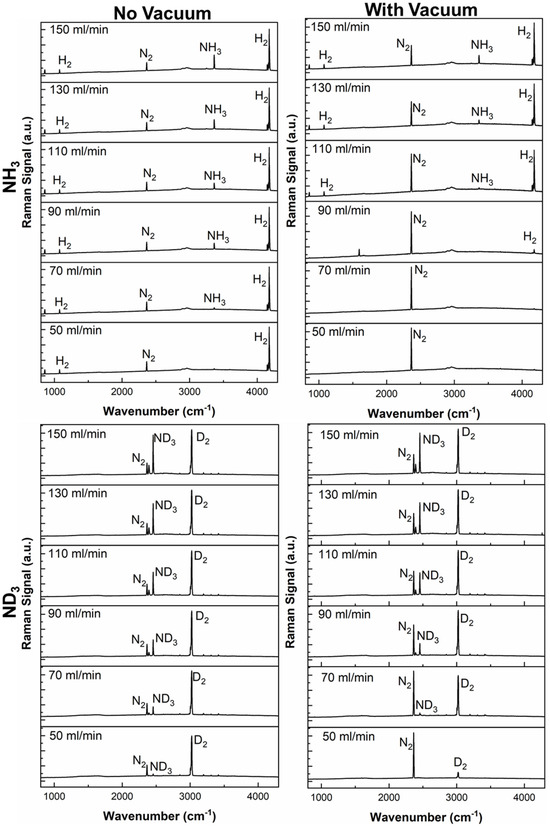 Figure 9
Peer Reviews
No public reviews on file for this paper yet. If you reviewed it on a platform where reviews are public (OpenReview, ICLR, NeurIPS, ICML), you can paste yours below so the community can read it here.
Videos
No videos yet. Explain this paper in a talk, walkthrough, or lecture? Add one.
Taxonomy
TopicsAmmonia Synthesis and Nitrogen Reduction · Catalysts for Methane Reforming · Hydrogen Storage and Materials