Multiregional MRI-based deep learning radiomics to predict axillary response after neoadjuvant chemotherapy in breast cancer patients
Weiyue Chen, Guihan Lin, Yi Zhou, Yongjun Chen, Changsheng Shi, Ting Zhao, Zhihan Yan, Zhiyi Peng, Shuiwei Xia, Min Xu, Minjiang Chen, Chenying Lu, Jiansong Ji

TL;DR
This study developed a deep learning model using MRI data to predict if breast cancer patients will have a complete response in their axillary lymph nodes after chemotherapy, potentially avoiding unnecessary surgery.
Contribution
A novel deep learning radiomics nomogram combining intratumoral and peritumoral MRI features to predict axillary response after chemotherapy in breast cancer.
Findings
The GPTV5_DLR model achieved an average AUC of 0.876 across validation cohorts.
The DLRN model outperformed the clinical model with AUCs up to 0.958 in the training cohort.
The model showed robust performance across different patient subgroups like age and clinical stage.
Abstract
This study was designed to develop a multiregional MRI-based deep learning radiomics nomogram (DLRN) for predicting axillary pathological complete response (apCR) after neoadjuvant chemotherapy (NAC) in breast cancer. In total, 539 patients in our hospital were randomly split into a training cohort (TC; n = 431) and an internal validation cohort (IVC; n = 108), and 703 patients were recruited from three external centers as external validation cohorts (EVC1–3). Uni- and multivariate analyses were performed to select clinicopathological characteristics and establish a clinical model. DLR models were constructed based on DL and handcrafted radiomics features extracted from gross tumor volume (GTV) and GTV incorporating 3-, 5-, 7-, and 9-mm peritumoral regions (GPTV3, GPTV5, GPTV7, and GPTV9, respectively). A DLRN model incorporating the optimal DLR model and clinicopathological predictors…
Genes, proteins, chemicals, diseases, species, mutations and cell lines named across the full text — each resolved to its canonical identifier and authoritative record.
Click any figure to enlarge with its caption.
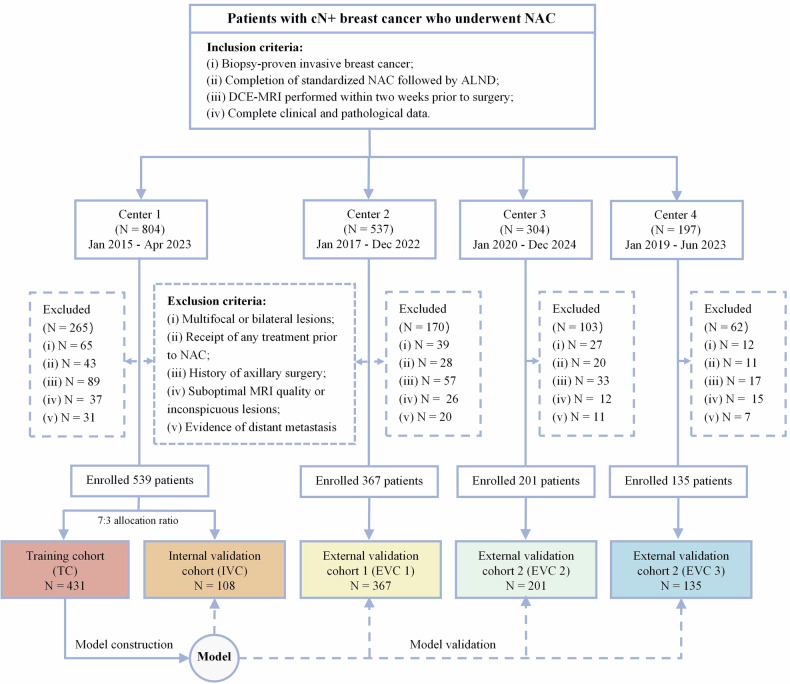 Figure 1
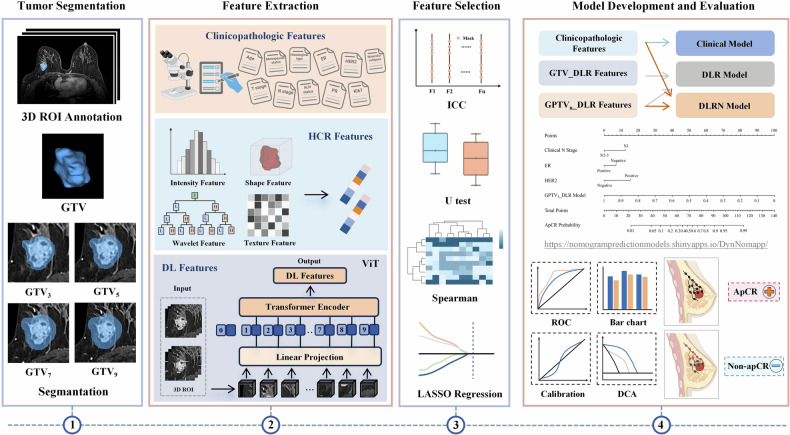 Figure 2
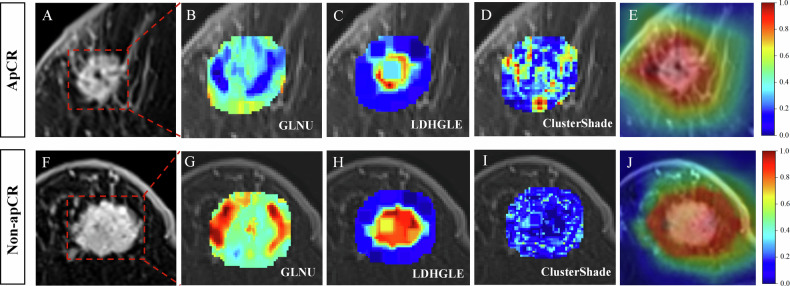 Figure 3
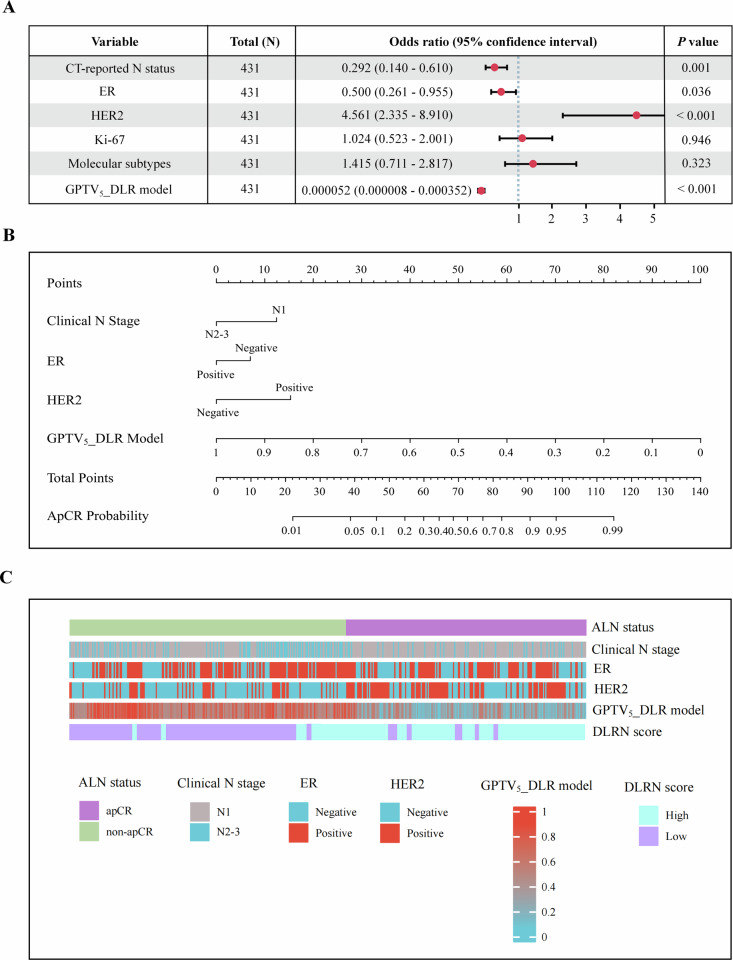 Figure 4
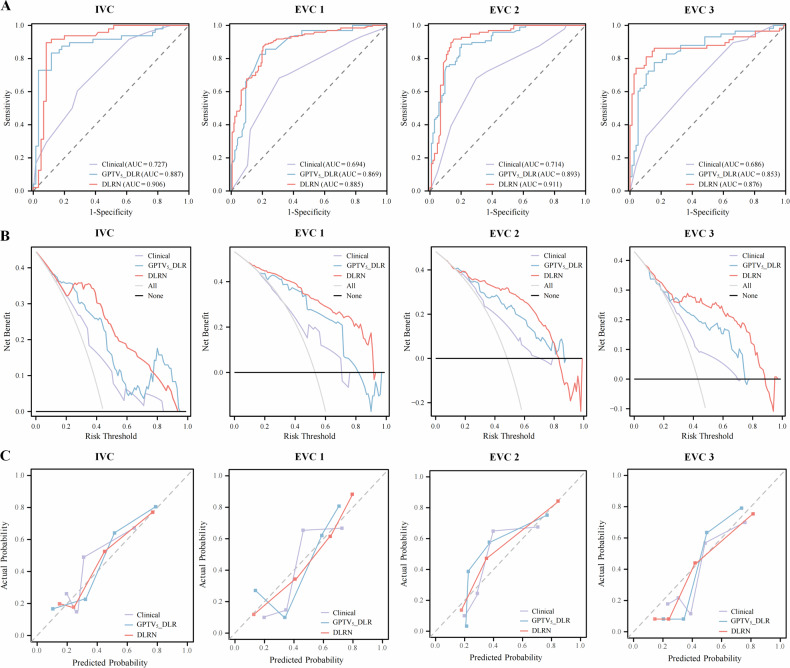 Figure 5
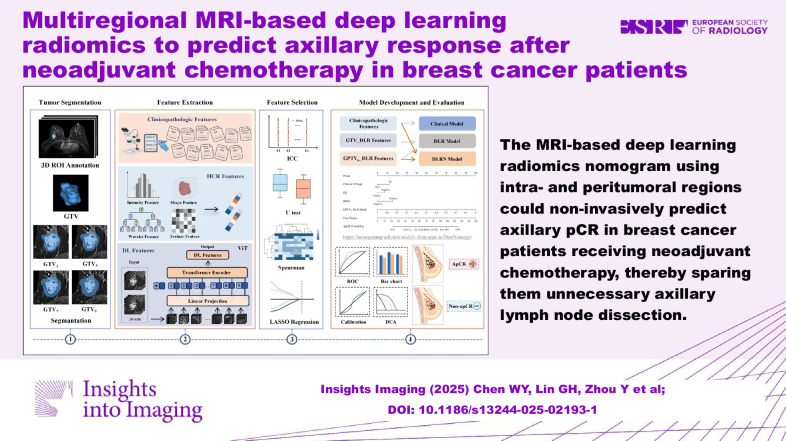 Figure 6
Peer Reviews
No public reviews on file for this paper yet. If you reviewed it on a platform where reviews are public (OpenReview, ICLR, NeurIPS, ICML), you can paste yours below so the community can read it here.
Videos
No videos yet. Explain this paper in a talk, walkthrough, or lecture? Add one.
Taxonomy
TopicsRadiomics and Machine Learning in Medical Imaging · Breast Cancer Treatment Studies · MRI in cancer diagnosis