Integrated enzymatic and sonication strategy for sustainable soybean processing: from cell wall deconstruction to product separation
Afranul Qader Ovi, Lu-Kwang Ju

TL;DR
This paper introduces a sustainable method for processing soybeans using enzymes and sonication to efficiently extract oil, protein, and carbohydrates without using harmful chemicals or high heat.
Contribution
The study introduces an integrated enzymatic-sonication strategy for sustainable soybean processing, enabling hexane-free, low-temperature extraction of high-value components.
Findings
ESP with sonication reduced processing time to 24 hours and increased carbohydrate solubilization to up to 90%.
Centrifugation efficiently separated intact oil bodies, native proteins, and monomerized carbohydrates.
Using water as a reaction medium and limiting processing time reduced protein dissolution to below 20%.
Abstract
Conventional soybean processing relies on hexane extraction and high-temperature treatments, which cause protein denaturation and hinder the separate recovery of oil, protein, and carbohydrate. To address this limitation, this study aimed to establish a sustainable enzymatic soybean processing (ESP) strategy for separate collection of all three major components: intact oil bodies, undenatured protein, and monomerized carbohydrate. This is the first demonstration that ESP efficiency can be significantly enhanced by integrating pulsed sonication. Multi-enzyme systems were produced via solid-state fermentation (SSF) of soyhull by Aspergillus niger and applied to cracked soybean particles. Screening of 15 SSF enzyme extracts revealed that pectinase, polygalacturonase, and invertase were the limiting carbohydrase activities for cell wall degradation. Effects of processing variables including…
Genes, proteins, chemicals, diseases, species, mutations and cell lines named across the full text — each resolved to its canonical identifier and authoritative record.
Click any figure to enlarge with its caption.
 Figure 1
 Figure 2
 Figure 3
 Figure 4
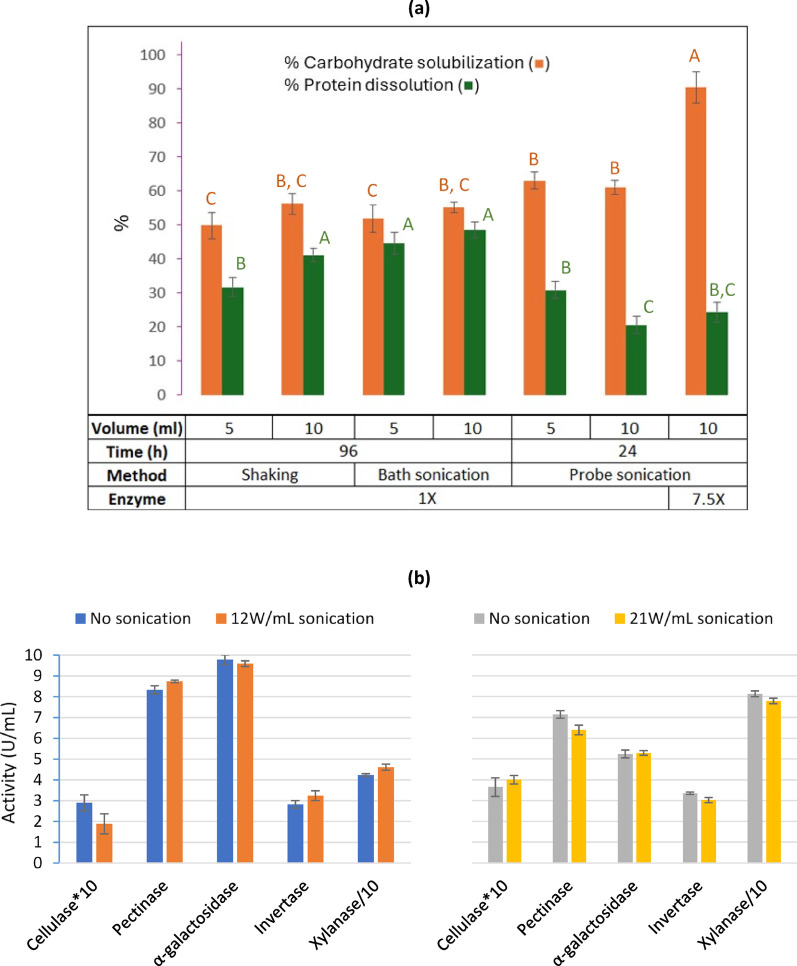 Figure 5
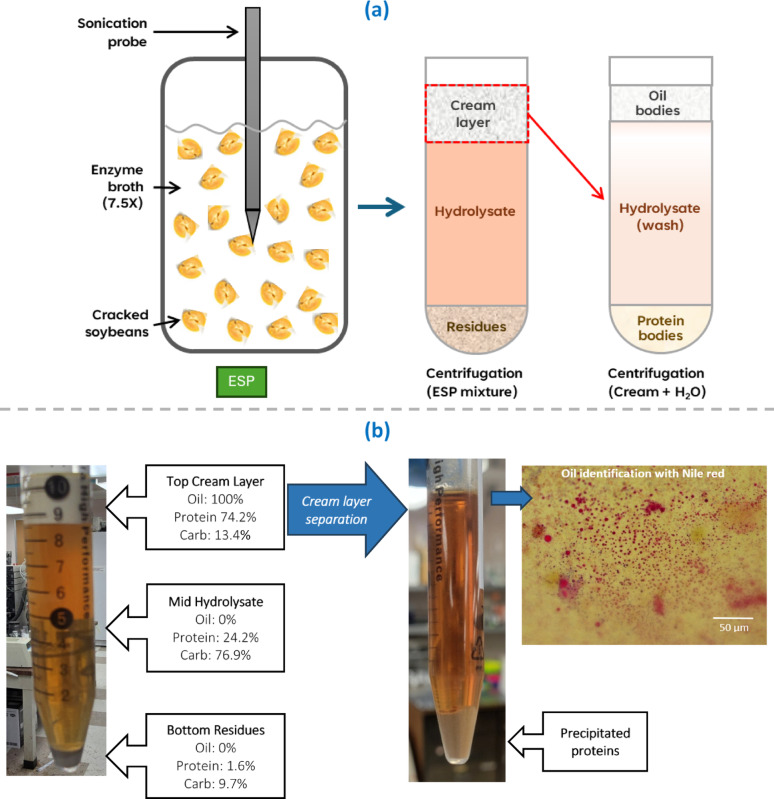 Figure 6
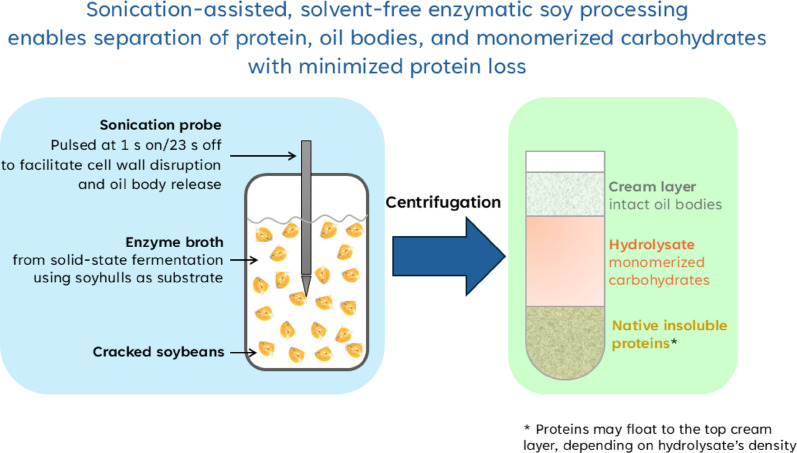 Figure 7
Peer Reviews
No public reviews on file for this paper yet. If you reviewed it on a platform where reviews are public (OpenReview, ICLR, NeurIPS, ICML), you can paste yours below so the community can read it here.
Videos
No videos yet. Explain this paper in a talk, walkthrough, or lecture? Add one.
Taxonomy
TopicsProteins in Food Systems · Microbial Inactivation Methods · Polysaccharides and Plant Cell Walls