Deep learning-based detection and viability assessment of Eimeria oocysts
Hyeon W. Park, Matthew J. Valente, Valsin Fournet, Benjamin M. Rosenthal, Mark Jenkins, Asis Khan, Nitin Nitin

TL;DR
This study uses deep learning to quickly and accurately assess the viability of Eimeria oocysts, which could improve coccidiosis vaccine development and management in poultry.
Contribution
A deep learning model based on YOLOv7 was developed to distinguish viable from non-viable Eimeria oocysts using morphological features.
Findings
The model trained with phase-contrast images achieved 93.1% precision and 91.2% recall for viability detection.
Refined labeling improved model performance to 99.1% precision and recall.
The model generalized well to E. tenella but required fine-tuning for E. maxima due to size differences.
Abstract
Coccidiosis, caused by Eimeria species, is a significant disease affecting the poultry industry worldwide, leading to substantial economic losses due to reduced flock performance. Effective vaccination strategies require the precise quantification of the dosage of viable Eimeria oocysts to induce immunity in young chicks without causing disease. However, current methods for determining oocyst viability rely on sophisticated equipment and are not effective for routine monitoring. Recently, we documented the presence of granular structures exclusively in dead oocysts using high-resolution microscopic imaging. Hence, this study aimed to develop a simple, cost-effective approach using deep learning-based models to distinguish viable from non-viable Eimeria oocysts using morphological features, including the presence/absence of granular structures. Phase-contrast (PC), differential…
Genes, proteins, chemicals, diseases, species, mutations and cell lines named across the full text — each resolved to its canonical identifier and authoritative record.
Click any figure to enlarge with its caption.
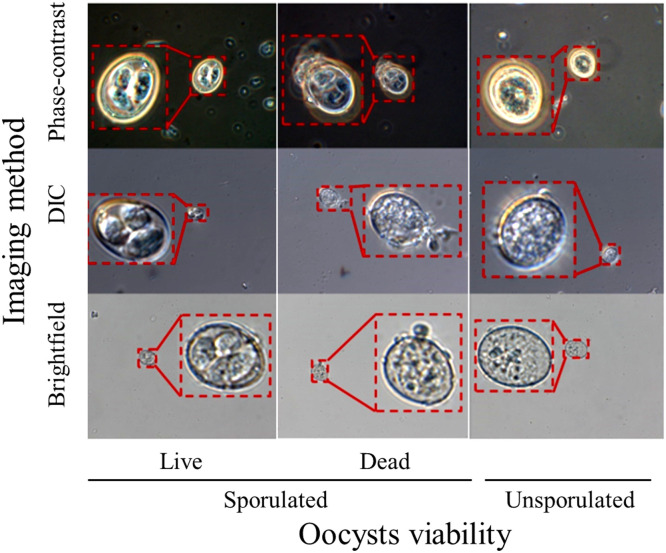 Figure 1
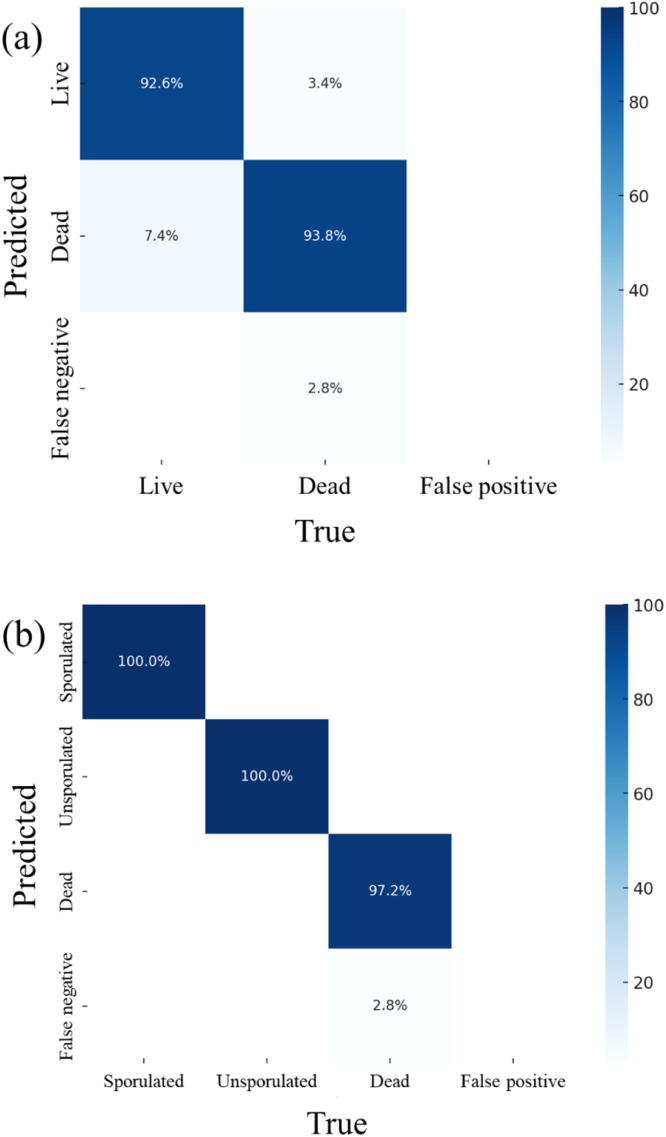 Figure 2
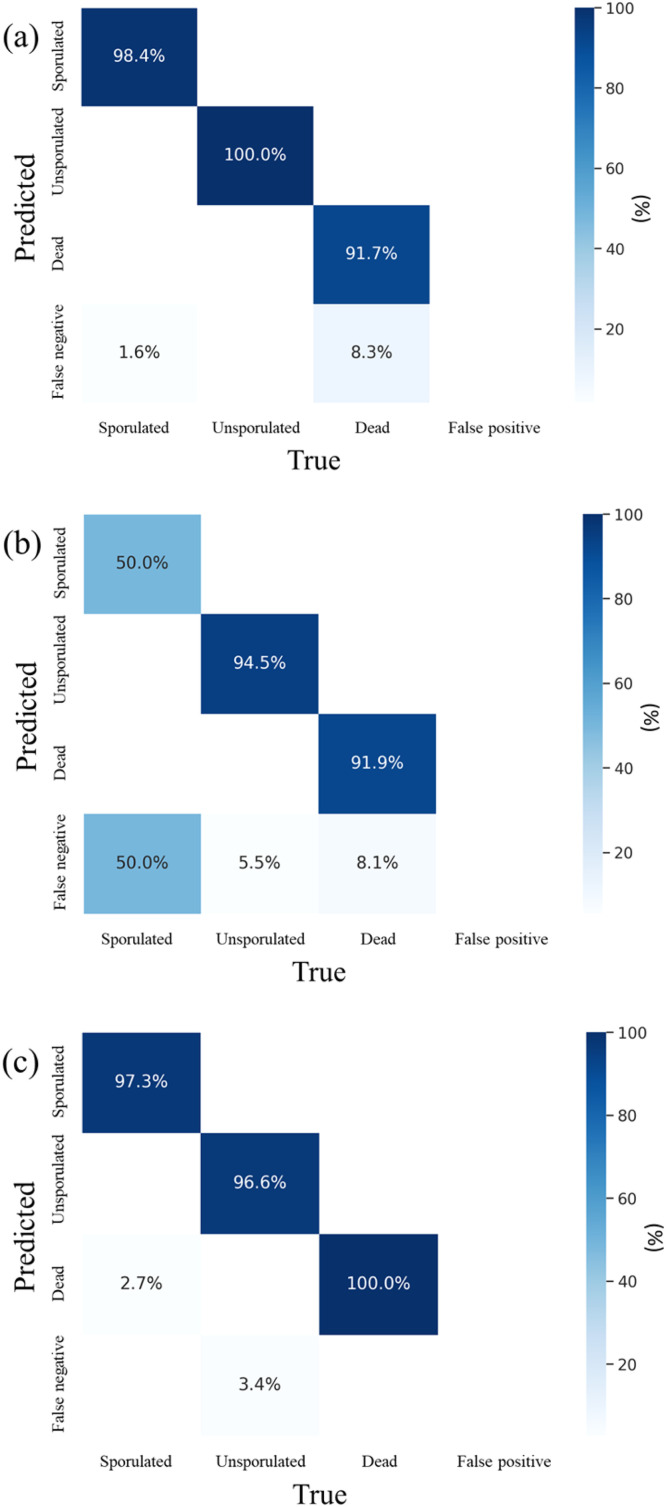 Figure 3
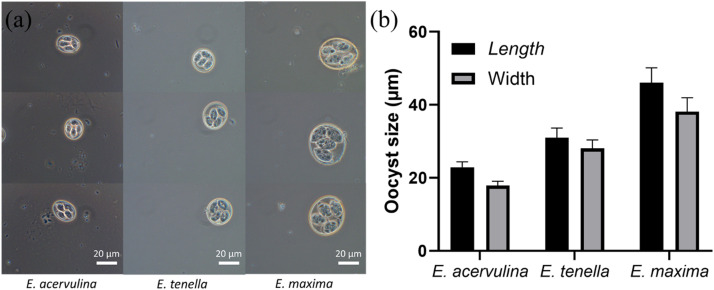 Figure 4
Peer Reviews
No public reviews on file for this paper yet. If you reviewed it on a platform where reviews are public (OpenReview, ICLR, NeurIPS, ICML), you can paste yours below so the community can read it here.
Videos
No videos yet. Explain this paper in a talk, walkthrough, or lecture? Add one.
Taxonomy
TopicsCoccidia and coccidiosis research · Helminth infection and control · Veterinary Pharmacology and Anesthesia