Allosteric zinc inhibition and interdomain regulation govern the catalytic mechanism of the E3-independent ubiquitin-conjugating enzyme hUBE2O
Dan Xiang, Xiaoxiao Tang, Ruona Shi, Shuqi Dong, Xiaofei Zhang

TL;DR
This study reveals how hUBE2O, an E3-independent ubiquitin-conjugating enzyme, uses domain cooperation and zinc ions to regulate its catalytic activity.
Contribution
The paper identifies a novel E3-independent ubiquitination mechanism involving interdomain regulation and allosteric zinc inhibition in hUBE2O.
Findings
hUBE2O relies on multiple domains for catalytic activity, including the UBC, CC, and CTR domains.
Zinc ions act as allosteric inhibitors by binding to cysteines and blocking ubiquitin access.
Non-cysteine residues in the UBC domain are critical for catalytic optimization.
Abstract
UBE2O, an E3-independent E2 ubiquitin-conjugating enzyme, directly engages substrates to mediate Ubiquitin conjugation and ligation. Despite its critical role in ubiquitination of multiple substrates, the catalytic and regulatory mechanisms of Homo sapiens UBE2O (hUBE2O) remain incompletely understood. Here, combining domain truncation, systematic mutagenesis and well-designed biochemical approaches, we demonstrate that hUBE2O mediates both mono- and polyubiquitination through a unique catalytic architecture. Specifically, hUBE2O lacks dedicated catalytic cysteines for E3 ligase activity. Instead, its E3-independent ubiquitination function relies on the coordination of multiple domains: the catalytically essential UBC domain requires the flanking coiled-coil (CC) and C-terminal regulatory (CTR) domains to maintain its full enzymatic competence, whereas the N-terminal region imposes an…
Genes, proteins, chemicals, diseases, species, mutations and cell lines named across the full text — each resolved to its canonical identifier and authoritative record.
Click any figure to enlarge with its caption.
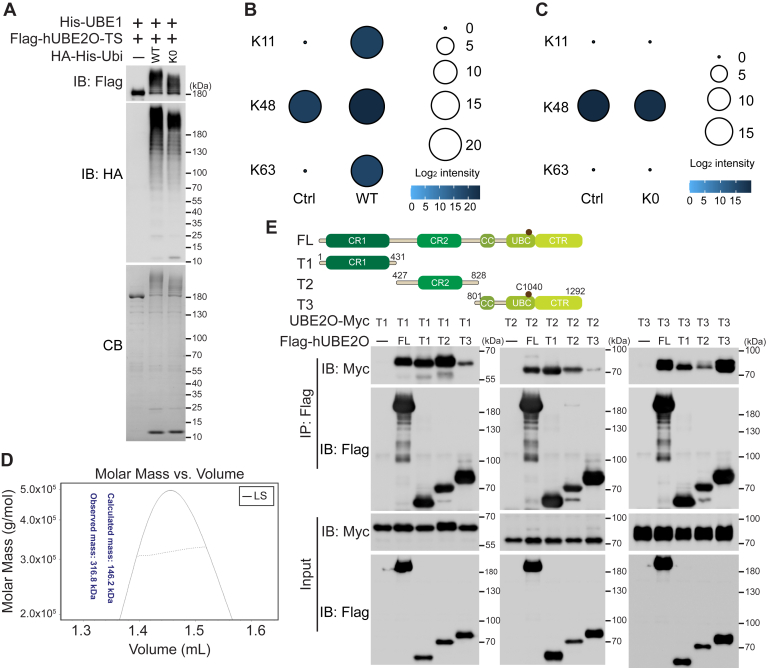 Figure 1
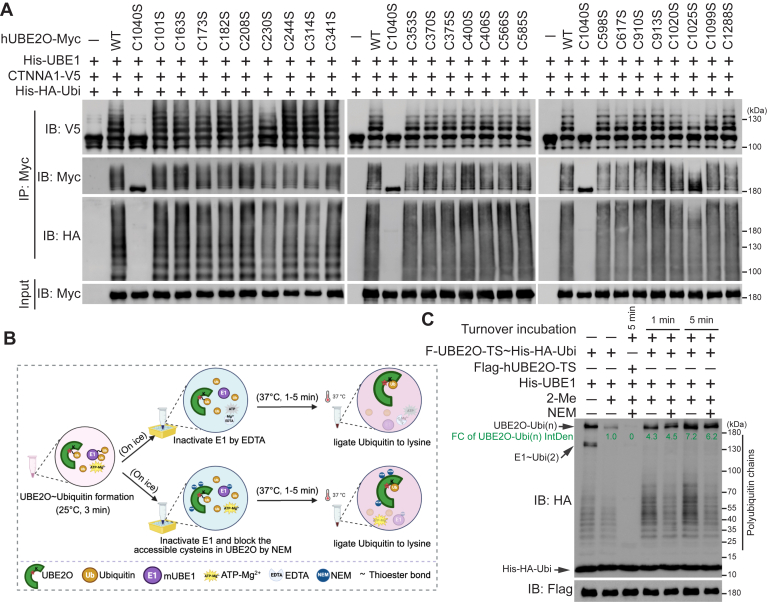 Figure 2
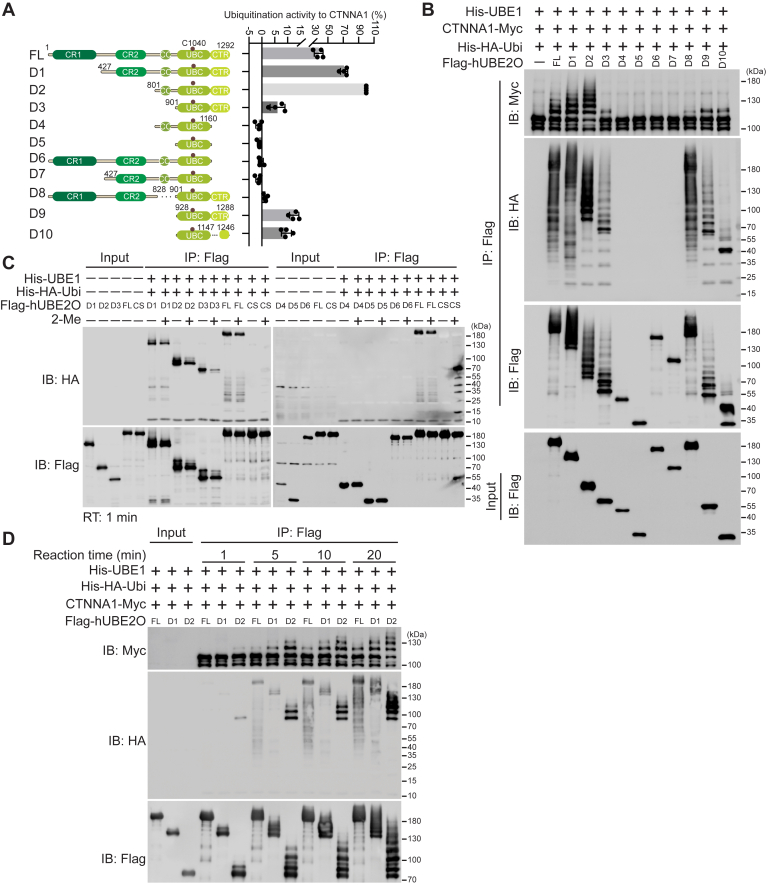 Figure 3
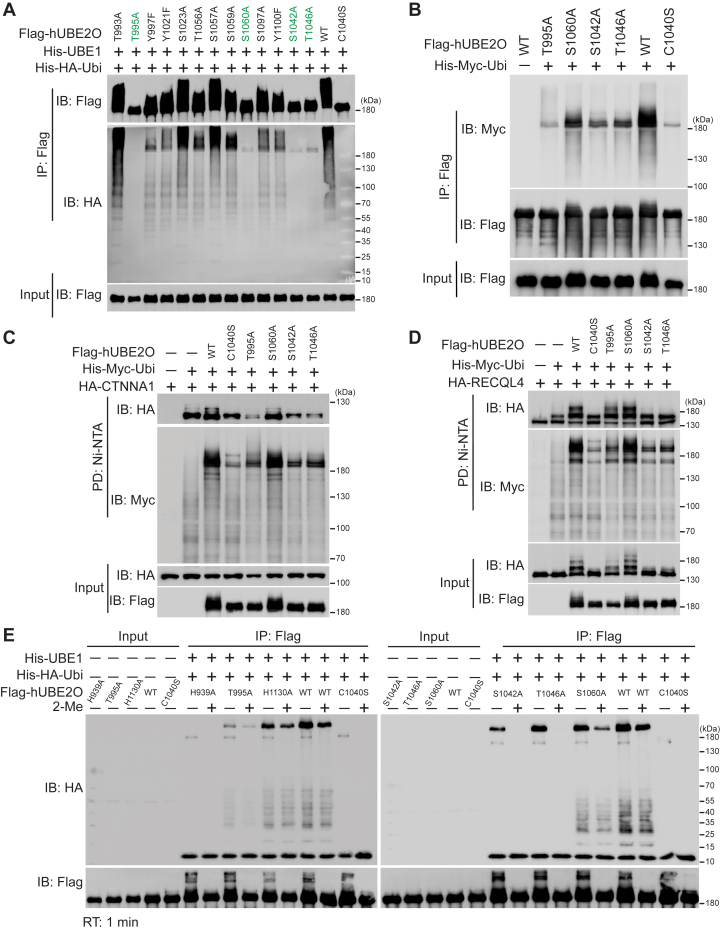 Figure 4
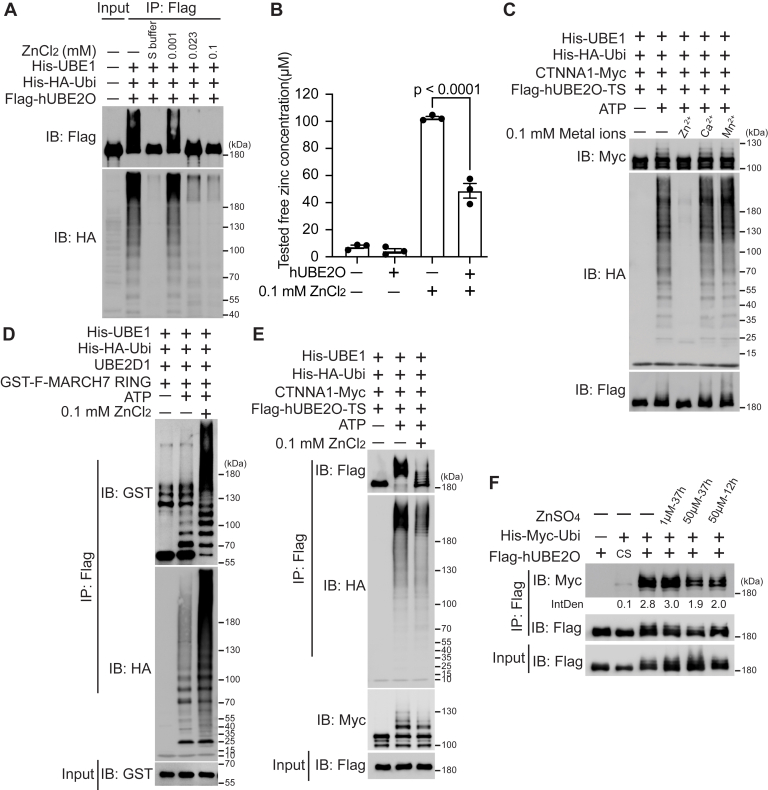 Figure 5
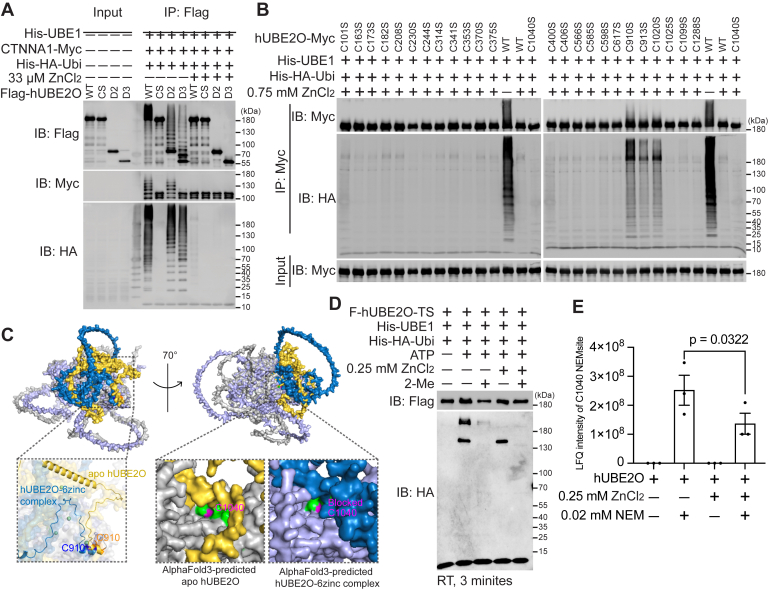 Figure 6
Peer Reviews
No public reviews on file for this paper yet. If you reviewed it on a platform where reviews are public (OpenReview, ICLR, NeurIPS, ICML), you can paste yours below so the community can read it here.
Videos
No videos yet. Explain this paper in a talk, walkthrough, or lecture? Add one.
Taxonomy
TopicsUbiquitin and proteasome pathways · Cancer-related Molecular Pathways · Protein Degradation and Inhibitors